 by
by Bulk Purchasing and Discounts: How Large-Scale Procurement of Generic Medications Lowers Costs
27 Feb, 2026When you walk into a clinic or urgent care center, you rarely think about how the $5 antibiotic on your receipt got there. But behind that price is a complex system of bulk purchasing, volume discounts, and hidden rebates that can cut costs by up to 30%. For small practices, hospitals, and state Medicaid programs, mastering bulk purchasing of generic drugs isn’t just smart-it’s necessary to stay open. This isn’t about buying in bulk at Costco. This is about how healthcare systems negotiate prices on the drugs millions of people rely on every day.
Why Bulk Buying Matters for Generic Drugs
Generic drugs make up over 90% of all prescriptions filled in the U.S., yet they account for only about 24% of total drug spending. That gap exists because of how these drugs are priced and distributed. Unlike brand-name drugs, which are protected by patents, generics are identical copies made after the original patent expires. Because multiple manufacturers can produce them, competition drives prices down-but only if buyers have enough leverage to push for it.That’s where bulk purchasing comes in. When a clinic orders 10,000 units of amoxicillin instead of 500, manufacturers don’t just give a small discount. They offer 20-30% off because they know they’re securing long-term volume. The same applies to common injectables like lidocaine, saline, or corticosteroids. One urgent care center in Texas cut its medication costs by 20% in just two months by switching from monthly to quarterly bulk orders. No new staff. No new equipment. Just smarter ordering.
How Discounts Really Work
There are three main ways bulk discounts happen-and most people don’t know about all of them.- Direct volume discounts: If you buy over 1,000 units of a drug, you typically get 5-15% off the list price. At 10,000+ units, that jumps to 20-30%. This is the simplest form of bulk pricing and is common with secondary distributors like Republic Pharmaceuticals.
- Rebate agreements: Pharmacy Benefit Managers (PBMs) negotiate rebates with manufacturers based on how much of a drug a health plan uses. These rebates can be 15-40%, but here’s the catch: only 50-70% of that money actually reaches the plan or patient. The rest stays with the PBM.
- Multi-state purchasing pools: States like Texas, Ohio, and Florida team up to buy drugs together. These pools-like the National Medicaid Pooling Initiative (NMPI) or the Sovereign States Drug Consortium (SSDC)-get an extra 3-5% off because they’re buying for hundreds of thousands of people. Single-state programs usually get less than 2%.
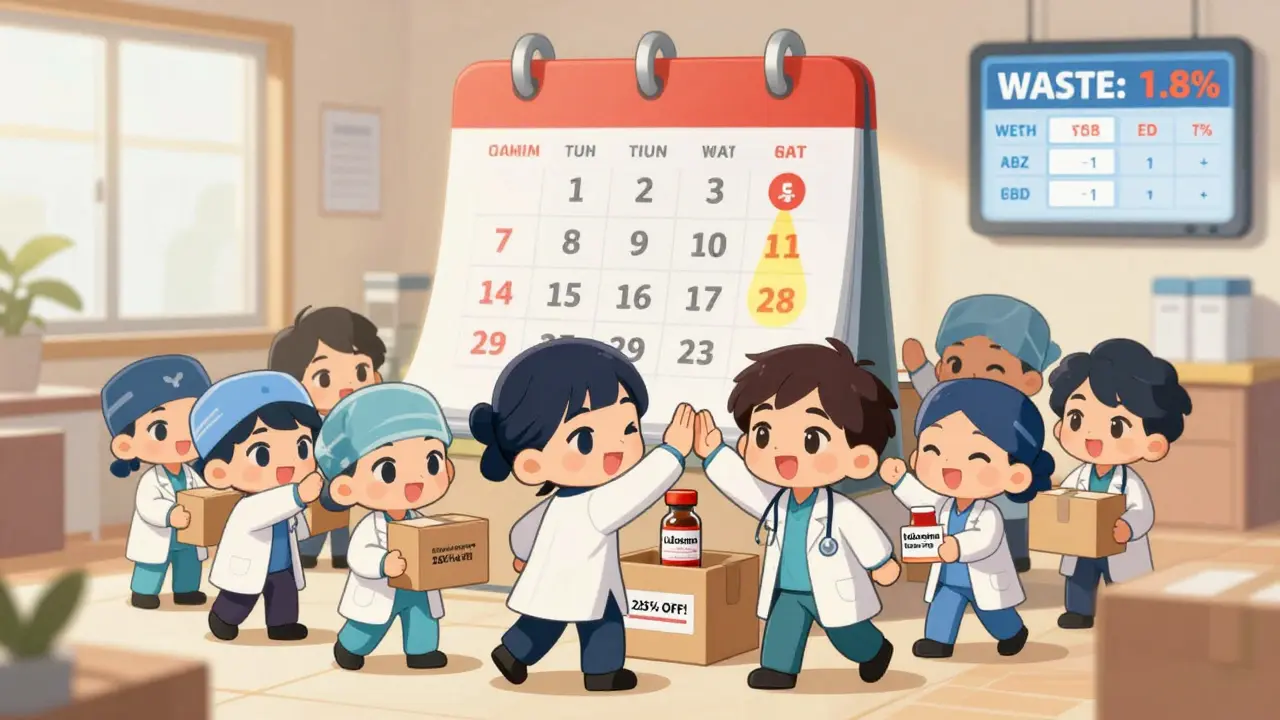
One of the most underused tactics is buying short-dated stock. These are medications with expiration dates 6-12 months away. Manufacturers and wholesalers sell them at 20-30% off because they want to move inventory before it expires. A clinic in Ohio saved 25% on injectables just by switching 40% of their orders to this category. Yes, you have to track expiration dates more closely. But with good inventory software, waste drops below 2%.
Who’s Buying and Who’s Winning
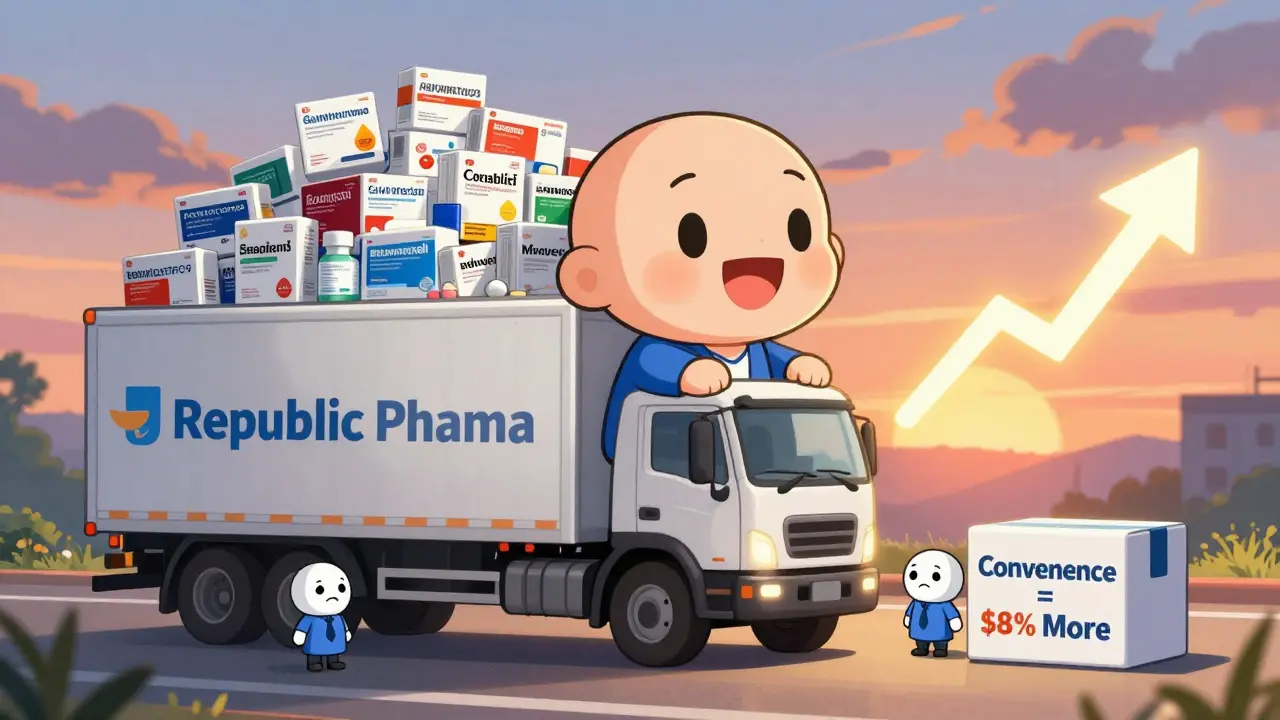
Not all buyers get the same deals. The system is stacked.Primary wholesalers-McKesson, Cardinal Health, AmerisourceBergen-control 85% of the generic drug market. But they rarely offer big discounts. Their model is built on convenience, not cost savings. Most small clinics use them because they’re easy. But they’re paying 3-8% more than they need to.
Secondary distributors like Republic Pharmaceuticals specialize in bulk and short-dated stock. They don’t have the same delivery networks, but they offer 20-25% savings. A 2023 survey of urgent care centers found that those switching 30-40% of their generic purchases to secondary distributors saved an average of 18% in the first year. The trade-off? You need to manage more suppliers. But for practices spending over $100,000 a year on meds, that’s worth it.
State Medicaid programs that join multi-state pools save 3-5% more than those flying solo. The National Pharmaceutical Discount Consortium (NPDC) alone facilitated over $800 million in drug purchases in 2023, saving $99.4 million since 2016. That’s money that goes back into patient care instead of corporate profits.
What Works Best-And What Doesn’t
Bulk purchasing isn’t magic. It only works for certain drugs.Best for bulk buying:
- Lidocaine
- Antibiotics (amoxicillin, azithromycin)
- Corticosteroids (prednisone, methylprednisolone)
- Saline solutions
- Metformin, atorvastatin, lisinopril
These are high-volume, stable-demand drugs. You can predict how much you’ll need. You can lock in prices. You can plan inventory.
Not good for bulk buying:
- Specialty medications (like those for rare diseases)
- Drugs in shortage
- Low-utilization items (used by only a few patients a month)
During the 2023 drug shortage crisis, 298 generic drugs were in short supply. If you’d ordered 10,000 units of a drug that suddenly had production delays, you’d be stuck with expired inventory. That’s why smart buyers don’t go all-in on bulk. They use it for their top 15-20 medications-the ones that make up 60-70% of their total drug spend.
How to Start Bulk Purchasing
If you’re a clinic, pharmacy, or provider, here’s how to begin:- Track your spending. Use your pharmacy logs to find which 15-20 generic drugs make up the most of your budget. These are your targets.
- Find a secondary distributor. Look for one that specializes in short-dated stock and bulk orders. Republic Pharmaceuticals is one example, but there are others. Compare their minimum order sizes and delivery times.
- Start small. Switch just 2-3 medications to bulk. Try short-dated stock on one injectable. See how it works.
- Set up inventory alerts. Use software that tracks expiration dates. Most clinics that succeed with short-dated stock use automated systems that flag items 90 days out.
- Scale up. Once you’re comfortable, add more drugs. Most practices reach full savings within 4-6 months.
The learning curve is real. One practice reported spending 20 hours in the first month just learning how to manage orders. But after three months, they were spending only 5-10 hours per month on optimization-and saving $18,000 annually.
The Bigger Picture
Bulk purchasing alone won’t fix the entire drug pricing system. PBMs still keep billions in rebates. Wholesalers still raise list prices to offset discounts. The Inflation Reduction Act’s new Medicare price negotiations may cut prices by 38-79% on some drugs starting in 2026. That could change everything.But here’s the truth: while Washington debates policy, clinics are still paying full price for antibiotics and insulin. Bulk purchasing is a tool you can use today. It doesn’t require new legislation. It doesn’t need federal approval. It just needs you to stop ordering the way you’ve always done it.
The future of affordable care isn’t just in policy-it’s in your pharmacy closet. The next time you order lidocaine, ask: Could I get this cheaper if I bought 10 times more? The answer might surprise you.
Can small clinics really save money with bulk purchasing?
Yes. Even small clinics can save 15-25% by focusing on their top 15-20 most-used generic drugs. One urgent care center in Texas cut its medication costs by 20% in two months by switching to quarterly bulk orders and using short-dated stock. You don’t need to buy huge volumes-just smarter ones.
What’s short-dated stock, and is it safe to use?
Short-dated stock means medications with expiration dates 6-12 months away. They’re sold at 20-30% off because distributors want to move them before they expire. These drugs are 100% safe and effective. The FDA requires all medications to maintain potency until their expiration date. The only risk is poor inventory management. With a simple tracking system, waste drops below 2%.
Why don’t more clinics use bulk purchasing?
Most clinics stick with primary wholesalers because they’re convenient. They deliver fast, handle billing, and don’t require extra work. But they rarely offer real discounts. Secondary distributors require more coordination-different ordering systems, tracking expiration dates, managing multiple suppliers. That’s a barrier for under-resourced practices. But once you get past the learning curve, the savings pay for the extra work.
Do rebates from Pharmacy Benefit Managers (PBMs) help patients?
Sometimes-but not always. PBMs negotiate rebates of 15-40% on generics, but they often keep 30-50% of that money. Only 50-70% gets passed to the plan or patient. That’s why a drug might cost $5 at the pharmacy even after a $20 rebate. Transparency laws being debated in Congress aim to fix this, but for now, bulk purchasing directly from distributors gives you more control over what you actually pay.
Is bulk purchasing risky during drug shortages?
It can be. In 2023, there were 298 active shortages of generic drugs. If you order 10,000 units of a drug that suddenly becomes unavailable, you could be stuck with expired inventory. That’s why smart buyers only use bulk purchasing for stable, high-demand drugs-like antibiotics, insulin, or saline-and avoid it for drugs with known supply issues. Always check the FDA’s Drug Shortage Database before committing to large orders.
How long does it take to see savings from bulk purchasing?
Most practices see savings within 30-60 days after switching their first few medications. Full optimization takes 4-6 months. The Texas urgent care center that saved 20% did it in two months. The key is starting small-focus on your top 3 drugs first. Don’t try to overhaul everything at once.
Eimear Gilroy
February 28, 2026 AT 09:39Interesting breakdown. I work in a small clinic in Dublin and we’ve been using short-dated stock for about a year now. Honestly, it felt sketchy at first-like we were buying expired meds or something. But after checking the FDA guidelines and seeing how our inventory software flagged expirations, it became second nature. We saved nearly 22% on injectables last year. The only downside? Staff still freak out when they see a vial labeled 'EXP: 08/2025.' We had to do a little education session. Worth it.
Ajay Krishna
March 2, 2026 AT 09:10This is such a practical guide. I’m from India, and we don’t have the same infrastructure, but I’ve seen similar dynamics with generic insulin and antibiotics here. Local cooperatives pool orders for 50+ clinics and get 25-30% off. The real win isn’t just the discount-it’s that it forces everyone to think about usage patterns. No more ‘order 500 because that’s what we always did.’ We track what actually gets used. It’s changed how we think about supply entirely. Thanks for sharing this.
Miranda Anderson
March 2, 2026 AT 16:24I’ve been reading this whole thing and honestly? I’m surprised more people aren’t talking about this. I work in a rural urgent care in Nebraska, and we were paying $12 per vial of lidocaine through McKesson. Switched to a secondary distributor, bought 5,000 units with 8-month expiry, and now it’s $8.50. Not even a third of the cost. The logistics were a nightmare at first-different PO system, different invoice format, no auto-replenishment. Took us three months to get the rhythm. But now? We’re saving $14k a year. That’s a full-time nurse’s salary. Why aren’t we all doing this? It’s not magic. It’s just math. And we’re not doing the math.
Gigi Valdez
March 4, 2026 AT 06:19The data presented here is methodologically sound and aligns with peer-reviewed studies on pharmaceutical procurement efficiency. The distinction between primary and secondary distributors is critical, as is the recognition that volume-based pricing is non-linear. The 20-30% discount threshold at 10,000 units is consistent with economic models of bulk elasticity in pharmaceutical supply chains. However, one should note that inventory carrying costs and opportunity cost of capital must be factored into net savings. A comprehensive cost-benefit analysis is advised before implementation.
Sneha Mahapatra
March 4, 2026 AT 13:42Reading this made me feel so much hope. 💛 It’s easy to feel helpless when you hear about drug prices, but this? This is something real. Something you can do today, right now, without waiting for Congress or a CEO to change their mind. I think about how many people in my village can’t afford their meds, and then I think-what if their clinic started doing this? What if every small clinic did? It’s not just about money. It’s about dignity. You shouldn’t have to choose between your health and your rent. This is quiet revolution. And it’s happening in pharmacy closets. 🌱
bill cook
March 6, 2026 AT 05:40So let me get this straight-you’re telling me the whole system is rigged, and the only way to get a deal is to buy from shady distributors who sell stuff that’s about to expire? And you’re saying this is the solution? Sounds like a pyramid scheme with needles. Who’s really behind these 'secondary distributors'? Are they owned by PBMs? Are they just front companies for Big Pharma to offload expired inventory? I’m not buying it. This smells like a loophole designed to make you feel like you’re saving money while they’re still screwing you.
Byron Duvall
March 6, 2026 AT 16:28Yeah right. Bulk purchasing? More like bulk manipulation. The FDA doesn’t even regulate short-dated stock properly. And those 'secondary distributors'? They’re not even licensed in half the states. I’ve seen reports-some of these companies are getting drugs from overseas, repackaging them in garages, and slapping on new labels. And you’re telling me this is how we save money? This is how we end up with counterfeit metformin in grandma’s medicine cabinet. The real solution is to shut down these middlemen and bring drug manufacturing back to the U.S. But nope, we’d rather play Jenga with people’s lives.
Noah Cline
March 7, 2026 AT 18:04There’s a fundamental flaw in your analysis. You’re conflating procurement efficiency with systemic cost reduction. The 20-30% discount figures are nominal, not real. You’re ignoring the embedded transaction costs of supply chain fragmentation-inventory turnover ratios, carrying costs, audit compliance, and regulatory risk exposure. Furthermore, the PBM rebate structure, while opaque, is a necessary hedge against price volatility in a monopsonistic market. Your recommendation to adopt secondary distributors ignores the fact that they lack the DSCSA-compliant pedigree tracking required under federal law. This is not a savings strategy-it’s a compliance liability waiting to happen.