 by
by Chronic Alcohol Use Disorder: Health Risks and Treatment Options
9 Mar, 2026Chronic Alcohol Use Disorder (AUD) isn't just about drinking too much. It's a medical condition where your brain and body get stuck in a cycle of compulsive drinking-even when it's destroying your health, relationships, or job. This isn't a lack of willpower. It's a brain disease. And the good news? It's treatable.
What Happens When You Drink Too Much for Too Long
Every time you drink, alcohol hits your brain and nervous system. At first, it might feel like it lifts your mood. But over time, your brain rewires itself. You need more alcohol to feel the same effect. That's tolerance. Then, your body starts to depend on it. Skip a drink, and you shake, sweat, get anxious, or even have seizures. That's physical dependence.
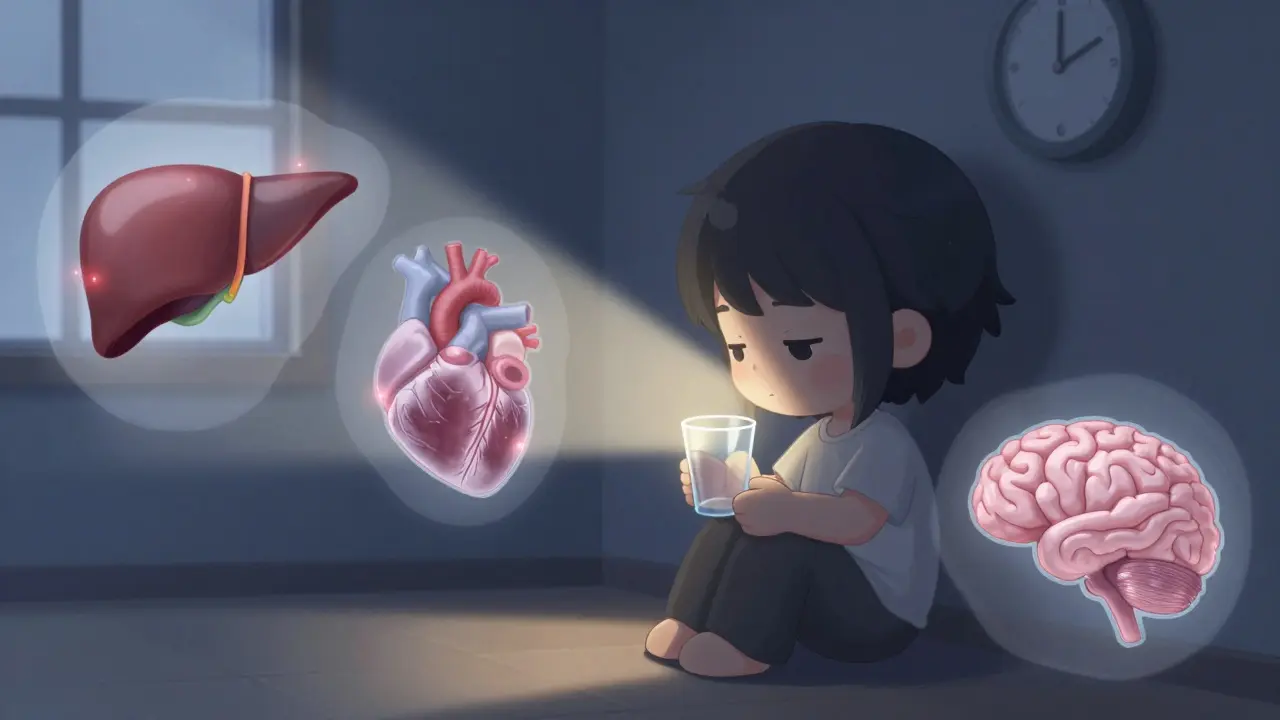
Long-term alcohol use doesn't just hurt your liver-it attacks nearly every system in your body. The liver takes the hardest hit. Around 90% of heavy drinkers develop fatty liver. If drinking continues, inflammation kicks in (alcoholic hepatitis). Eventually, scar tissue replaces healthy liver cells. That's cirrhosis. And once cirrhosis sets in, your liver can't heal itself fully. Some damage is permanent.
Your heart isn't safe either. Heavy drinking raises your blood pressure, increases your risk of irregular heartbeat (atrial fibrillation), and boosts your stroke risk by 34%. It also raises your chance of heart attack. Alcohol weakens your heart muscle over time, making it harder to pump blood. This isn't theoretical. People who drink heavily are 40% more likely to develop atrial fibrillation.
Then there's your brain. Chronic use shrinks brain tissue. Memory gets fuzzy. Thinking slows down. Some people develop dementia-like symptoms. Numbness and burning pain in hands and feet? That's nerve damage from vitamin B1 deficiency. Left untreated, this can spiral into Wernicke's encephalopathy-a life-threatening condition with confusion, loss of coordination, and eye movement problems. And yes, 80% of people with severe AUD are deficient in thiamine.
Alcohol also fuels cancer. Heavy drinkers are five times more likely to get mouth and throat cancer. Breast cancer risk goes up 12% for every daily drink. Liver cancer, bowel cancer, and esophageal cancer all become more likely. The American Cancer Society says alcohol is a direct carcinogen.
The Hidden Costs: Mental Health and Life
It's not just physical. AUD and mental health are tangled together. Depression. Anxiety. Panic attacks. These aren't just side effects-they often feed the drinking. You drink to feel better. It works briefly. Then it gets worse. The cycle tightens.
Relationships break down. Jobs get lost. Finances collapse. Homelessness becomes a real risk. Alcohol impairs judgment, leading to risky decisions, violence, or accidents. In the U.S., 29% of all traffic deaths involve alcohol. That's nearly one in three.
Your immune system? It weakens. You're 2.7 times more likely to get pneumonia. A simple cold can turn deadly. Even minor cuts take longer to heal. Your body is too busy trying to process alcohol to fight off infection.
And it's not just you. Families suffer. Children grow up in unstable homes. Partners live in fear. The ripple effect is massive.
How Is It Diagnosed?
Doctors don't diagnose AUD based on how many drinks you have. They look at patterns. The DSM-5 (the official diagnostic manual) lists 11 criteria. If you meet two or more in a year, you have mild AUD. Four to five? Moderate. Six or more? Severe.
These include:
- Drinking more or longer than you meant to
- Wanting to cut down but can't
- Spending a lot of time getting, using, or recovering from alcohol
- Cravings
- Drinking interferes with responsibilities
- Continuing to drink despite relationship problems
- Giving up hobbies because of alcohol
- Using alcohol even when it's dangerous (like driving)
- Needing more to get the same effect
- Experiencing withdrawal symptoms
- Drinking to avoid withdrawal
You don't need to be homeless or jobless to have severe AUD. You could be a high-performing professional who drinks every night. The damage is still happening.
Treatment Isn't One-Size-Fits-All
Treatment starts with detox-if you're physically dependent. This isn't something to do alone. Withdrawal can be deadly. Seizures, delirium tremens, heart failure-they're real risks. Medically supervised detox in a clinic or hospital is the only safe way to start.
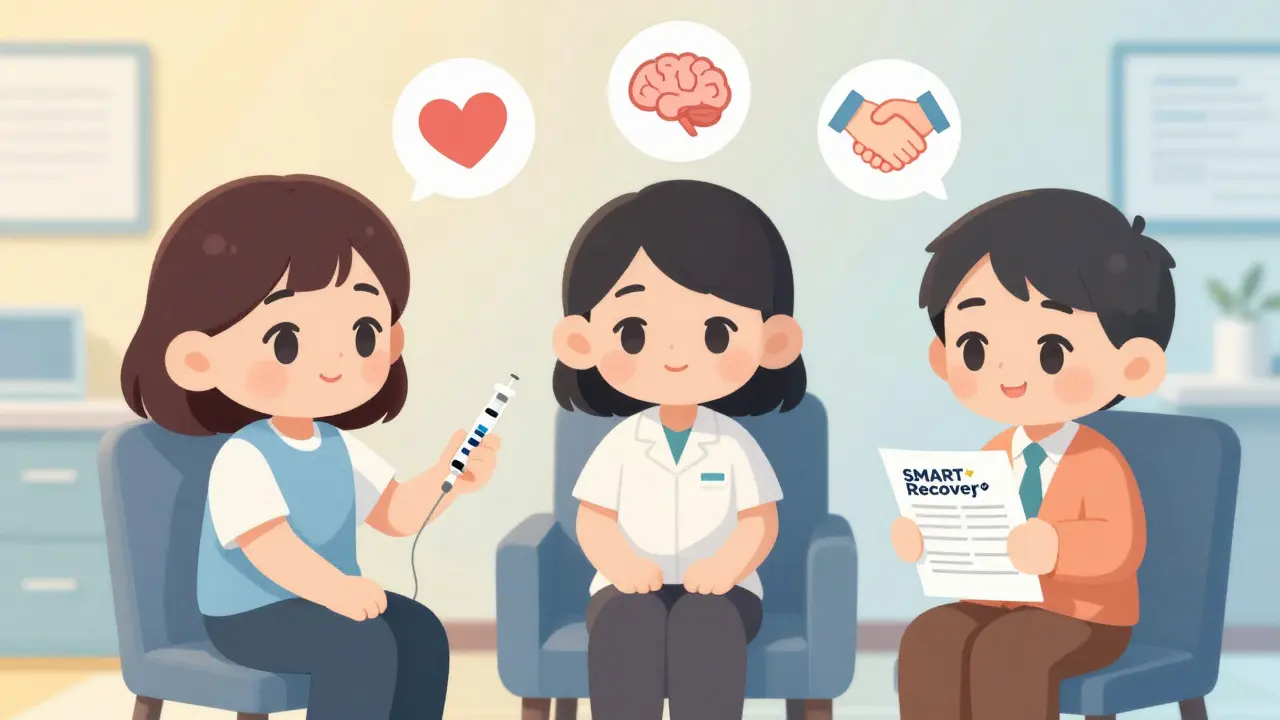
After detox, real recovery begins. And there are three proven paths: medication, therapy, and support.
Medications That Work
Three FDA-approved drugs help people stay sober:
- Naltrexone (ReVia, Vivitrol): Blocks the pleasurable effects of alcohol. Reduces cravings. Taken daily or as a monthly shot.
- Acamprosate (Campral): Helps stabilize brain chemistry after stopping. Reduces urges to drink. Works best after detox.
- Disulfiram (Antabuse): Makes drinking unpleasant. Causes nausea, flushing, and headaches if alcohol is consumed. It's a deterrent-not a cure.
Studies show combining medication with therapy increases abstinence rates by 24% compared to either alone. These aren't magic pills. But they take the edge off the craving, giving you space to rebuild.
Therapy That Changes Behavior
Therapy tackles the root cause: why you drink. Two of the most effective:
- Cognitive Behavioral Therapy (CBT): Teaches you to recognize triggers-stress, boredom, social pressure-and replace drinking with healthier responses. Studies show it reduces heavy drinking days by 60%.
- Motivational Enhancement Therapy (MET): Helps you resolve mixed feelings. If you're torn between wanting to quit and wanting to keep drinking, MET helps you find your own reasons to change.
These aren't talk therapy sessions with no direction. They're structured, time-limited, and evidence-based.
Support That Lasts
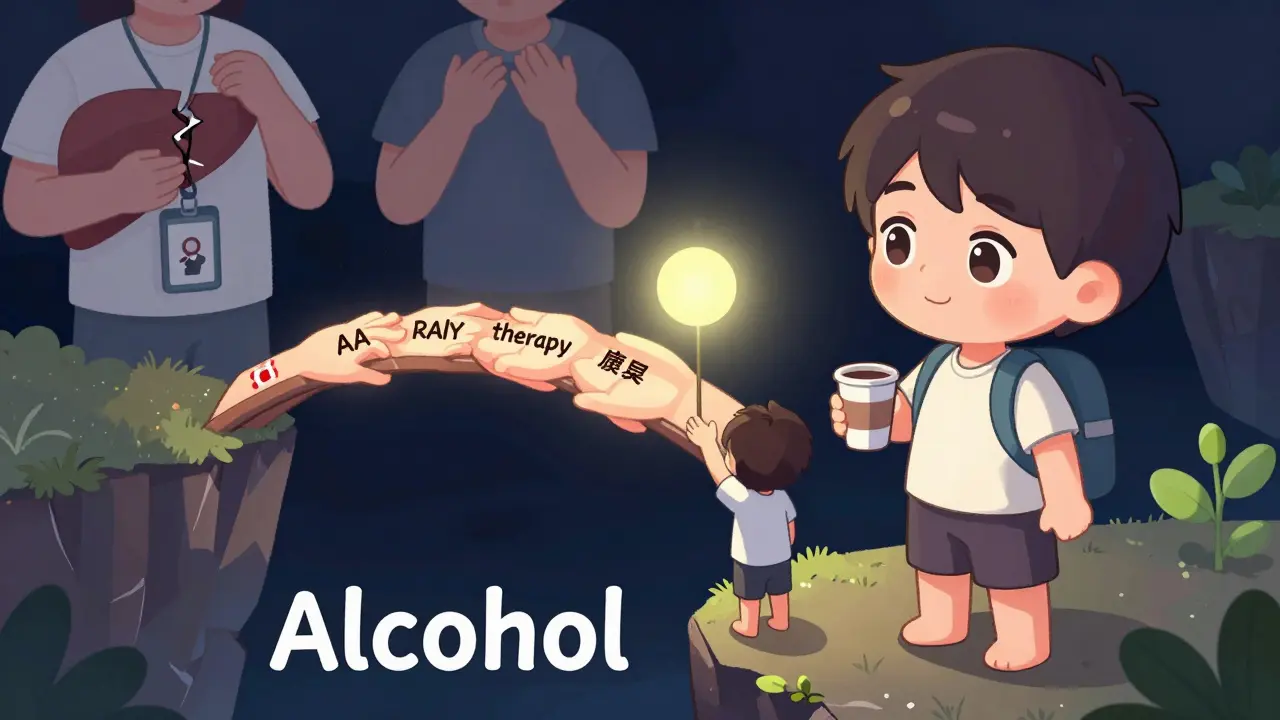
Alcoholics Anonymous (AA) has been around since 1935. It's not for everyone. But it works for many. Their 2014 survey found 27% of members stayed abstinent after one year. That's higher than most other treatments without medication.
Other groups like SMART Recovery, Refuge Recovery, and Women for Sobriety offer secular, science-backed alternatives. The key? Connection. You're not alone. And knowing someone else understands makes all the difference.
New Frontiers in Treatment
Science is moving fast. In 2022, a JAMA Psychiatry study found transcranial magnetic stimulation (TMS)-a non-invasive brain stimulation technique-led to 50% abstinence rates in heavy drinkers after 12 sessions. Another FDA-approved tool, the reSET app, helped 40.7% of users stay sober, compared to 17.4% in the control group.
The NIAAA's Rethinking Drinking guide offers practical steps for cutting back-even if you're not ready to quit. It's not about perfection. It's about progress.
Recovery Is Possible
Some liver damage can reverse if you stop drinking. Fatty liver can clear in weeks. Inflammation can calm. Your brain can start healing. Your heart can recover. Your relationships can mend.
But recovery isn't linear. Relapse happens. That doesn't mean failure. It means you need to adjust your plan. Maybe you need stronger medication. Maybe you need more therapy. Maybe you need to find a different support group.
The biggest barrier isn't addiction. It's shame. People think they're weak. They're not. AUD is a medical condition, not a moral failing. And like diabetes or high blood pressure, it needs ongoing care.
You don't have to hit rock bottom to get help. You don't have to lose your job or your family. If you're reading this and thinking, "Maybe I have a problem," that's the first step. The next? Reach out. Talk to your doctor. Call a helpline. Text a friend. Recovery starts with one small action.
Is chronic alcohol use disorder the same as alcoholism?
Yes. "Alcoholism" is the older, informal term. "Chronic Alcohol Use Disorder" (AUD) is the current medical term. AUD covers the full spectrum-from mild to severe. What people used to call "alcoholism" is now classified as severe AUD.
Can you recover from liver damage caused by alcohol?
It depends. Fatty liver and early-stage inflammation can reverse completely if you stop drinking. But once cirrhosis (scarring) develops, the damage is permanent. However, stopping alcohol can stop further damage and improve liver function. The liver is resilient-if you give it a chance.
Do I need to quit drinking completely, or can I just cut back?
For mild AUD, some people can reduce drinking safely. But for moderate to severe AUD, abstinence is the most reliable path to recovery. The brain chemistry changes in chronic AUD make controlled drinking extremely difficult-and dangerous. Most experts recommend complete abstinence for long-term success.
Are medications for AUD just replacing one addiction with another?
No. Medications like naltrexone and acamprosate don't cause euphoria or dependence. They don't get you high. They help reduce cravings and stabilize brain function so you can focus on therapy and rebuilding your life. Think of them like blood pressure medication-they manage a medical condition, not create a new one.
How long does treatment for AUD take?
There's no set timeline. Detox takes days to weeks. Therapy usually lasts 3-6 months. But recovery is lifelong. Like managing diabetes or heart disease, ongoing support, self-awareness, and healthy habits are key. Many people stay in recovery groups for years-even decades.
What if I can't afford treatment?
Help is still available. Many clinics offer sliding-scale fees. Medicaid and Medicare often cover AUD treatment. The SAMHSA National Helpline (1-800-662-4357) connects people to free or low-cost services. Support groups like AA are free. You don't need money to start healing-just the willingness to ask for help.
Can someone with AUD ever drink again safely?
For most people with moderate to severe AUD, the answer is no. Even one drink can trigger a full relapse. The brain remembers the reward pathway too well. Abstinence is the safest and most effective path to recovery. Some with mild AUD may learn to drink moderately-but this requires careful monitoring and is not recommended without professional guidance.
Is AUD more common in men or women?
Men are more likely to have AUD overall. But women develop health complications faster-even with less alcohol. Liver damage, heart disease, and breast cancer risks rise more quickly in women. The biological impact is more severe, and societal stigma often delays women from seeking help.
What's the success rate for AUD treatment?
Success varies. About 30-40% of people stay abstinent after one year with proper treatment. That's better than many chronic illnesses. Combining medication with therapy improves outcomes by 24%. Relapse is common, but it doesn't mean failure. Each attempt at recovery builds resilience.
Can I help a loved one with AUD?
Yes-but not by forcing them. Set boundaries. Stop enabling. Say "I love you, but I won't watch you hurt yourself." Encourage them to talk to a doctor. Offer to go with them to a support group. Join a family support group like Al-Anon. Your well-being matters too. You can't fix someone else's addiction-but you can create space for change.
Chronic Alcohol Use Disorder is a heavy burden. But it doesn't have to be carried alone. Treatment works. Recovery is real. And every person who chooses to reach out-no matter how scared they are-takes the first step toward a life beyond alcohol.