 by
by FDA Listing for Biosimilars: How They Are Evaluated and Approved
29 Dec, 2025When you hear the word biosimilar, you might think it’s just another name for a generic drug. But that’s not true. Biosimilars aren’t copies like generics-they’re highly similar versions of complex biologic drugs, made from living cells. The FDA doesn’t rate them like you’d rate a movie or a restaurant. Instead, they go through one of the most detailed scientific reviews in medicine to prove they’re safe and effective. If you’re trying to understand why some biosimilars are approved and others aren’t, or why your doctor might hesitate to switch you to one, it all comes down to how the FDA evaluates them.
What Makes a Biosimilar Different From a Generic
Generics are simple. They’re chemically identical copies of small-molecule drugs like ibuprofen or metformin. You can synthesize them in a lab using the same ingredients every time. Biosimilars? They’re made from living organisms-bacteria, yeast, or mammalian cells. Even tiny changes in temperature, pH, or cell culture conditions can alter the final product. That’s why a biosimilar isn’t identical to its reference drug-it’s highly similar, with no clinically meaningful differences in safety or effectiveness.
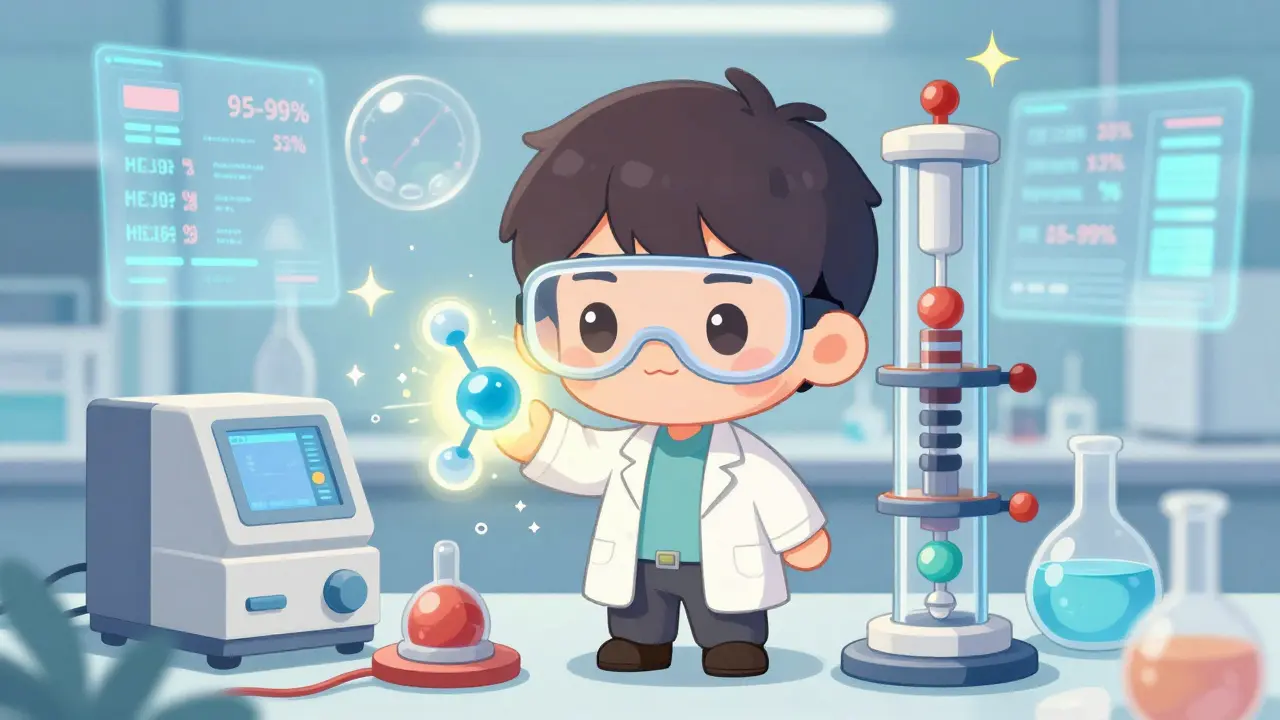
The FDA requires biosimilars to match the reference product in structure, function, and behavior. That means testing for things like protein folding, sugar attachments (glycosylation), and how the drug binds to its target. These aren’t surface-level checks. They’re deep, molecular-level analyses that can take months to complete. A single biosimilar might be tested against 200 to 300 different quality attributes. Generics don’t need any of this. That’s why biosimilars cost more to develop-and why they’re not called generics.
The FDA’s Step-by-Step Approval Process
The FDA doesn’t just look at one piece of data. They build a complete picture using a stepwise approach called the “totality of evidence.” It starts with lab tests, moves to animal studies, then human trials-and only then do they decide if the product is ready for approval.
First comes analytical studies. Scientists use advanced tools like mass spectrometry, capillary electrophoresis, and high-performance liquid chromatography to compare the biosimilar and the reference product molecule by molecule. The goal? To show they’re 95% to 99% similar across critical attributes. If the data shows a gap-even a small one-the application gets put on hold.
If the analytical data looks good, the next step is pharmacokinetic (PK) and pharmacodynamic (PD) studies. These are done in healthy volunteers or patients. They measure how fast the drug enters the bloodstream, how long it stays there, and how it affects the body. These studies usually involve 50 to 100 people and use a crossover design, meaning each participant gets both the biosimilar and the reference drug at different times.
Then there’s immunogenicity. This is huge. Biologics can trigger immune responses. Even a small difference in structure could make the body attack the drug-or worse, attack itself. So developers must track immune reactions over 24 to 52 weeks. The FDA has seen no safety signals from approved biosimilars in nine years of monitoring, but they still require this data for every single product.
For a long time, clinical trials comparing outcomes between the biosimilar and reference drug were mandatory. But in September 2024, the FDA updated its guidance. Now, if analytical data is strong enough-especially for well-understood proteins-those full-scale clinical trials can be skipped. That’s a big shift. It means faster approvals without lowering safety standards.
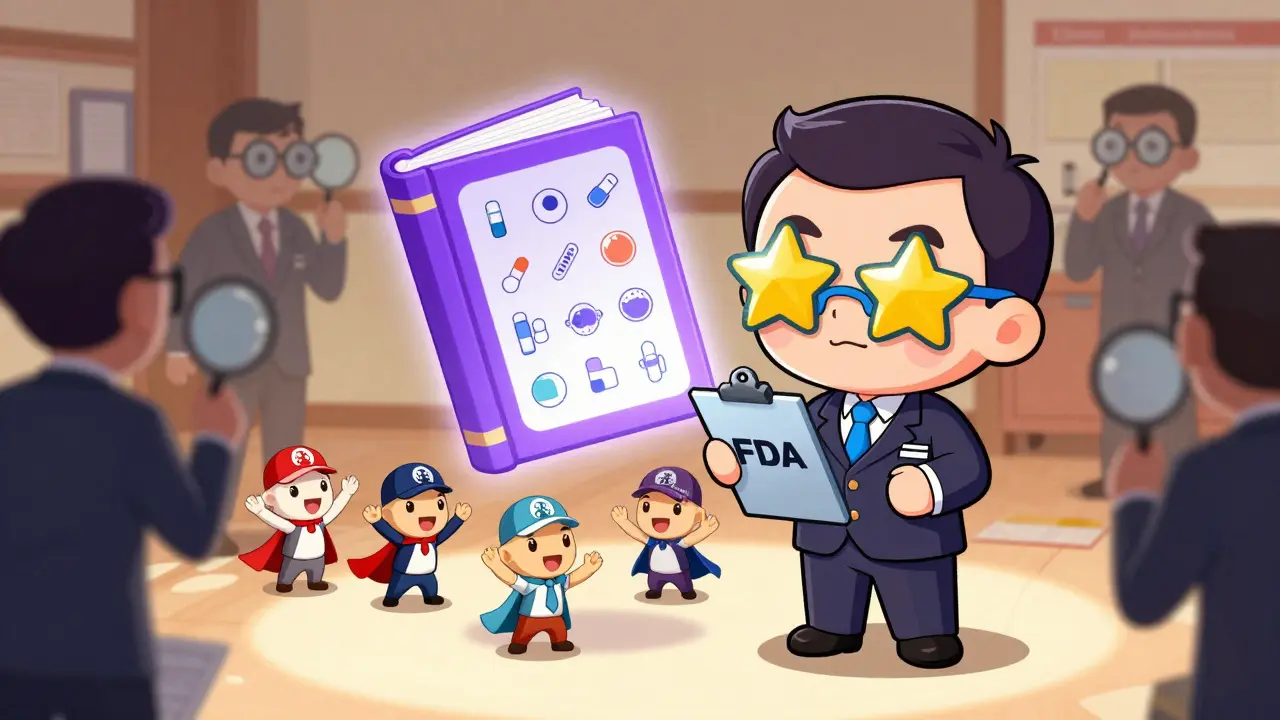
The Purple Book: The Official FDA Listing
There’s no public “approved drugs” list for biologics like there is for small-molecule drugs. Instead, the FDA maintains the Purple Book. It’s the official database of all licensed biologics, including reference products and their biosimilars. As of October 2025, it lists 387 reference biologics and 43 approved biosimilars.
Each entry includes the approval date, manufacturer, and whether the product is designated as “interchangeable.” That’s a special status. It means the FDA has determined you can switch between the biosimilar and the reference drug without any increased risk. Only 17 of the 43 approved biosimilars have this designation so far.
The Purple Book also shows patent information. Since 2021, reference product sponsors must disclose patent details within 30 days of a biosimilar application being filed. This helps prevent endless legal battles that delay market entry. Still, many biosimilars sit on the shelf for years because of lawsuits. Out of the 43 approved, only 29 have actually reached patients.
Interchangeable vs. Non-Interchangeable: What’s the Difference?
Not all biosimilars are created equal. The FDA has two categories: biosimilar and interchangeable.
A biosimilar is approved based on showing it’s highly similar with no clinically meaningful differences. That’s enough for a doctor to prescribe it, and a pharmacist to dispense it-with permission from the prescriber.
An interchangeable biosimilar goes further. It must prove it can be switched back and forth with the reference product without affecting safety or effectiveness. That requires additional data: multiple switching studies, often in patients with chronic conditions like rheumatoid arthritis or Crohn’s disease. The FDA requires evidence that switching doesn’t increase immune reactions or reduce drug performance.
Why does it matter? In some states, pharmacists can automatically substitute an interchangeable biosimilar without telling the doctor. For non-interchangeable ones, they can’t. That’s a big deal for patients who want cost savings without extra paperwork.
Why Are So Few Biosimilars on the Market?
Even though the FDA has approved 43 biosimilars since 2015, only 29 are actually being sold. The rest are stuck in legal limbo. Patent litigation is the biggest blocker. Reference drug makers often file dozens of patents, creating what’s called a “patent thicket.” Developers spend years fighting in court instead of manufacturing drugs.
Cost is another issue. Developing a biosimilar costs $120 million to $180 million-up to 10 times more than a generic. The analytical phase alone takes 10 to 12 months and requires teams of specialists with expertise in advanced lab techniques. Many small companies can’t afford it.
Payers also play a role. Insurance companies sometimes favor the original brand because of rebates or contracts. Even when biosimilars are cheaper, formularies don’t always list them first. In oncology, biosimilars have taken off-65% to 75% market share within 18 months. But in autoimmune diseases like those treated with adalimumab, adoption is slow. By mid-2025, only 28% of prescriptions were for biosimilars, far below the 50% the FDA expected.

What’s Changing in 2025 and Beyond
The FDA is making moves to speed things up. In June 2025, they introduced a new policy allowing indication extrapolation based on analytical data alone-for certain well-characterized proteins. That means if a biosimilar is approved for one condition, it can be used for others without separate trials, as long as the science supports it.
They’re also building AI tools to review analytical data faster. A pilot program launching in early 2026 will use machine learning to flag inconsistencies in chromatograms or mass spec readings. That could cut review times by months.
And they’re working on guidance for complex biosimilars-like antibody-drug conjugates and gene therapies. Only three applications for these advanced products have been submitted so far. None have been approved. The FDA admits this is a gap. Without clear rules, developers don’t know how to prove similarity for these next-generation drugs.
The goal? By 2030, biosimilars will make up 30% of the biologics market, saving $250 billion in cumulative costs. That’s up from the $150 billion projected in 2018. The science is sound. The regulatory path is clear. The challenge now is getting them into patients’ hands.
Real-World Evidence: Are Biosimilars Safe?
Some patients worry: If it’s not identical, is it safe? The data says yes.
The FDA’s Sentinel Initiative tracks adverse events across millions of patients. As of Q3 2025, biosimilars had 0.8 adverse events per 10,000 patients. The reference products? 0.7. That’s statistically the same. No biosimilar has shown a unique safety risk in nearly a decade of post-market surveillance.
Patient advocacy groups like the Cancer Support Community have praised the FDA’s rigor. Kim Thiboldeaux, their executive director, testified in March 2025 that every approved biosimilar has performed just like its reference drug. No surprises. No hidden risks.
That’s the bottom line. The FDA doesn’t just approve biosimilars because they’re cheaper. They approve them because the science proves they work the same way. And for patients who need life-changing treatments-like those for cancer, rheumatoid arthritis, or diabetes-the option to use a biosimilar could mean the difference between starting treatment… and waiting.
Are biosimilars the same as generics?
No. Generics are chemically identical copies of small-molecule drugs, made through chemical synthesis. Biosimilars are highly similar versions of complex biologic drugs made from living cells. Even tiny changes in the manufacturing process can affect their structure and function, so they can’t be identical. The FDA requires much more data to approve a biosimilar than a generic.
What is the FDA Purple Book?
The Purple Book is the FDA’s official list of all licensed biologics, including reference products and their biosimilars. It includes approval dates, manufacturers, patent information, and whether a biosimilar is designated as interchangeable. It was updated in 2021 to include more transparency around patents and exclusivity periods.
What does "interchangeable" mean for a biosimilar?
An interchangeable biosimilar has been proven to produce the same clinical result as the reference product in any patient, and switching between them doesn’t increase safety risks. Pharmacists can substitute an interchangeable biosimilar without needing the prescriber’s permission, just like they can with generics. Only 17 of the 43 FDA-approved biosimilars have this status as of 2025.
Why are biosimilars so expensive to develop?
Biosimilars require complex analytical testing-up to 300 quality attributes measured with advanced techniques like mass spectrometry and chromatography. This phase alone costs $120-180 million and takes 10-12 months. Manufacturing living cell cultures is also far more complex than synthesizing pills. Plus, patent litigation can delay market entry for years, adding to the cost.
Can a biosimilar be used for all the same conditions as the reference drug?
Not always. In the past, developers had to run separate clinical trials for each condition. Now, under FDA guidance updated in June 2025, biosimilars can be approved for additional indications based on strong analytical data alone-if the mechanism of action is the same. This is called extrapolation. But for complex molecules like antibody-drug conjugates, full clinical data is still required.
How long does it take to get a biosimilar approved by the FDA?
The median time from IND submission to approval is 3.2 years in the U.S., compared to 2.1 years in Europe. This is because the FDA requires more extensive analytical data than other agencies. However, the 2024 guidance changes have reduced the need for clinical trials, and approval times are expected to drop to around 2.5 years by 2027.
Are biosimilars safe for long-term use?
Yes. Since the first biosimilar was approved in 2015, the FDA has monitored over 9 years of real-world use. Adverse event rates are statistically identical to reference products-0.8 per 10,000 patients for biosimilars versus 0.7 for the originals. No unique safety risks have been found. Patient advocacy groups and clinical studies both confirm their safety profile.
David Chase
December 30, 2025 AT 04:11Nicole K.
December 31, 2025 AT 16:12Aliza Efraimov
January 1, 2026 AT 07:24Nisha Marwaha
January 2, 2026 AT 20:39Paige Shipe
January 3, 2026 AT 17:15Tamar Dunlop
January 4, 2026 AT 13:58Emma Duquemin
January 6, 2026 AT 08:12Kevin Lopez
January 7, 2026 AT 13:15