 by
by FDA Orange Book: Where to Find Patent Expiration Dates for Generic Drug Access
19 Dec, 2025The FDA Orange Book is the single most important public resource for figuring out when a brand-name drug’s patent protection ends and generic versions can legally hit the market. If you’re a pharmacist, a generic drug manufacturer, a patient waiting for a cheaper option, or even a researcher tracking drug pricing trends, knowing where to find these expiration dates isn’t just helpful-it’s essential.
What Is the FDA Orange Book?
The FDA Orange Book, officially called Approved Drug Products with Therapeutic Equivalence Evaluations, has been around since 1985. It was created by the Hatch-Waxman Act to balance innovation and access. Brand-name companies get patent protection and market exclusivity to recoup R&D costs. Generic companies need clear timelines to develop and launch cheaper versions. The Orange Book is the official list that connects those dots. It doesn’t just list drugs. It lists every approved small-molecule drug in the U.S.-over 20,000 as of 2025-and ties each one to its patents and exclusivity periods. You won’t find biologics like insulin or monoclonal antibodies here; those are tracked separately. But for common pills, injections, and tablets, this is where the patent clock ticks.Where to Find Patent Expiration Dates
The easiest way to find a patent expiration date is through the Electronic Orange Book on the FDA’s website. Here’s how to do it step by step:- Go to the Electronic Orange Book.
- Search using the drug’s brand name, active ingredient, or application number. For example, type in “Brilinta” or “ticagrelor.”
- Click on the Application Number next to the drug you’re looking for.
- On the next page, scroll down and click View under the “Patents and Exclusivity” section.
- You’ll see a list of patents, each with a patent number, expiration date, and a use code (like U-123).
What the Data Actually Means
Don’t assume the expiration date means a generic can launch immediately. There are three things to check:- Patent Expiration: The legal end of the patent’s protection.
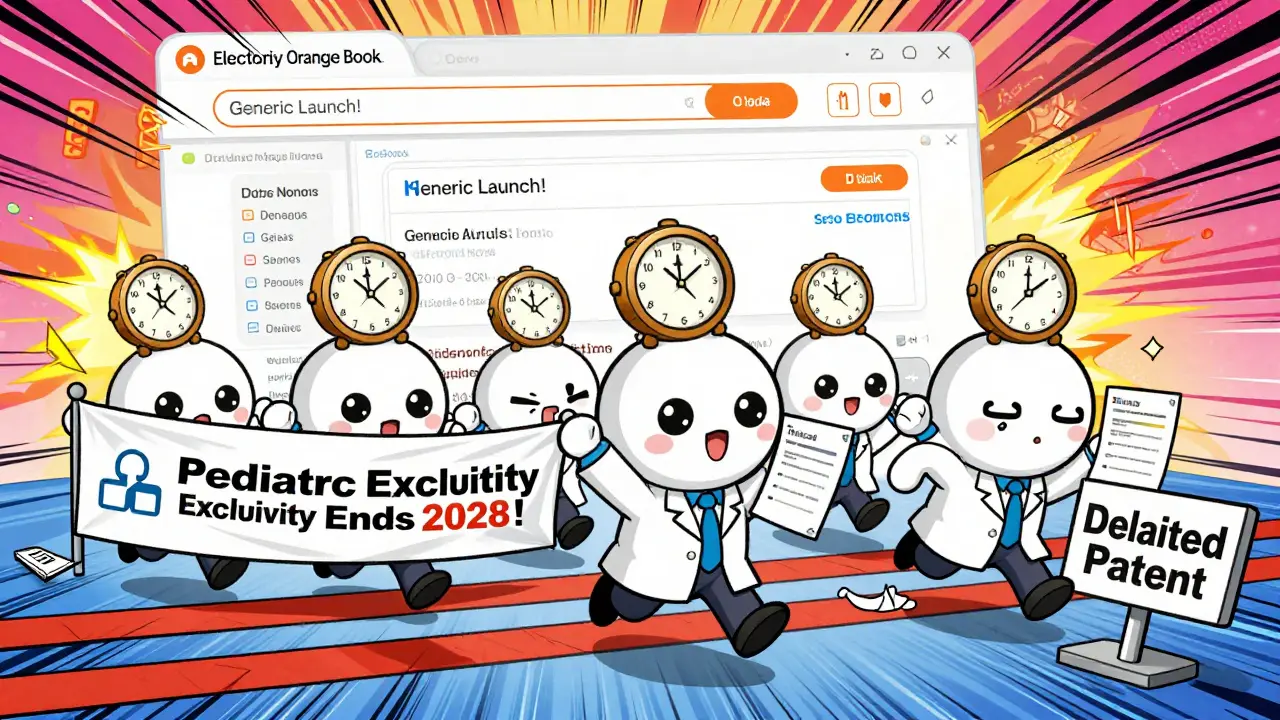
- Exclusivity Period: A separate FDA-granted period that blocks generics even if the patent is gone. This could be 3 years for new clinical data, 5 years for a new chemical entity, or 6 months for pediatric studies.
- Delisting Flag: If the patent owner requested removal (marked “Y”), it may mean the patent was invalidated or is no longer enforced.
The Orange Book shows this clearly: if pediatric exclusivity applies, the same patent appears twice-once with the original date and once with the 6-month extension added. This trips up many users. Always check both lines.
Download the Data for Bulk Analysis
If you’re tracking dozens of drugs or building a database, the web interface won’t cut it. The FDA offers daily-updated data files you can download for free: These files are in CSV and TXT formats. Key columns include:- Patent Expiration: The exact date the patent ends.
- Patent No: The U.S. Patent and Trademark Office number.
- Patent Use Code: A code like U-123 that tells you what the patent covers (e.g., treating hypertension, not just the molecule itself).
- Drug Substance Flag: “Y” means the patent covers the active ingredient, not just the pill shape or coating.
- Delist Requested Flag: “Y” means the company asked to remove the patent.
Why the Dates Can Be Wrong
The Orange Book is authoritative-but not perfect. A 2023 study by the National Bureau of Economic Research (NBER) found that 10% of patent dates in the Orange Book had discrepancies with the USPTO database. Why?- Early expirations: Patent holders sometimes stop paying maintenance fees. The patent dies early, but the FDA doesn’t update the Orange Book retroactively. About 46% of patents expire early due to this.
- Delisting delays: If a patent is invalidated in court, the company may not request delisting right away.
- Human error: Companies submit patent info using FDA Form 3542. Mistakes happen.
Patent Use Codes: What They Really Tell You
A patent doesn’t protect the whole drug. It protects a specific use. That’s why use codes matter. For example, a drug might have three patents:- One for the molecule (covers all uses)
- One for treating high blood pressure
- One for treating heart failure
What Happens After the Patent Expires?
Once the last patent and exclusivity period ends, generic manufacturers can file an Abbreviated New Drug Application (ANDA). The first one to file with a “Paragraph IV” certification (challenging a patent) gets 180 days of exclusivity. That’s why so many companies race to be first. But here’s the catch: even if the Orange Book says a patent expires on June 1, 2026, the generic might not be on shelves until July or August. Manufacturing, FDA review, and distribution take time. Always plan for a 30-90 day lag.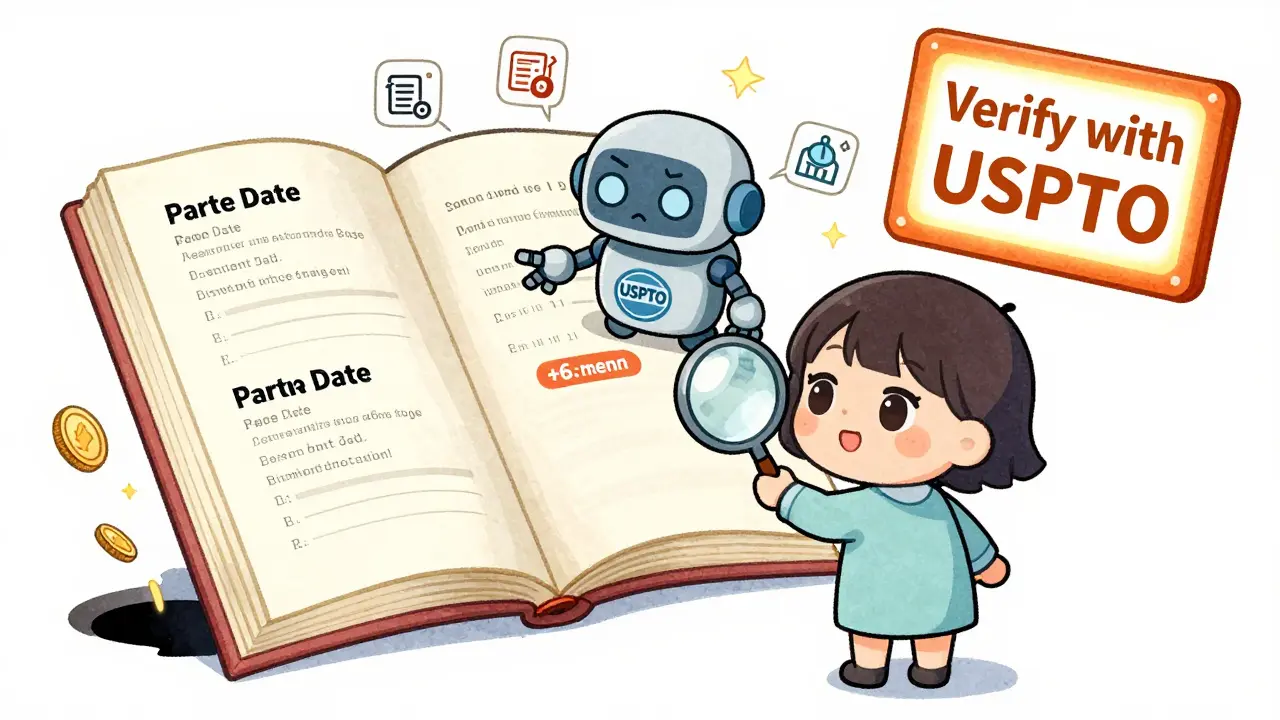
How to Stay Updated
The FDA updates the Orange Book daily. But you don’t have to check manually.- Subscribe to the FDA’s data file notifications-they email you when files are updated.
- Use third-party tools like Drug Patent Watch or LexisNexis PatentSight, which track Orange Book changes in real time and flag delistings.
- Set up Google Alerts for “FDA Orange Book [drug name]” to catch news about patent challenges or delistings.
Common Mistakes to Avoid
- Confusing exclusivity with patents: Exclusivity can outlast a patent. Always check both.
- Ignoring delistings: If a patent is removed, it’s often because it’s no longer enforceable. That’s a green light for generics.
- Assuming all patents are equal: Only patents claiming the active ingredient (Drug Substance Flag = Y) block generics. Formulation patents don’t.
- Not checking the USPTO: The FDA doesn’t update for early expirations. You need to verify.
Why This Matters in 2025
By 2025, 78% of brand-name drug revenue will face generic competition, according to Evaluate Pharma. That means more people are watching the Orange Book than ever before. For patients, it means cheaper meds are coming. For pharmacies, it means stocking more generics. For manufacturers, it’s a race against time. For regulators, it’s about transparency and fairness. The Orange Book isn’t perfect, but it’s the only public source that ties patents to real drugs. If you understand how to read it, you’re not just tracking dates-you’re tracking access to medicine.Where can I find patent expiration dates for FDA-approved drugs?
Patent expiration dates for FDA-approved drugs are listed in the Electronic Orange Book, available at https://www.accessdata.fda.gov/scripts/cder/ob/index.cfm. Search by drug name or application number, then click "View" under the Patents and Exclusivity section to see the exact expiration dates for each patent.
Do patent expiration dates in the Orange Book include extensions?
Yes. The expiration dates shown in the Orange Book include Patent Term Extensions (PTE) granted by the FDA under 35 U.S.C. 156. These extensions make up for time lost during the FDA’s review process. The date you see is the final, legally effective expiration date, not the original patent filing date.
Can a generic drug launch immediately after a patent expires?
Not always. Even after a patent expires, other protections may still block generics. These include regulatory exclusivities like 5-year new chemical entity exclusivity or 6-month pediatric exclusivity. The generic can only launch after the latest of all applicable patents and exclusivity periods ends.
Why are some patent expiration dates missing or incorrect in the Orange Book?
The Orange Book doesn’t retroactively update for patents that expire early due to unpaid maintenance fees. About 46% of patents expire early this way, but the FDA doesn’t remove them from the database. Also, companies sometimes submit incorrect data. Always verify critical dates with the USPTO Patent Center.
What’s the difference between a patent and exclusivity in the Orange Book?
A patent is a legal right granted by the USPTO to protect an invention, like a drug compound or method of use. Exclusivity is a regulatory protection granted by the FDA, independent of patents, to encourage innovation-for example, 5 years for a new chemical entity or 3 years for new clinical data. They can overlap, run separately, or expire at different times.
How do I know if a patent covers the active ingredient or just the formulation?
Look for the "Drug Substance Flag" in the Orange Book data files. If it says "Y," the patent covers the active ingredient itself. If it’s blank, the patent likely covers only the pill’s shape, coating, or delivery method-these don’t block generic versions of the same active ingredient.
Chris Clark
December 21, 2025 AT 08:58Just used the Orange Book for the first time last week to check when my meds go generic. Took me 20 minutes to figure out the difference between patent and exclusivity. Glad I didn’t give up. Now I feel like a drug detective 🕵️♂️
Nancy Kou
December 22, 2025 AT 05:09This is the most useful thing I’ve read all month. I work in pharmacy and we get asked daily when generics will be available. Now I can point people to the exact source instead of guessing. Thank you.
Janelle Moore
December 22, 2025 AT 06:22Did you know the FDA is hiding some patents on purpose? They’re in cahoots with Big Pharma to keep prices high. I checked USPTO and three of the dates here were wrong by over a year. They don’t want you to know how easy it is to bypass this system.
Henry Marcus
December 23, 2025 AT 17:54Ohhhhh, so THAT’S why my prescription cost $400 last month?!?!?!!? The Orange Book says the patent expired in 2023… but the pharmacy says ‘nope, still under exclusivity’-and now I see why. It’s a trap. A legal, bureaucratic, profit-driven trap. They’re playing chess with our health. And we’re the pawns.
Frank Drewery
December 25, 2025 AT 17:26Thanks for breaking this down so clearly. I’ve been trying to understand this for my dad’s meds-he’s on a $500/month drug and I’ve been hoping a generic will come soon. This gives me a real path to follow now.
Ryan van Leent
December 27, 2025 AT 05:54Why are we even using this? Just go to the USPTO. The Orange Book is a mess. Half the time the data’s outdated. I’ve wasted hours on this. If you’re serious, skip the FDA and go straight to the source. No fluff.
Sajith Shams
December 28, 2025 AT 19:05You people are overcomplicating this. Just look at the patent number and search USPTO. The Orange Book is a joke. I’ve tracked 14 drugs this year. Only 3 had correct dates. The FDA doesn’t care. They’re slow. Lazy. You want accuracy? Do the work yourself.
Adrienne Dagg
December 29, 2025 AT 21:30OMG this is so helpful!! 😍 I just used it to check my anxiety med-patent expires next year!! I’m already saving for the generic version. Also, the use code thing? Mind blown. 🤯
Chris Davidson
December 30, 2025 AT 07:51The Orange Book is an official document. It is not infallible. It is not a substitute for due diligence. The data provided is accurate as submitted. Users must verify independently. That is the standard.
Glen Arreglo
December 31, 2025 AT 14:40Appreciate the clarity. I’ve been in generic manufacturing for 12 years. The Orange Book is our bible-but we always cross-check with USPTO and court records. If you’re not doing that, you’re gambling with lawsuits. Don’t be that guy.
benchidelle rivera
December 31, 2025 AT 22:45If you’re a patient or caregiver, this is your roadmap to affordable care. Don’t let the complexity scare you. Bookmark this. Print it. Share it. Knowledge is power-and cheaper medicine is a human right.
holly Sinclair
January 1, 2026 AT 15:20It’s fascinating how a simple database like this becomes a battleground for ethics, capitalism, and public health. The Orange Book isn’t just a list of dates-it’s a reflection of how society values innovation versus access. Who gets to decide when a life-saving drug becomes affordable? Is it the patent holder? The FDA? The courts? Or is it the patient who can’t afford their medication? The system pretends to be neutral, but every patent extension, every delisting delay, every use code hides a decision about who lives and who suffers. We call it transparency, but it’s really just a very complicated gatekeeping mechanism dressed in bureaucratic clothing.
Monte Pareek
January 1, 2026 AT 23:10Man I’ve been using this for years and still get tripped up by the exclusivity vs patent thing. The key is to always look at the end date of the last blocker-not just the patent. And if you’re building a tool or doing research, download the CSV. The web interface is a relic. Also-don’t forget the 180-day exclusivity for first filers. That’s why you see 5 generics drop on the same day. They’re all racing for that prize. Pro tip: set up a spreadsheet with expiration + exclusivity + delist flag. You’ll thank me later.