 by
by Generic Drug Contamination Risks: Prevention and Response
23 Mar, 2026When you pick up a generic pill at the pharmacy, you expect it to work just like the brand-name version. But what if that pill isn’t just ineffective-it’s unsafe? Generic drugs make up 90% of all prescriptions filled in the U.S., and while they’re legally required to meet the same standards as brand-name drugs, contamination risks are rising. These aren’t rare glitches. They’re systemic issues tied to global supply chains, aging factories, and cost-cutting pressures that leave patients exposed to unseen dangers.
What Exactly Is Drug Contamination?
Contamination in generic drugs means unwanted substances end up in the medicine. This could be chemical residues from previous batches, harmful microbes like bacteria or mold, or even foreign particles like metal shavings or dust. The FDA defines it as the "undesired introduction of impurities" into a drug during manufacturing. These impurities don’t always show up on the label. You can’t see them. You can’t smell them. But they can make you sick.For example, in 2018, a contamination crisis hit the blood pressure medication valsartan. A chemical called NDMA, a known carcinogen, was found in generic versions made in India. Over 2,000 recalls followed. Patients who took these pills for months unknowingly exposed themselves to cancer-causing agents. This wasn’t an accident. It was a failure in cleaning protocols and quality control.
Where Does Contamination Come From?
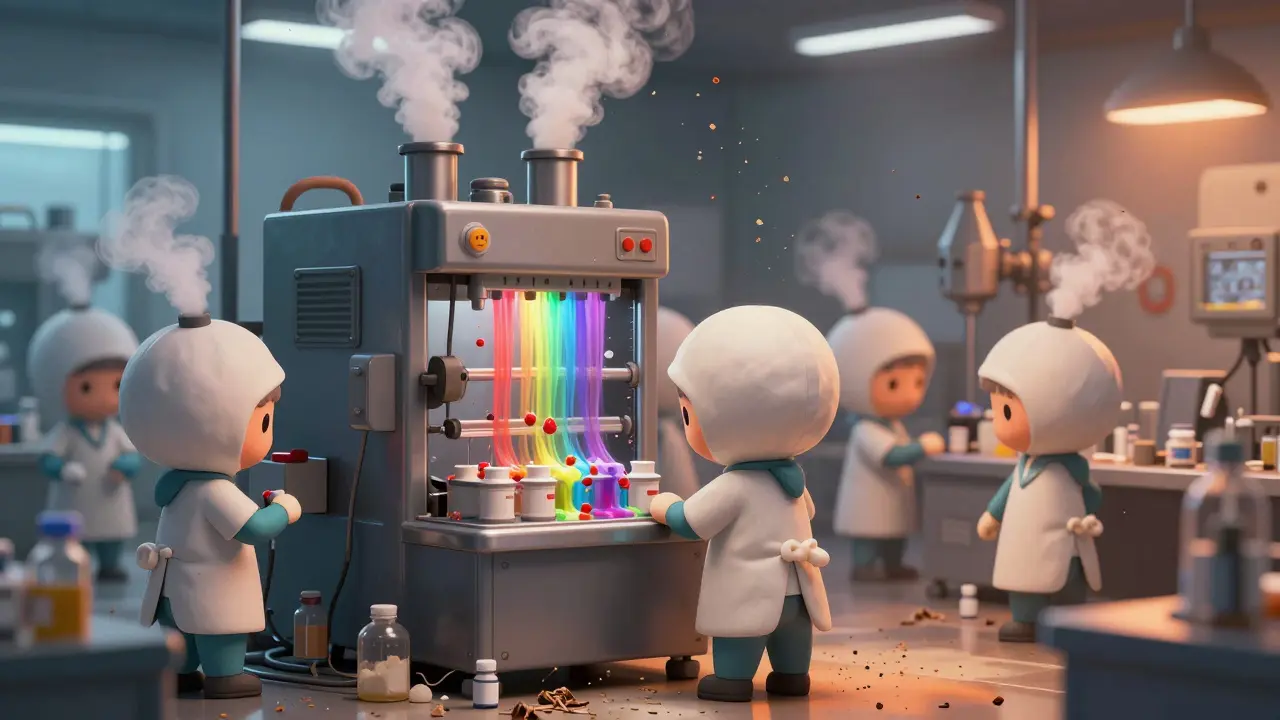
Most generic drugs aren’t made in the U.S. About 80% of the active ingredients come from just two countries: India and China. These facilities often serve multiple clients, producing dozens of different drugs on the same lines. That’s where cross-contamination happens.Imagine a machine that makes metronidazole one day, then amoxicillin the next without a proper clean. Residue from the first drug can stick to surfaces, mix with the next batch, and end up in your pill bottle. The FDA says this accounts for 37% of all contamination-related recalls involving generics.
Human error is another big source. Workers in cleanrooms shed around 40,000 skin cells per minute. A single person moving around can release over 100,000 particles into the air. If they don’t gown properly-or if the facility’s air filtration is outdated-those particles become contamination. Even something as simple as piercing a vial with a needle can introduce microbes. Studies show that 62% of contamination incidents in pharmacies involve this exact step.
Older factories are especially risky. Facilities built before 2000 have 34% higher contamination rates than newer ones. Many lack modern isolation systems, air pressure controls, or automated cleaning. They rely on manual swabs and visual checks-methods that miss invisible threats.
Why Are Generics More Vulnerable?
Brand-name drugmakers often have deeper pockets. Their profit margins average 60-70%. Generic manufacturers? 20-25%. That difference changes everything.When every dollar counts, companies cut corners. They delay facility upgrades. They skip extra testing. They stretch cleaning cycles. The FDA’s 2022 inspection data shows 8.3% of generic facilities had contamination-related violations, compared to just 5.1% for brand-name ones. In India, that number jumps to 12.7%.
But not all generics are risky. Some manufacturers, like Teva in Italy and Mylan in West Virginia, invested millions in closed-system production lines and real-time air monitoring. Teva cut contamination incidents by 78% between 2018 and 2022. Mylan slashed them by 82%. The difference? Technology, training, and accountability.
How Are Contaminants Detected?
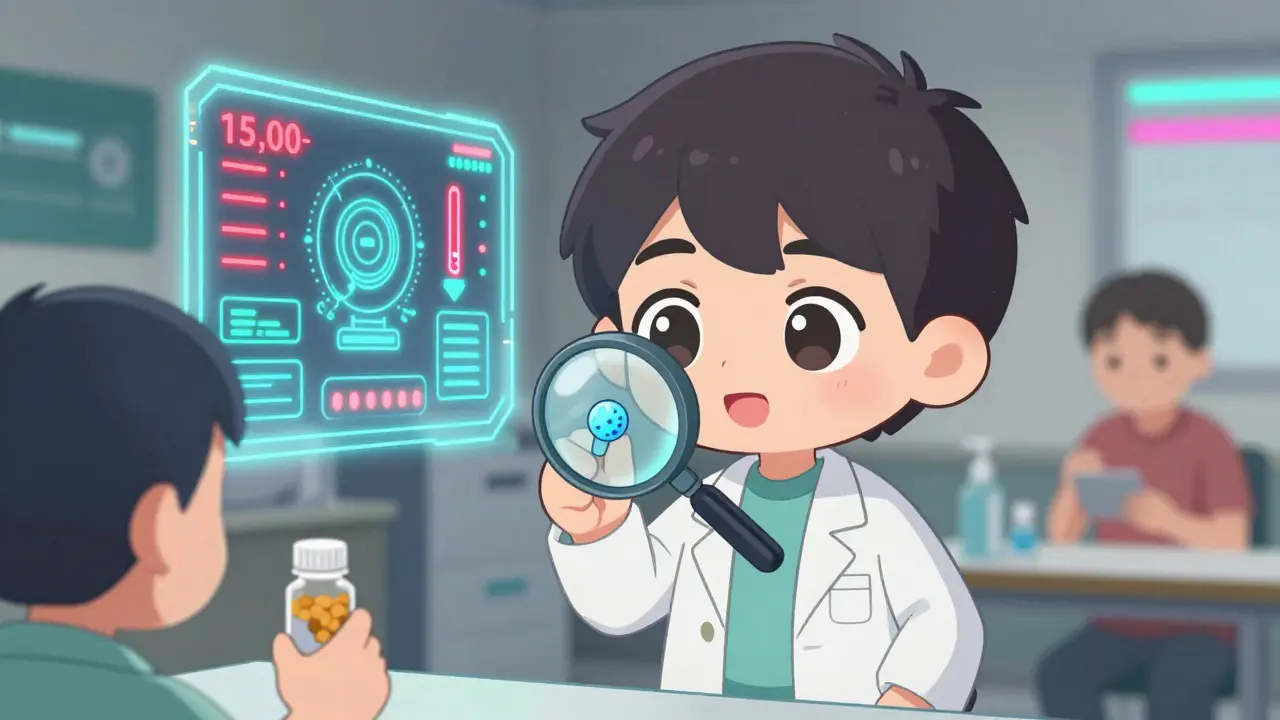
Traditionally, labs had to wait 7 days to confirm microbial contamination. That’s because they had to grow cultures in petri dishes. Today, some manufacturers use rapid microbiological methods that give results in 4 hours. These systems detect microbes using light, sensors, or DNA markers instead of waiting for them to multiply.By 2022, 63% of top generic manufacturers had adopted these faster tests. But many smaller plants still use old methods. That delay means contaminated batches can be shipped out before anyone knows they’re unsafe.
The FDA also uses swab tests to check for chemical residue. The rule? No more than 10 parts per million (ppm) of leftover drug from the previous batch. But experts like Dr. Michael Kopcha argue that’s not enough for potent drugs. A tiny amount of a cancer drug residue in a painkiller could be deadly. He says acceptance limits should be tailored to each drug-not one-size-fits-all.
What Happens When Contamination Is Found?
Once contamination is confirmed, manufacturers must report it to the FDA through the MedWatch system. The agency then decides whether to issue a recall. In 2022, 22% of all drug recalls were due to contamination-and nearly 4 out of 10 of those involved generics.Recalls aren’t quick. They can take weeks to organize. Patients might not even know they took a contaminated product. That’s why the FDA’s new PREDICT system is a game-changer. It uses data analytics to flag high-risk shipments before they even reach U.S. ports. In early 2023, it caught 37% more suspicious imports than the old system.
Still, the FDA inspects fewer than 1% of imported drug products. That means most contamination slips through. Pharmacists on the front lines often spot problems first. One pharmacist on Reddit reported finding blue specks in generic metronidazole tablets. Lab tests later confirmed copper contamination. Another patient developed severe skin burns from a contaminated hydrocortisone cream. These stories aren’t rare. A 2022 survey by the American Society of Health-System Pharmacists found that 28% of hospital pharmacists had encountered suspicious generics-and 14% of those cases led to patient harm.
How Can You Protect Yourself?
You can’t test your pills at home. But you can take smart steps:- Check for recalls. Visit the FDA’s website monthly. Sign up for email alerts on drug recalls.
- Ask your pharmacist. If a generic looks different-color, shape, markings-ask if it’s the same batch. Some pharmacies switch suppliers without telling you.
- Report suspicious reactions. If you feel worse after starting a new generic, tell your doctor. File a report with MedWatch. Your report could help catch a pattern.
- Know your manufacturer. Some companies consistently have better records. Ask your pharmacist which brand made your generic. Look up its inspection history on the FDA’s website.
There’s also a growing movement for transparency. Some pharmacies now list the manufacturer name on the prescription label. If yours doesn’t, ask why.
The Future: Better Systems, Fewer Risks
The FDA is moving fast. By 2024, it plans to roll out AI-powered monitoring systems that track 15,000+ data points per facility-from air flow to worker movement to temperature changes. These systems predict contamination before it happens, with 89% accuracy.Regulations are tightening too. Since January 2023, all sartan-class drugs (blood pressure meds) must be tested for nitrosamines. USP has updated its disinfection rules to require sporicidal cleaners in all sterile manufacturing areas. And manufacturers using rapid testing methods are now being prioritized for faster FDA approvals.
Experts predict contamination-related recalls will drop by 40% by 2027. But that doesn’t mean the risk disappears. Global supply chains are still fragile. Workers still shed skin cells. Factories still get old. Prevention isn’t optional-it’s essential.
What’s Missing From the System?
The biggest gap? Transparency. Independent pharmacists say they lack the tools to test drugs themselves. 63% of them told a 2022 survey they can’t verify if a generic is safe. Hospitals can’t afford to test every batch. Patients have no way to know what’s in their pills.Dr. Scott Gottlieb, former FDA commissioner, put it bluntly: "The globalization of pharmaceutical supply chains has created contamination risks that outpace our current inspection capabilities." We’re relying on a system designed for a time when drugs were made locally, not shipped across oceans.
Until we demand better oversight, stricter inspections, and full transparency, the burden falls on patients and pharmacists to spot what regulators can’t.
Can generic drugs be as safe as brand-name drugs?
Yes, generic drugs are required by law to meet the same quality, strength, and purity standards as brand-name drugs. The FDA mandates that generics contain the same active ingredient, dosage, and route of administration. However, contamination risks are higher in generics due to cost pressures, older facilities, and complex global supply chains. While most generics are safe, the frequency of contamination-related recalls is significantly higher than for brand-name drugs.
How do I know if my generic drug is contaminated?
You won’t be able to tell just by looking. Contaminants like chemicals or microbes are invisible. Signs may include unusual odors, discoloration, or unexpected side effects after starting a new generic. If your medication looks different than before-different color, shape, or markings-ask your pharmacist. Report any unusual reactions to your doctor and file a report with the FDA’s MedWatch system.
Are all generic drugs made in India or China?
No, but the majority are. About 80% of the active ingredients in U.S. generic drugs come from India and China. However, some generics are manufactured in the U.S., Europe, and other countries. Facilities in the U.S. and EU generally have stricter oversight and newer infrastructure, which reduces contamination risk. You can often find out where your drug was made by asking your pharmacist or checking the manufacturer’s name on the label.
Why do contamination issues happen more often in generics?
Generics are produced with much thinner profit margins-around 20-25% compared to 60-70% for brand-name drugs. This leads to cost-cutting in areas like facility upgrades, staff training, and quality testing. Older factories, shared production lines, and less rigorous cleaning protocols increase contamination risk. FDA inspection data shows generic facilities have nearly twice the rate of contamination-related violations compared to brand-name manufacturers.
What should I do if I think my medication is contaminated?
Stop taking the medication immediately. Contact your pharmacist or doctor to confirm whether the batch has been recalled. Save the bottle and any packaging. File a report with the FDA’s MedWatch system at fda.gov/medwatch. Your report helps regulators identify patterns and take action. If you experience symptoms like rash, nausea, dizziness, or worsening of your condition, seek medical care right away.
Danielle Arnold
March 23, 2026 AT 19:36And the FDA inspects less than 1% of imports? That’s not oversight, that’s a game of Russian roulette with my blood pressure meds.
James Moreau
March 24, 2026 AT 05:14J. Murphy
March 26, 2026 AT 00:54Jesse Hall
March 26, 2026 AT 08:40And props to Teva and Mylan for stepping up. We need to support the good ones, not just scream at the bad ones. Maybe we can start a subreddit to crowdsource which generics are actually safe? I’d donate my time to help.
Sean Bechtelheimer
March 27, 2026 AT 20:38Also, your phone listens to you. Always.
Seth Eugenne
March 29, 2026 AT 06:48Don’t panic, but stay informed. Ask your pharmacist. Report weird stuff. You’re not being paranoid - you’re being smart. 💙
Namrata Goyal
March 30, 2026 AT 12:21Alex Arcilla
March 31, 2026 AT 03:46And now I’m gonna go check the label on my metformin. If it says 'Made in India' again, I’m switching to herbal tea and hope for the best. 🤷♂️
Brandon Shatley
April 1, 2026 AT 11:16Anyway, I’m gonna start asking my pharmacist where it’s made. Thanks for the info. Really helpful.