
 by
by Goiter: Understanding Thyroid Enlargement and the Role of Iodine Supplementation
26 Jan, 2026When your neck starts to swell, it’s not always just weight gain or a tight collar. A visible lump at the base of your throat could be a goiter - an enlarged thyroid gland. It’s more common than most people think, especially in women over 40, and often goes unnoticed until it’s big enough to feel or see. The good news? In many cases, it’s simple to fix - especially if it’s caused by something as basic as not getting enough iodine.
What Exactly Is a Goiter?
A goiter isn’t a disease on its own. It’s a sign that something’s off with your thyroid - the butterfly-shaped gland tucked under your Adam’s apple. This gland makes hormones that control your metabolism, energy, temperature, and even your heart rate. When it gets bigger than normal - usually over 25 mL in volume - it’s called a goiter. In healthy adults, the thyroid weighs about 15 to 20 grams. In goiter cases, it can balloon to 50, 80, even 100 grams. That’s like adding a small plum to your neck.
You might notice it when your shirt collar feels tighter, when you cough more than usual, or when swallowing feels like it’s catching. In severe cases, it can press on your windpipe or voice box, making breathing or speaking harder. But many people have small goiters and never feel a thing. That’s why it’s often found during a routine checkup or a selfie that catches an odd bulge.
Why Does the Thyroid Swell?
The biggest cause of goiter worldwide? Iodine deficiency. Around 90% of cases in places without iodized salt are due to not getting enough iodine in your diet. The thyroid needs iodine to make its hormones. If it doesn’t get enough, it grows bigger trying to trap more iodine from the blood - like a plant stretching toward the sun.
In the U.S., where iodized salt has been standard since the 1920s, iodine deficiency is rare. Instead, the main culprits are autoimmune conditions. Hashimoto’s thyroiditis - where your immune system attacks your thyroid - is the #1 cause here. It slowly destroys the gland, leading to hypothyroidism and often a goiter. Another common cause is Graves’ disease, where the thyroid gets overstimulated and grows too large, sometimes producing too much hormone (toxic goiter).
Other reasons include thyroid nodules, inflammation from infections, or even certain medications. But if you’re eating a standard American diet, chances are if you have a goiter, it’s tied to Hashimoto’s - not lack of iodine.
How Much Iodine Do You Really Need?
The American Thyroid Association says adults need 150 micrograms (mcg) of iodine daily. Pregnant women need 220 mcg, and breastfeeding moms need 290 mcg. That’s not a lot - about one teaspoon of iodized salt contains 45 mcg. So, if you use iodized salt regularly, you’re likely covered.
But here’s the catch: not everyone uses iodized salt. Some people switch to sea salt, Himalayan salt, or kosher salt - none of which are iodized. Others cut back on salt entirely for health reasons. That’s where the risk creeps in. In Australia, where you’re reading this, iodized salt is widely available, but many people still don’t get enough because they rely on processed foods that use non-iodized salt.
Supplements can help. For someone with an iodine-deficient goiter, taking 150 mcg of iodine daily - often as potassium iodide - can shrink the gland by 30% to 40% in 6 to 12 months. It’s not magic, but it’s effective. The World Health Organization recommends 90-150 mcg daily for children and 150-250 mcg for adults in areas where iodine is scarce. In the U.S., most multivitamins include 150 mcg - just check the label.
Supplements Alone Won’t Fix Everything
If you have a goiter and start taking iodine, you might feel better - but only if iodine deficiency is the real cause. If your goiter is from Hashimoto’s, extra iodine won’t help. In fact, it might make things worse. Too much iodine can trigger or worsen autoimmune thyroid disease in people who are genetically prone to it.
A 2021 Cochrane Review looked at over 20 studies on selenium and iodine for goiter. It found no strong evidence that selenium reduces goiter size. Some European guidelines suggest it might help in specific autoimmune cases, but it’s not a standard recommendation. Don’t waste money on selenium pills unless your doctor says so.
The same goes for kelp supplements or seaweed snacks. They’re packed with iodine - sometimes way too much. One sheet of nori can have 16-43 mcg, but a single kelp capsule might contain 500-2,000 mcg. That’s 3-13 times your daily need. Too much iodine can cause thyroid dysfunction, including hyperthyroidism or even goiter. More isn’t better.

How Is a Goiter Diagnosed?
If you suspect a goiter, your doctor will likely start with a physical exam - feeling your neck while you swallow. Then they’ll order a blood test to check your thyroid hormone levels (TSH, T3, T4) and antibodies (like TPO) to see if it’s autoimmune. An ultrasound gives a clear picture of the size and structure of the gland. It can spot nodules, which are common in goiters and need monitoring.
In some cases, a radioactive iodine uptake scan or fine-needle biopsy might be needed, especially if nodules are large or irregular. The goal isn’t just to shrink the goiter - it’s to find out why it’s there.
Treatment Options - What Actually Works?
Treatment depends entirely on the cause.
- Iodine-deficient goiter: 150 mcg iodine daily. Results: 70-85% shrinkage within 1-2 years.
- Hashimoto’s with hypothyroidism: Levothyroxine (synthetic T4). Dose: 1.6 mcg per kg of body weight. It fixes hormone levels, but the goiter shrinks only 10-20% because scar tissue forms.
- Graves’ disease (toxic goiter): Antithyroid drugs like methimazole (5-30 mg daily). Shrinks goiter by 40-60% in 12-18 months.
- Large or compressive goiter: Surgery (thyroidectomy). Removes 30-40 grams of tissue. Usually done when the gland is over 80-100 mL or causes breathing/swallowing issues.
- Toxic goiter not responding to drugs: Radioactive iodine (5-15 mCi). Shrinks gland by 50-60%, but 75-80% of patients end up with permanent hypothyroidism and need lifelong medication.
Most people with small, non-toxic goiters don’t need treatment at all - just monitoring. But if it’s growing or causing symptoms, don’t wait. Early action prevents complications.
Who’s at Risk?
Women are 3 times more likely than men to develop goiter. After age 40, the risk goes up for everyone. If you have a family history of thyroid disease, autoimmune disorders like lupus or type 1 diabetes, or live in a region with low soil iodine (mountainous areas, inland regions far from the sea), you’re at higher risk.
Pregnant women are especially vulnerable. Iodine needs jump during pregnancy, and even mild deficiency can affect fetal brain development. That’s why prenatal vitamins in the U.S. and Australia now include iodine - but not all do. Always check the label.
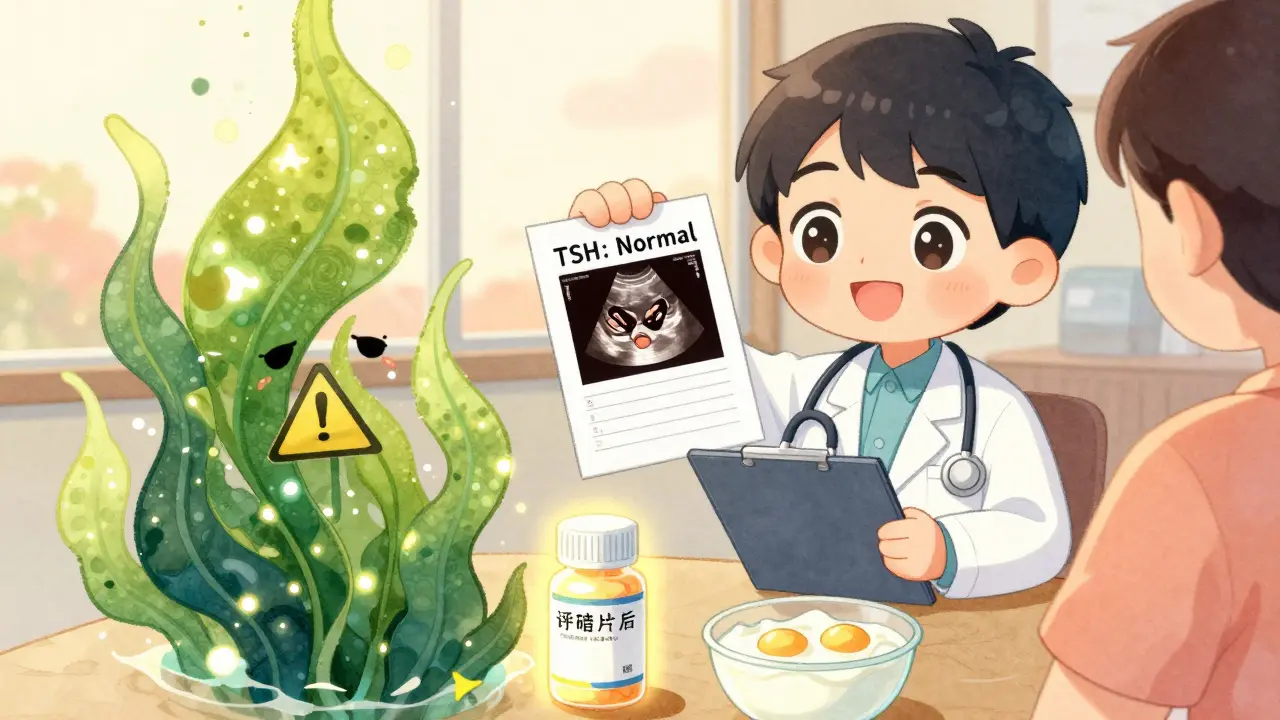
What About Diet?
Food sources of iodine include:
- Iodized salt (most reliable source)
- Dairy products (milk, yogurt, cheese - iodine comes from sanitizing equipment)
- Eggs
- Seafood (cod, shrimp, seaweed - but seaweed can be too high)
- Fortified bread (in some countries)
Cruciferous vegetables - broccoli, cabbage, kale - contain goitrogens, compounds that can interfere with iodine uptake. But you’d need to eat pounds of raw crucifers daily to cause a problem. Cooking them reduces the effect. For most people, these foods are fine - even healthy.
When Should You Worry?
Most goiters are harmless. But call your doctor if you notice:
- A visible lump in your neck
- Difficulty swallowing or breathing
- Hoarseness that doesn’t go away
- Rapid weight loss, sweating, or heart palpitations (signs of too much hormone)
- Unexplained fatigue, weight gain, dry skin (signs of too little hormone)
Don’t self-diagnose. A goiter can be a simple fix - or a sign of something more serious. Only a blood test and imaging can tell you which.
The Big Picture
Goiter used to be a global epidemic. In the early 1900s, up to 70% of people in some U.S. regions had it. Then came iodized salt. By 1940, goiter rates dropped by 90%. Today, the World Health Organization says universal salt iodization has cut global goiter cases by half since the 1990s.
Still, 1.9 billion people worldwide remain at risk of iodine deficiency. In Australia, we’re lucky - our salt is iodized, and most processed foods follow the standard. But if you avoid salt, eat only organic or non-iodized products, or follow a strict vegan diet without supplements, you might be slipping through the cracks.
For most people, the answer isn’t complex: use iodized salt, eat dairy and eggs, take a prenatal vitamin with iodine if you’re pregnant, and get your thyroid checked if you’re over 40 - especially if you’re a woman. Simple steps. Big impact.
What’s Next?
Research is ongoing. The NIH’s TRIPOD study, tracking 5,000 people across 10 countries, is looking at genetic links to thyroid size. Early results suggest 37 genes play a role in how big your thyroid gets - even with enough iodine. That means some people are just more prone to goiters, no matter their diet.
The global market for thyroid treatments is growing fast - expected to hit $6.3 billion by 2027. But the real win isn’t in pills or surgery. It’s in prevention. A $0.05 bag of iodized salt can stop a lifetime of thyroid problems.
Can iodine supplements shrink a goiter?
Yes - but only if the goiter is caused by iodine deficiency. In those cases, taking 150 mcg of iodine daily can reduce the size by 30-40% within 6-12 months. If the goiter is due to Hashimoto’s or Graves’ disease, extra iodine won’t help and could make things worse.
Is iodized salt enough to prevent goiter?
For most people, yes. One teaspoon of iodized salt provides about 45 mcg of iodine. The daily requirement is 150 mcg, so using iodized salt in cooking and at the table, along with dairy or eggs, usually covers your needs. If you avoid salt entirely or use non-iodized salts like sea salt, you may need a supplement.
Can eating seaweed help with goiter?
Not reliably - and it can be dangerous. Seaweed, especially kelp, contains very high and unpredictable amounts of iodine - sometimes over 1,000 mcg per gram. That’s far above the safe daily limit. Too much iodine can trigger thyroid dysfunction, including goiter or hyperthyroidism. Stick to iodized salt or a controlled supplement instead.
Do I need to avoid broccoli and cabbage if I have a goiter?
No. These vegetables contain goitrogens, but you’d need to eat several pounds of raw cruciferous veggies daily to affect thyroid function. Cooking reduces goitrogens significantly. For most people, these are healthy foods and safe to eat - even with a goiter.
Is surgery the only option for a large goiter?
No, but it’s often the best option when the goiter is very large (over 80-100 mL) or causing breathing or swallowing problems. Radioactive iodine can shrink toxic goiters, and medications can help with autoimmune causes. Surgery is reserved for cases where other treatments fail or the goiter is physically obstructive. It’s effective but carries risks like voice changes or low calcium levels.
Can goiter be cured completely?
Iodine-deficient goiters can often resolve completely with supplementation - up to 85% of cases improve within 1-2 years. Autoimmune goiters, like those from Hashimoto’s, usually can’t be cured but can be managed with medication. The gland may shrink slightly, but it won’t return to normal size because scar tissue forms. Lifelong monitoring and sometimes hormone replacement are needed.
If you’ve noticed a lump in your neck, don’t panic - but don’t ignore it either. A simple blood test and ultrasound can tell you what’s going on. Most goiters are manageable. The key is catching them early and treating the real cause - not guessing.
Anjula Jyala
January 28, 2026 AT 01:15Goiter isn't just iodine deficiency that's a 1920s myth propagated by pharmaceuticals to sell synthetics
Hashimoto's is autoimmune inflammation driven by gut permeability and molecular mimicry from gluten and lectins
Thyroid tissue expresses HLA-DR antigens under stress that attract autoreactive T cells
Iodine supplementation in autoimmune cases is a trigger not a solution
WHO guidelines ignore genetic predisposition and epigenetic modulation
90% of goiters in the US are autoimmune not dietary
Stop blaming salt and start looking at microbiome dysbiosis
Levothyroxine doesn't fix the root cause it just masks hypothyroidism
Functional medicine knows this but mainstream endocrinology is stuck in the iodized salt paradigm
Check your fecal calprotectin and zonulin levels before reaching for potassium iodide
Thyroid nodules are often a consequence of chronic inflammation not iodine scarcity
Stop treating symptoms and start addressing immune tolerance
Universal salt iodization reduced goiter but increased autoimmune thyroid disease by 300% in 50 years
Correlation isn't causation but the data is screaming at you
It's time to stop the iodine dogma and look at the whole picture
Andrew Clausen
January 28, 2026 AT 01:56The claim that iodized salt reduces goiter by 90% is misleading
The decline began before iodization due to improved nutrition and sanitation
Multiple peer-reviewed studies show no significant correlation between iodized salt adoption and goiter reduction in industrialized nations
The real driver was increased dairy consumption and better food processing
Blaming iodine deficiency for goiter in the US is pseudoscience
Hashimoto's is the dominant cause and iodine supplementation exacerbates it
Don't let outdated public health narratives mislead you
Check your TPO antibodies before taking any iodine supplement
Correlation does not equal causation and this post ignores confounding variables
Kathy McDaniel
January 28, 2026 AT 06:01Wow this was so helpful I just got my thyroid checked last week and was totally freaked out
Now I feel way less scared
Also I started using iodized salt again after reading this
Thanks for breaking it down so clearly
Paul Taylor
January 29, 2026 AT 06:12Let me tell you something about goiters and iodine that nobody else is saying
It's not just about how much iodine you get it's about how your body uses it
Thyroid cells have sodium iodide symporters that regulate uptake
Chronic stress elevates cortisol which suppresses TSH and reduces iodine uptake
So even if you're eating iodized salt if you're constantly overwhelmed your thyroid still starves
And selenium is critical for converting T4 to T3
Most people don't realize that
Also gut health affects thyroid hormone absorption
If you have SIBO or leaky gut your meds won't work even if your labs look good
And don't forget the role of heavy metals
Cadmium and mercury compete with iodine at the receptor sites
So if you're eating a lot of canned fish or living near industrial zones you might be getting poisoned
It's not just about popping a supplement
It's about systemic health
And yes I've seen patients shrink goiters with low iodine and high selenium
It's counterintuitive but it works when the immune system is the real culprit
So don't just follow the mainstream advice
Listen to your body and get the right tests
Because one size does not fit all
astrid cook
January 29, 2026 AT 08:45How can you even recommend iodine supplements when you know how many people are suffering from autoimmune thyroid disease
This is dangerous advice
And you're just going to make people worse
It's irresponsible
I can't believe this is being shared like it's harmless
People are going to take this and ruin their thyroids
And then blame the doctor
When it was this post that pushed them over the edge
I'm so angry right now
April Williams
January 30, 2026 AT 05:37Anyone who thinks iodine is the answer to goiter is either ignorant or pushing a supplement agenda
Hashimoto's is an autoimmune disease
Not a vitamin deficiency
And you're giving people false hope
Then they take iodine
And their thyroid goes haywire
And they end up with Graves' or permanent damage
And you just sit there saying I told you so
But you didn't tell them anything
You just gave them a dangerous suggestion
This is why people lose trust in medical advice
Because it's oversimplified
And you're part of the problem
Harry Henderson
January 31, 2026 AT 13:56Stop being so passive about your thyroid
If you have a goiter you need to act
Not wait for your next checkup
Not hope it goes away
Not trust some random post
Go get a full thyroid panel
Check TSH T4 T3 TPO TGAB
Get an ultrasound
Find out what's really going on
If it's autoimmune then go low carb paleo
If it's iodine deficiency then take 150 mcg
But don't sit around waiting for someone else to fix it
Your thyroid is your responsibility
Take control
Or suffer the consequences
suhail ahmed
February 2, 2026 AT 00:51Back in my village in Punjab we used to eat kelp from the Himalayan streams
Grandma said it kept the women from swelling up
But then came the salt trucks
And everyone switched to iodized
Now the young ones have Hashimoto's
Old folks? Fine
Maybe it's not about more iodine
Maybe it's about balance
Like in Ayurveda
Too much of anything breaks the doshas
Thyroid isn't a light switch
It's a dance
Between salt and selenium
Between stress and sleep
Between tradition and science
Don't just take the pill
Listen to your body
And your ancestors
Candice Hartley
February 2, 2026 AT 01:07Thank you for this so much 😊 I had no idea iodized salt was that important
I switched to sea salt last year because I thought it was healthier
Now I'm going back to iodized
And I'm getting my thyroid checked next week 💪
Kirstin Santiago
February 2, 2026 AT 07:11I just want to say thank you for writing this
It's rare to find such a clear and balanced explanation
I've been reading conflicting advice for months
Some say iodine is life
Others say it's poison
This helped me understand the nuance
Now I know to get tested first
And not just supplement blindly
Also I'm going to start checking labels on my prenatal vitamins
Because I didn't realize not all of them have iodine
Thank you again