 by
by Hemochromatosis: How Iron Overload Damages Your Liver and How Phlebotomy Fixes It
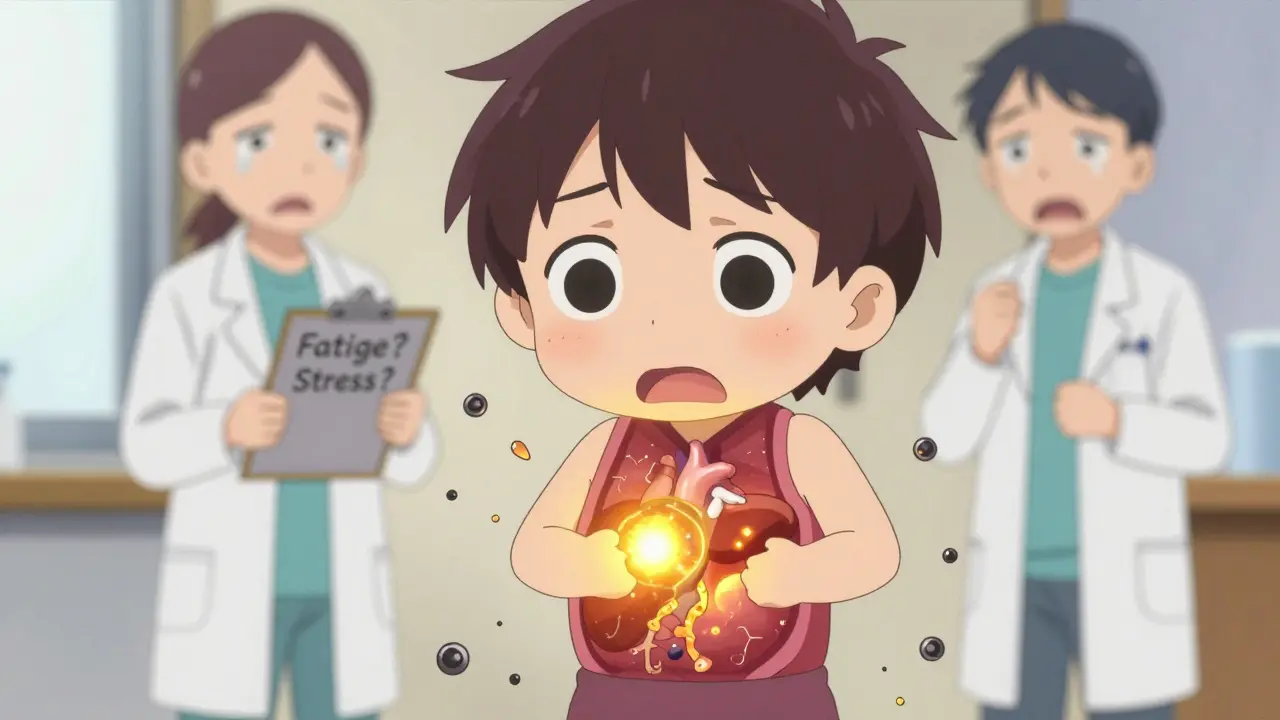
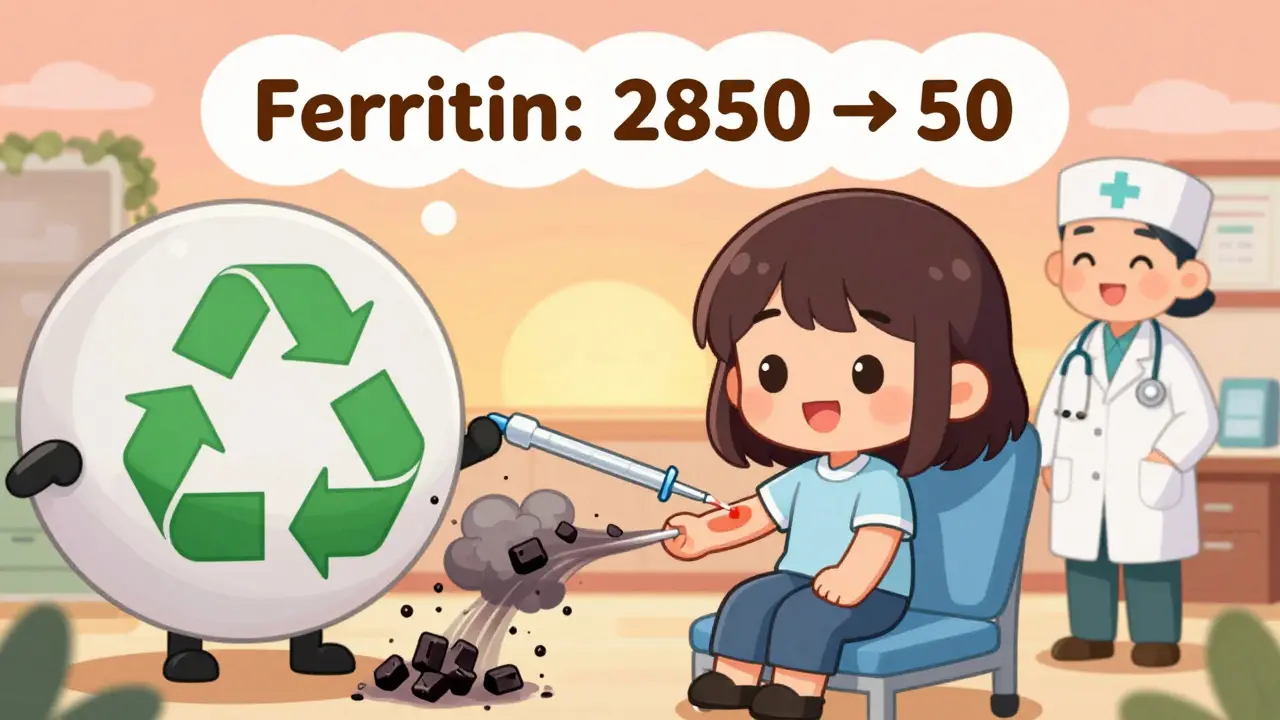
24 Jan, 2026Imagine feeling tired all the time, your joints ache for no reason, and you’ve lost interest in sex. You go to the doctor, get blood tests, and they tell you it’s stress, aging, or depression. Years pass. Then, one day, your ferritin level hits 2,850 ng/mL - more than ten times the normal range. That’s when you finally hear the word: hemochromatosis.
This isn’t rare. About 1 in 200 people of Northern European descent carry two copies of the HFE gene mutation that causes it. In Ireland, Scotland, and Wales, it’s even higher - 1 in 83. Yet, only 10 to 15% of those affected know they have it. Why? Because the symptoms look like everything else. Fatigue? Common. Joint pain? Everyone gets that. Skin that looks bronze? People think it’s a tan.
But here’s the truth: hemochromatosis is a silent thief. It steals iron from your food and dumps it into your liver, heart, pancreas, and joints. Left untreated, it doesn’t just make you feel bad - it destroys organs. The good news? There’s a simple, cheap, and proven fix: phlebotomy. Removing blood is the cure. And it works better than almost any treatment in medicine.
What Is Hemochromatosis, Really?
Hemochromatosis is not just high iron. It’s a genetic glitch that makes your body absorb too much iron - even when you don’t need it. Normally, your body holds about 0.8 to 1.2 grams of iron. That’s enough for red blood cells, energy, and brain function. In someone with untreated hemochromatosis, that number can climb to 5 grams or more. That’s like stuffing 4 extra pounds of metal into your organs.
This happens because of a mutation in the HFE gene. Most cases (80-95%) are caused by two copies of the C282Y mutation. Your liver stops making enough hepcidin - the hormone that tells your gut to stop absorbing iron. Without it, your intestines keep sucking up iron like a vacuum, even if your body is already full. The excess iron doesn’t just sit around. It gets stored in your liver first, then your heart, pancreas, and joints.
Men are affected 5 to 10 times more often than women before menopause. Why? Because women lose iron every month through menstruation. It’s nature’s built-in phlebotomy. After menopause, women’s risk rises sharply. That’s why many women are diagnosed in their 50s or 60s - too late, sometimes.
How Do You Know You Have It?
The first signs are vague. Most people ignore them for years. But there are three red flags that show up again and again in patients:
- Fatigue - 74% of patients report constant exhaustion, even after sleeping.
- Joint pain - especially in the knuckles of the index and middle fingers. It’s often mistaken for arthritis.
- Loss of libido or erectile dysfunction - 54% of men experience this. It’s not psychological. It’s iron damaging the pituitary gland and lowering testosterone.
Later, you might notice your skin turning gray or bronze. Your belly aches. You start peeing a lot and feeling thirsty - signs of diabetes, which develops in 25% of untreated cases because iron kills insulin-producing cells in the pancreas.
The diagnosis isn’t hard, but most doctors don’t think to look. You need two blood tests:
- Transferrin saturation - if it’s over 45%, that’s a major red flag. This is the earliest sign, often years before symptoms appear.
- Serum ferritin - this measures stored iron. Above 300 ng/mL in men or 200 ng/mL in women means you need further testing.
If those are high, you get a genetic test for HFE mutations. No biopsy is needed anymore. MRI scans can now measure liver iron accurately without a needle. And if you have C282Y homozygosity, the diagnosis is confirmed.
Why Phlebotomy Is the Only Real Cure
There’s no pill for hemochromatosis. No supplement. No diet. The only treatment that reverses damage and prevents death is phlebotomy - removing blood.
Each time you donate 500 mL of blood, you lose about 200-250 mg of iron. Your body doesn’t store that iron anymore. It has to use what’s left to make new red blood cells. Slowly, the excess drains out.
The process has two phases:
- Induction - Weekly blood removal until ferritin drops to 50 ng/mL. This can take 12 to 18 months. One patient needed 62 sessions over 15 months. That’s more than a year of weekly visits.
- Maintenance - Once iron is normal, you need phlebotomy every 2 to 4 months to keep ferritin between 50 and 100 ng/mL. Most people need 4 to 6 sessions a year.
It’s simple. It’s cheap. Most insurance covers it. Each session costs $0 to $50. Compare that to iron-chelating drugs like deferasirox, which cost $25,000 to $35,000 a year and come with kidney and liver risks.
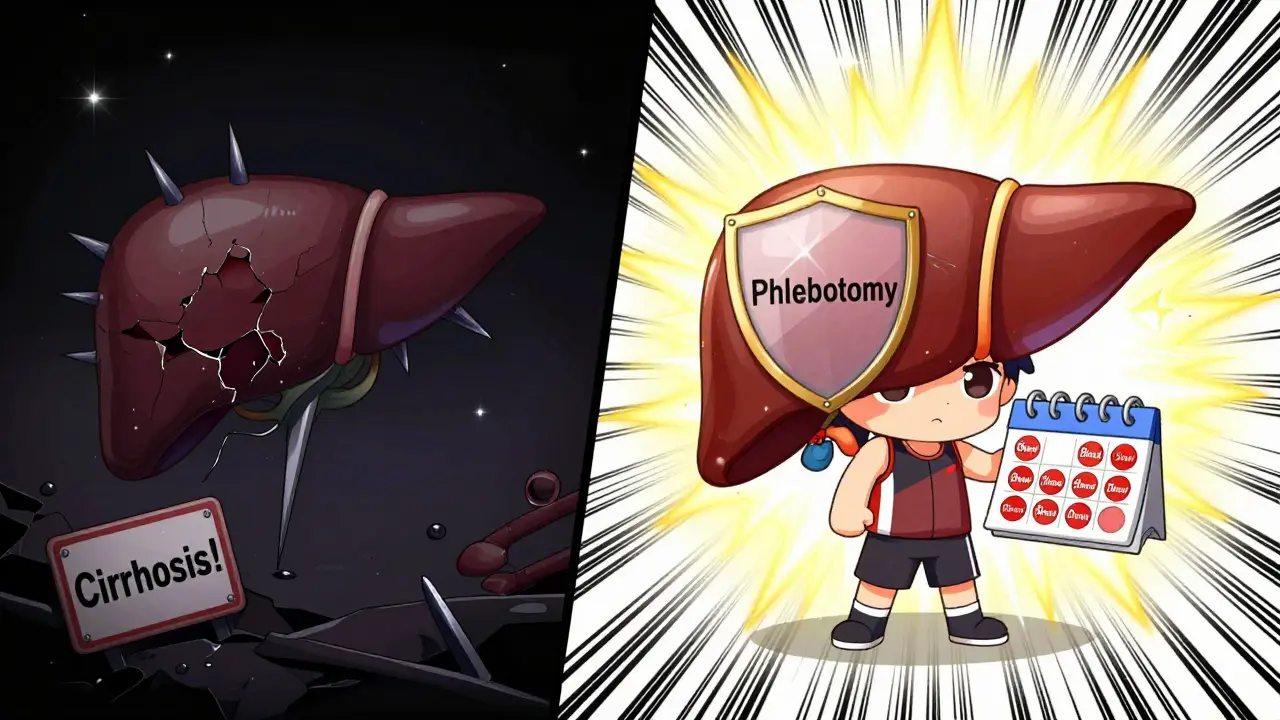
And it works. If you start before ferritin hits 1,000 ng/mL, you have a 99% chance of avoiding cirrhosis or liver cancer. If you wait until your liver is already scarred, survival drops to 60% over 10 years.
What Happens If You Don’t Treat It?
Iron doesn’t just sit there. It oxidizes. It creates free radicals. It tears apart cells. The liver takes the first hit. Over time, it swells, scars, and hardens. Cirrhosis sets in. Then liver cancer. One in four patients with untreated hemochromatosis develops hepatocellular carcinoma.
But it doesn’t stop there. Iron builds up in the heart and can cause arrhythmias or heart failure. In the pancreas, it kills insulin cells - leading to diabetes. In the pituitary gland, it shuts down sex hormones. In the joints, it causes crippling pain.
And here’s the worst part: once damage is done, it’s often permanent. A scarred liver doesn’t heal. Diabetes doesn’t reverse. Heart damage can’t be undone. Phlebotomy stops further harm - but it doesn’t fix what’s already broken.
That’s why early diagnosis saves lives. A study from the American Liver Foundation found that treated patients spend $500 a year on care. Untreated patients? $42,000 - from hospital stays, transplants, insulin pumps, and heart surgeries.
Why So Many People Are Misdiagnosed
Patients spend an average of 5 to 7 years seeing 3 to 5 doctors before getting the right diagnosis. Why?
- Doctors test for anemia, not iron overload.
- Ferritin is often ignored unless liver enzymes are high.
- Transferrin saturation is rarely ordered - even though it’s the earliest warning sign.
- Many think it’s “just aging” or “stress.”
Reddit user u/HemoWarrior wrote: “I was told I had fibromyalgia. Then depression. Then I was given antidepressants for 6 years. My ferritin was over 2,800 the whole time.”
Even blood banks won’t take therapeutic donations. Many patients can’t find a place to get their blood drawn because clinics don’t know how to handle it. Some end up donating blood illegally - risking their health and breaking rules.
And maintenance is hard. When your energy returns and your joints stop hurting, you want to stop. But stopping means iron builds back up. That’s why 42% of patients feel “treatment fatigue.” They need to keep going - even when they feel fine.
Who Should Get Tested?
You should get tested if:
- You have unexplained fatigue, joint pain, or sexual dysfunction.
- You have elevated liver enzymes with no known cause.
- You have type 2 diabetes without obesity.
- You have heart failure with no clear cause.
- You’re a first-degree relative of someone with hemochromatosis.
Family screening is the most effective way to find cases. If one person is diagnosed, their parents, siblings, and children should all get tested. The genetic test costs $150 to $300 now - down from $1,200 in 2000.
And if you’re of Northern European descent? Even if you feel fine, consider a simple blood test. It takes five minutes. It could save your life.
What’s Next? New Treatments on the Horizon
Phlebotomy works - but it’s not perfect. Some people can’t tolerate it. Others have bad veins. Some just can’t keep up with appointments.
That’s why researchers are working on new options. One drug, PTG-300, mimics hepcidin - the hormone your body should be making. In trials, it lowered transferrin saturation by 53% in 12 weeks. It’s not approved yet, but it could one day replace blood draws for some patients.
Scientists are also building polygenic risk scores. Instead of just looking at HFE, they’re analyzing 27 other genes that influence iron storage. This helps predict who will get severe disease - even if they only have one copy of the mutation.
But for now, the best tool is still the needle. Blood removal. Simple. Safe. Free. And life-saving.
What to Do Right Now
If you’ve been told you’re just tired, or your joints are aging, or your sex drive is gone - don’t accept that. Ask for two simple tests:
- Transferrin saturation
- Serum ferritin
If either is high, ask for HFE gene testing. If you’re diagnosed, start phlebotomy immediately. Don’t wait for symptoms to get worse. Don’t wait for your liver to scar.
And if you’ve already been diagnosed? Keep your maintenance appointments. Don’t stop because you feel better. Iron doesn’t care how you feel. It keeps building. You have to keep removing it.
Hemochromatosis isn’t a death sentence. It’s a treatable condition - if you catch it early. And if you do, you can live a normal, healthy life. No pills. No surgery. Just blood.
Can hemochromatosis be cured?
Hemochromatosis can’t be cured - because it’s genetic. But it can be completely managed. With regular phlebotomy, iron levels stay normal, organs stop getting damaged, and life expectancy returns to normal. You don’t need to live with symptoms or fear complications. You just need to stick with treatment.
Can I donate blood if I have hemochromatosis?
In most U.S. states, therapeutic phlebotomy patients can donate blood - but not always through the Red Cross. Many blood centers won’t accept it because of FDA rules. Your best bet is to get treatment at a hospital or clinic that specializes in hemochromatosis. Some states allow patients to donate blood as long as it’s part of their medical treatment. Ask your doctor for a letter explaining your condition - it helps.
Does diet matter with hemochromatosis?
Diet plays a small role. You should avoid iron supplements, vitamin C with meals (it boosts iron absorption), and raw shellfish (risk of infection). But you don’t need to avoid red meat, spinach, or lentils. Your body absorbs iron regardless of what you eat - because of the gene mutation. Phlebotomy is the only thing that removes the excess.
Is hemochromatosis the same as hemochromatosis?
Yes, it’s the same condition. The term “hemochromatosis” refers to iron overload from genetic causes. Sometimes people confuse it with secondary iron overload from blood transfusions or alcohol - but those are different. Hemochromatosis specifically means inherited iron overload, usually from HFE gene mutations.
Can women get hemochromatosis?
Yes, absolutely. Women are protected before menopause because they lose iron monthly. But after menopause, their risk equals men’s. Many women are diagnosed in their 50s or 60s - often after developing diabetes or liver disease. Don’t assume it’s a “man’s disease.”
How often do I need blood draws after treatment starts?
Once your iron is normal, you’ll need maintenance phlebotomy every 2 to 4 months. Most people need 4 to 6 sessions per year. Your doctor will monitor your ferritin levels and adjust based on how fast your iron builds back up. Some need it every 8 weeks. Others every 12 weeks. It’s personalized.
Allie Lehto
January 25, 2026 AT 10:44Henry Jenkins
January 25, 2026 AT 16:36Dan Nichols
January 27, 2026 AT 00:23Renia Pyles
January 27, 2026 AT 01:32Ashley Karanja
January 27, 2026 AT 04:19Josh josh
January 27, 2026 AT 08:57bella nash
January 28, 2026 AT 08:40TONY ADAMS
January 29, 2026 AT 18:52