 by
by How Lower Generic Drug Prices Improve Patient Adherence and Cut Healthcare Costs
19 Jan, 2026When prescriptions cost too much, people skip doses - and it’s costing the system billions
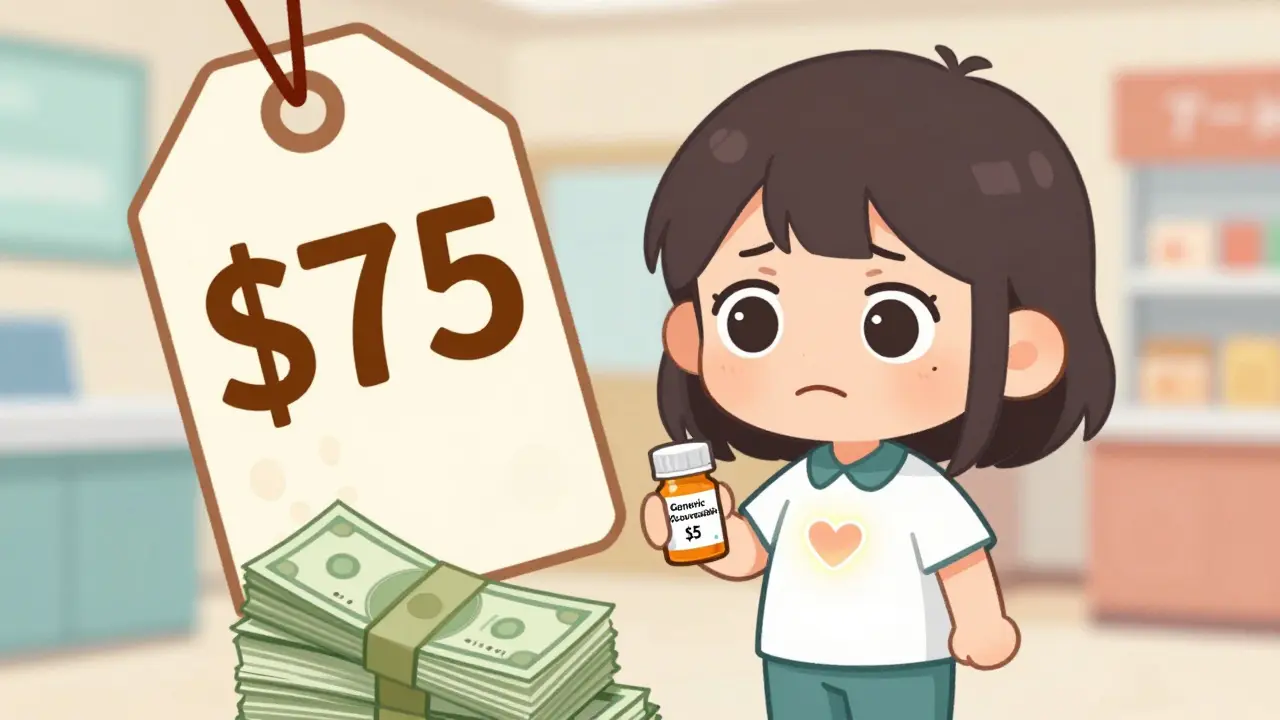
Imagine you’re told to take a pill every day to keep your blood pressure in check. But each month, it costs you $75 out of pocket. You’ve got rent, groceries, and a kid’s soccer fees to cover. So you start skipping days. Maybe you take it every other day. Or you wait until you have $20 saved up. You tell yourself it’s fine - you feel okay. But inside your body, the medication isn’t working like it should. Your blood pressure creeps up. A few months later, you end up in the ER with a stroke.
This isn’t a hypothetical. It happens every day. And the fix isn’t complicated: lower the price of the generic version.
Generic drugs are not cheaper because they’re weaker. They’re cheaper because they don’t carry the marketing, patent, and R&D costs of brand-name drugs. The FDA requires them to have the same active ingredient, strength, dosage form, and route of administration. They must also be bioequivalent - meaning they work in your body just like the brand name, within a 80-125% range of the original. In plain terms? They’re the same medicine. Just without the fancy packaging and TV ads.
And yet, in the U.S., people still pay 256% more for brand-name drugs than people in Canada, Germany, or Australia. Meanwhile, generics cost 80-85% less - and still work just as well.
Cost drives behavior - and high prices mean missed pills
People don’t skip meds because they’re forgetful. They skip them because they can’t afford them.
A 2023 JAMA Network Open survey of over 2,100 adults found that 32.7% of people admitted to not filling a prescription, skipping doses, or cutting pills in half just to save money. That’s more than one in three. And among those people, 78% said if they knew the real price of their drug before filling it, they’d have made a different choice.
It’s not just about big-ticket drugs. Even for common conditions like high cholesterol or diabetes, small cost increases make a big difference. A 2023 study in Diabetes Care found that for every $10 increase in out-of-pocket cost for GLP-1 medications, the chance of taking the drug as prescribed dropped by 3.7%. That may sound small, but over time, it adds up. Non-adherent patients were 5.2% more likely to end up in the emergency room.
And it’s not just diabetes. The same pattern shows up in heart disease, depression, and cancer treatment. A 2011 study of women on aromatase inhibitors for breast cancer found those on brand-name drugs were 22.3% more likely to stop taking them than those on generics. Adherence rates? 68.4% for brand, 73.1% for generic.
It’s a dose-response relationship: the higher the copay, the lower the adherence. Every $10 increase in cost leads to a 2-4% drop in adherence across most chronic conditions. That’s not a coincidence. It’s economics.
Switching to generics isn’t a compromise - it’s a win
Let’s talk about statins. These are the drugs millions take to lower cholesterol and prevent heart attacks. Brand-name atorvastatin (Lipitor) used to cost $100+ a month. Generic rosuvastatin? $5.
In a landmark 2012 study, researchers tracked Medicare Part D patients when their brand-name statins were moved from a higher-cost tier to a lower one. The result? Adherence jumped by 5.9% - just because the copay dropped from $30 to $10. No counseling. No reminders. Just lower price. More pills taken.
That’s not an outlier. A review of 160 studies published in the Journal of Managed Care & Specialty Pharmacy found that in 85% of cases, higher out-of-pocket costs directly led to lower adherence. And the effect was strongest for long-term conditions - the ones where missing doses doesn’t cause immediate symptoms, but leads to disaster over time.
And here’s the kicker: patients who switch to generics don’t just take them more often - they stay on them longer. One Reddit user, u/HeartHealthJourney, shared: “After my cardiologist switched me from brand-name Crestor ($75 copay) to generic rosuvastatin ($5 copay), I went from missing 3-4 doses weekly to perfect adherence for 11 months straight.”
That’s the power of price. It removes the barrier. It lets people choose health over hunger.
What’s the real cost of non-adherence?
Skipping meds might seem like a way to save money - but it’s a trap.
Medication non-adherence causes up to 50% of treatment failures. It leads to 100,000+ preventable deaths every year in the U.S. And it adds $100-$300 billion in avoidable healthcare costs.
Why? Because when people don’t take their meds, they get sicker. They need more doctor visits. More lab tests. More hospital stays. More surgeries. A 2011 study in Health Affairs showed that patients who took their medications as prescribed had 15-20% fewer hospitalizations than those who didn’t. Even though the drug cost went up slightly, total healthcare spending dropped.
It’s a classic case of spending now to save later. Pay $5 for the pill today. Or pay $15,000 for the ER visit tomorrow.
And it’s not just hospitals. Non-adherence leads to more primary care visits, more lab work, more imaging. All of it adds up. For insurers, employers, and taxpayers, it’s a massive drain.
Real solutions are already working - and they’re simple
There’s no need to invent new tech or rewrite the healthcare system. The fixes are here.
Tiered formularies - where insurers put generics in the lowest cost tier - have been shown to boost adherence. Medicare Part D started doing this in 2006. Since then, generics have become the default for most chronic conditions. In 2022, the Inflation Reduction Act capped insulin at $35/month. The result? More people filling prescriptions. Fewer diabetic emergencies.
Real-time benefit tools (RTBTs) are another game-changer. These are systems built into electronic health records that show doctors the price of a prescription before they write it. One pilot program by Magellan Healthcare found that when doctors saw the price upfront, adherence improved by 12-15%. And the ROI? 2:1 - for every dollar spent on the tool, $2 in savings were generated.
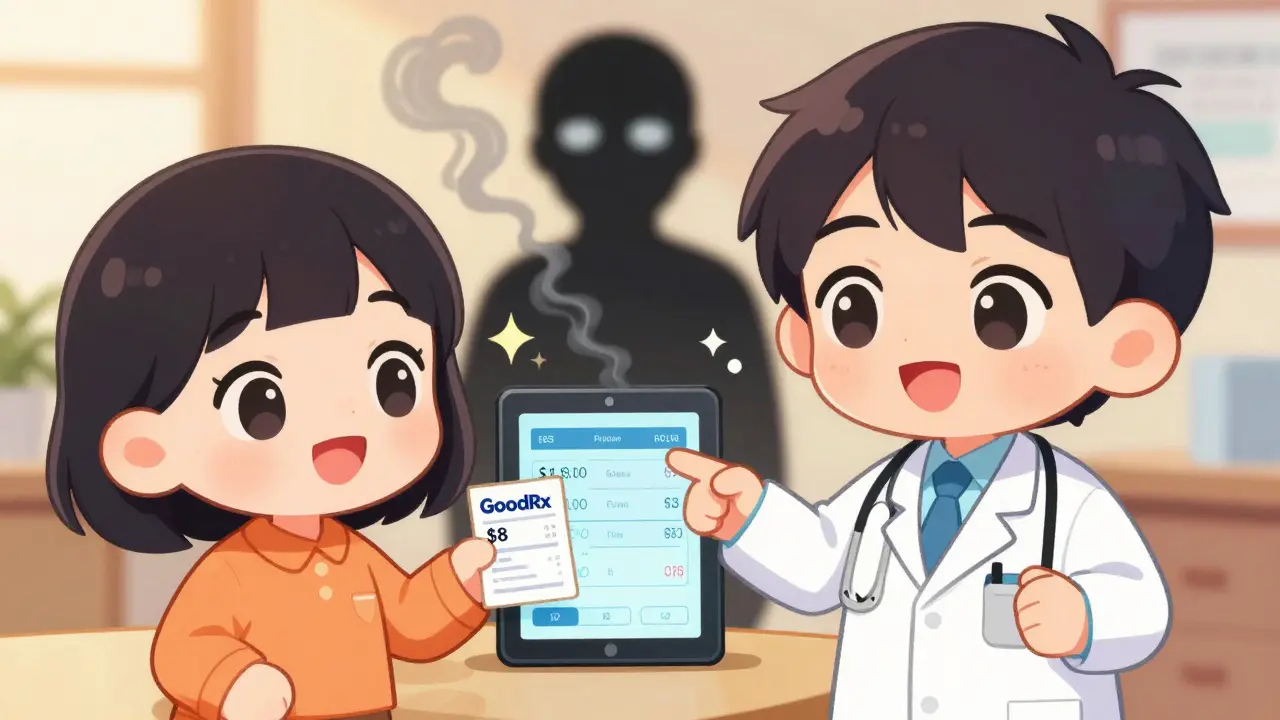
And then there’s GoodRx. A simple app that shows you the lowest cash price for a generic at pharmacies near you. One user told me, “I used to pay $120 for my blood pressure pill. GoodRx showed me a pharmacy that had it for $8. I started taking it every day.”
These aren’t futuristic ideas. They’re being used right now. And they work.
Why aren’t we doing more?
There are still barriers. Some patients don’t trust generics. They think cheaper means worse. The FDA’s “It’s Okay to Use Generics” campaign is helping, but education is still needed. Pharmacists can play a bigger role - explaining that a generic isn’t a substitute. It’s the same drug.
Insurance formularies are still confusing. One patient told me she was prescribed a generic, but her plan wouldn’t cover it unless she tried three other drugs first. That’s not care. That’s bureaucracy.
And doctors? Many still default to brand names because they’re familiar, or because reps visit their offices. But when doctors see the price impact - and the adherence data - they change. One cardiologist told me, “I used to write Lipitor because it was the default. Now I write rosuvastatin. I’ve seen the numbers. I’ve seen the patients.”
The future is cheaper - and better
By 2025, Medicare Part D will cap out-of-pocket drug spending at $2,000 a year. That’s a big deal. It means no one will have to choose between meds and food.
And the FDA is speeding up generic approvals. Through GDUFA III, $1.1 billion is being invested to bring 1,500+ new generics to market by 2027. More options. Lower prices. Better access.
Even better? New models like value-based insurance design are being tested. Instead of charging the same copay for every drug, they charge less for high-value meds - like those for diabetes or heart disease - and more for low-value ones. Early results? An 18.3% increase in adherence for the most important drugs.
This isn’t about politics. It’s about math. Lower price → more adherence → fewer hospitalizations → lower overall costs.
It’s the simplest equation in healthcare. And we already know the answer.
What you can do today
- If you’re on a brand-name drug, ask your doctor or pharmacist: “Is there a generic?”
- Use GoodRx or SingleCare to compare prices before you fill your prescription.
- If your insurance denies coverage, appeal. Many plans will cover generics if you ask.
- Ask your doctor to use real-time benefit tools when prescribing. Most systems have them now.
- Don’t skip doses because of cost. Talk to your provider. There’s almost always a cheaper option.
Medication isn’t a luxury. It’s a lifeline. And it shouldn’t cost a fortune to stay alive.
Are generic drugs really as effective as brand-name drugs?
Yes. The FDA requires generic drugs to have the same active ingredient, strength, dosage form, and route of administration as the brand-name version. They must also prove they’re bioequivalent - meaning they work the same way in your body, within a tight 80-125% range. Studies show they produce the same clinical outcomes. The only differences are in inactive ingredients (like fillers) and packaging - neither affects how the drug works.
Why do some people still prefer brand-name drugs?
Some people believe brand-name drugs are stronger or more reliable - but that’s a myth. Others have had bad experiences with generics, often due to switching between different generic manufacturers, which can cause slight variations in how the pill looks or tastes. These aren’t differences in effectiveness, but they can cause confusion. Education and consistent pharmacy choices help. Most patients who try generics and stick with them report no issues.
How much can I save by switching to a generic?
On average, generics cost 80-85% less than brand-name drugs. For example, a brand-name statin might cost $100 a month, while the generic costs $5-$10. For insulin, the price drop can be from $300 to $35 under the new Medicare cap. Even for common drugs like metformin or lisinopril, savings of $50-$200 per month are typical.
Can I ask my doctor to prescribe a generic even if they suggest a brand?
Absolutely. You have the right to ask for the most affordable option. Say: “I’d like to try the generic version if it’s right for me.” Most doctors will agree - especially if you mention cost concerns. In fact, many now default to generics because they know the evidence supports better adherence and outcomes.
What if my insurance doesn’t cover the generic?
First, check if it’s listed on your plan’s formulary. Sometimes, the generic is covered but under a different tier. Ask your pharmacist to check. If it’s not covered, ask your doctor to file a prior authorization. You can also use discount apps like GoodRx, which often offer prices lower than your insurance copay. If you’re on Medicare, you can switch plans during open enrollment to one that covers your meds better.
Does lowering drug prices hurt innovation?
No. Generic drugs don’t replace innovation - they make existing treatments accessible. Brand-name companies still profit from new drugs during their patent period. Once those patents expire, generics enter the market and drive down prices. This system has worked for decades. The U.S. spends more on drugs than any other country, but innovation isn’t tied to high prices - it’s tied to research funding, which comes from public and private sources, not just consumer copays.
How do real-time benefit tools help patients?
Real-time benefit tools show doctors the exact cost of a prescription before they write it - including what the patient will pay out of pocket. This helps avoid surprises at the pharmacy. Studies show when doctors see the price upfront, they’re 12-15% more likely to choose a lower-cost, equally effective option. Patients are more likely to fill the prescription, stick with it, and avoid costly complications later.
Bottom line: Lower prices = better health
It’s not magic. It’s math. When people can afford their meds, they take them. When they take them, they stay healthier. When they stay healthier, the system spends less. Generic drugs are the easiest, most proven tool we have to fix this cycle.
Every dollar saved on a pill is a dollar not spent on an ambulance ride. Every dose taken is a chance to avoid a hospital bed. And every patient who fills their prescription - because it’s affordable - is proof that healthcare doesn’t have to be a luxury.
Steve Hesketh
January 21, 2026 AT 09:30shubham rathee
January 21, 2026 AT 13:57Melanie Pearson
January 23, 2026 AT 10:37Barbara Mahone
January 24, 2026 AT 20:53Kelly McRainey Moore
January 26, 2026 AT 05:28Amber Lane
January 26, 2026 AT 21:46Roisin Kelly
January 26, 2026 AT 21:51Samuel Mendoza
January 27, 2026 AT 03:24Yuri Hyuga
January 28, 2026 AT 10:29Coral Bosley
January 29, 2026 AT 09:50MAHENDRA MEGHWAL
January 30, 2026 AT 01:48Kevin Narvaes
January 31, 2026 AT 13:49