 by
by How to Ask for Alternatives if a Medication Is Not Working
13 Mar, 2026When a medication isn’t doing what it’s supposed to, it’s not just frustrating-it can be dangerous. You might be taking it every day, following the instructions exactly, but still feeling the same pain, anxiety, or fatigue. Maybe you’re even noticing new side effects like dizziness, nausea, or trouble sleeping. If that’s happening, you’re not alone. About 25% of patients stop taking their meds because they don’t feel any better, according to a 2022 study in JAMA Internal Medicine. But here’s the thing: most doctors won’t know something’s wrong unless you tell them. And telling them the right way makes all the difference.
Don’t Wait Until Your Next Appointment
Too many people wait weeks or months to mention that a medication isn’t working. A 2022 study in JAMA Network Open found that 32% of patients waited until their next scheduled visit to bring up concerns. That means they’re stuck with something that’s not helping-maybe even making things worse-for longer than necessary. If you notice a problem, don’t wait. Call your provider’s office. Use your patient portal. Send a quick message. You don’t need to schedule a full appointment to start the conversation. Early feedback helps your doctor adjust faster.Bring Your Actual Medicines
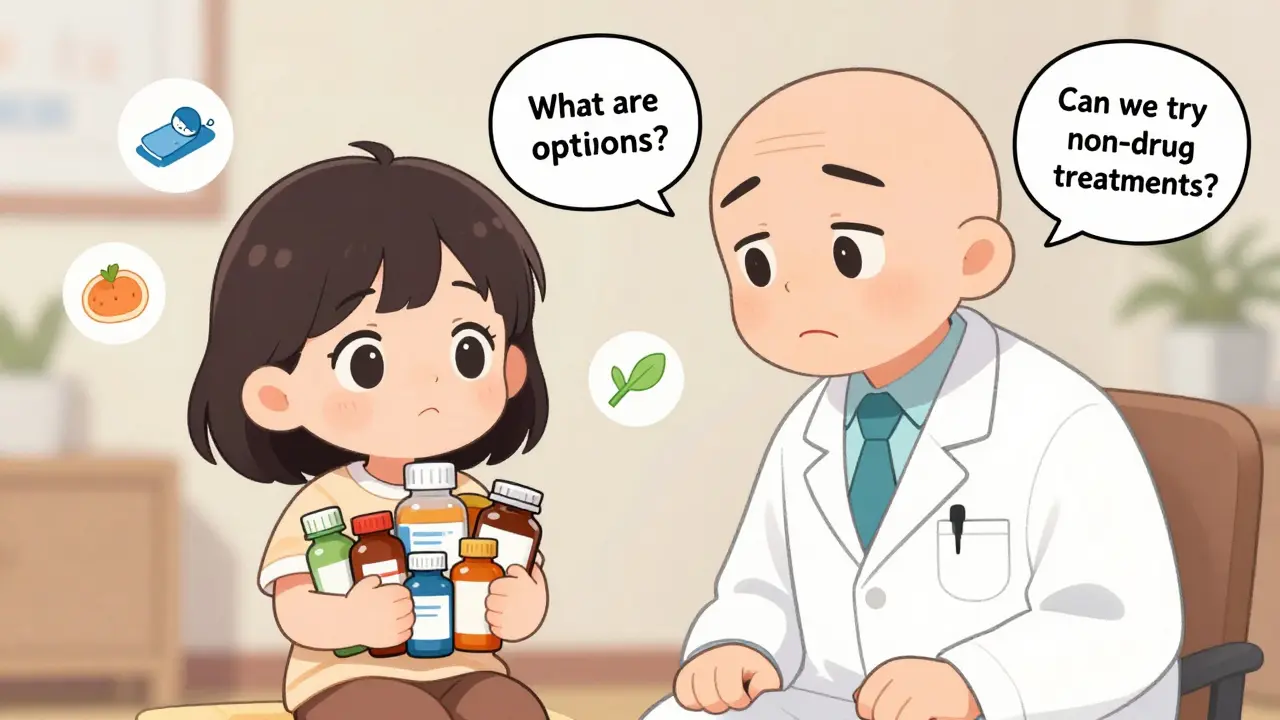
Don’t just rely on your memory. Bring the actual bottles-every single one. Prescription drugs, over-the-counter pills, vitamins, herbal supplements. Even the ones you only take occasionally. A 2022 University Health study showed that patients who brought their meds to appointments reduced medication errors by 22%. Why? Because your doctor might not know you’re taking that ginkgo supplement or that you’ve been using ibuprofen daily for your back pain. These things interact. They change how your main medication works. Seeing the bottles gives your provider a real picture, not a guess.Write Down Your Symptoms
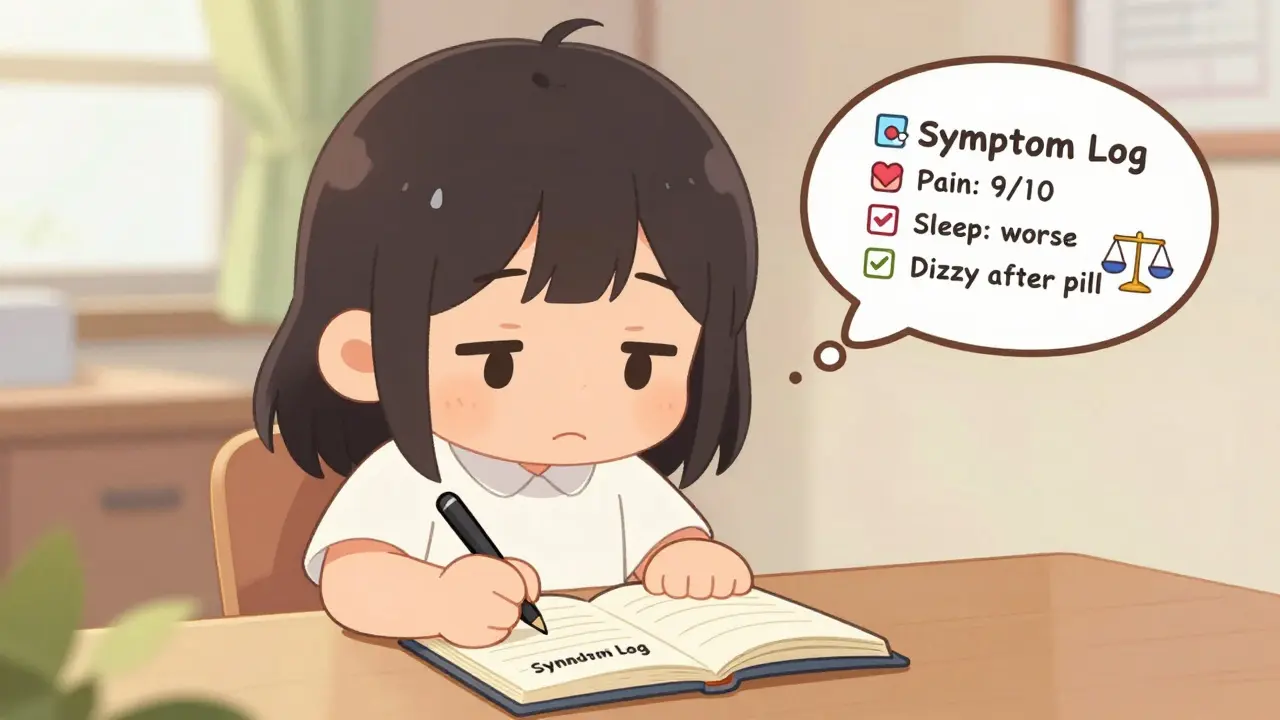
Vague statements like “It’s not working” or “I feel worse” don’t help much. Be specific. How long have you been on the medication? When did you start noticing it wasn’t helping? What exactly changed? Did your pain go from a 7 to a 6, or is it still a 9? Are you sleeping better, worse, or the same? Did you gain weight? Feel more anxious? Have headaches? A 2022 study found that 68% of effective medication discussions included clear timelines and symptom details. Try this: keep a simple log for a week. Write down what you took, when, and how you felt. You don’t need to be a doctor-you just need to be honest and detailed.Ask the Right Questions
You don’t have to know the medical jargon. Just ask these simple, powerful questions:- “What are the other options?” This opens the door to alternatives. There might be another pill, a different class of drug, or even a non-drug approach.
- “Why am I taking this?” Sometimes, people stay on meds they don’t need anymore. This question can lead to deprescribing-safely stopping something that’s no longer useful.
- “What are the pros and cons of each option?” You deserve to understand the trade-offs. One drug might help your anxiety but make you tired. Another might be cheaper but cause stomach issues.
- “Can this affect my memory or balance?” Especially if you’re over 65, this is critical. The American Geriatrics Society lists 34 medications with high risks for older adults, including ones that increase fall risk.
- “Is there a generic version or a cheaper alternative?” Cost is a real barrier. A 2022 AARP report found that 62% of patients could switch to a lower-cost option if they asked.
Be Clear About Your Goals
Your doctor isn’t a mind reader. If you’re taking a medication for anxiety, but you care more about feeling calm during work meetings than about sleeping better at night, say that. A 2023 Healthline guide found that patients who shared their personal goals-like “I need to drive without dizziness” or “I want to play with my grandkids without pain”-were 47% more likely to get a treatment that actually fit their life. Different medications target different symptoms. Tell your doctor what matters most to you.Ask About Non-Medication Options
Medication isn’t the only path. For many conditions, lifestyle changes work just as well-and without side effects. For example:- For sleep problems: Cognitive behavioral therapy for insomnia (CBT-I) is as effective as sleeping pills after 8 weeks, according to JAMA Internal Medicine (2021). No pills needed.
- For type 2 diabetes: A 2022 study in Diabetes Care showed that diet, exercise, and weight loss helped 68% of patients control blood sugar as well as metformin.
- For acid reflux: A 2023 study in the American Journal of Gastroenterology found that changing eating habits and losing weight helped 55% of people stop needing proton-pump inhibitors.
- For back pain: The American College of Physicians recommends exercise, physical therapy, and acupuncture as first-line treatments-before NSAIDs or opioids.
Ask: “Are there non-drug options I should try first?” You might be surprised by what’s available.
Request Written Instructions
If your doctor suggests a new medication or changes your regimen, ask for it in writing. MedlinePlus reports that patients who get written instructions understand their treatment 40% better than those who only hear it verbally. Write down the name, dose, timing, and purpose. Ask: “What should I expect in the first week?” and “What side effects mean I should call you?” Having it on paper reduces confusion and mistakes.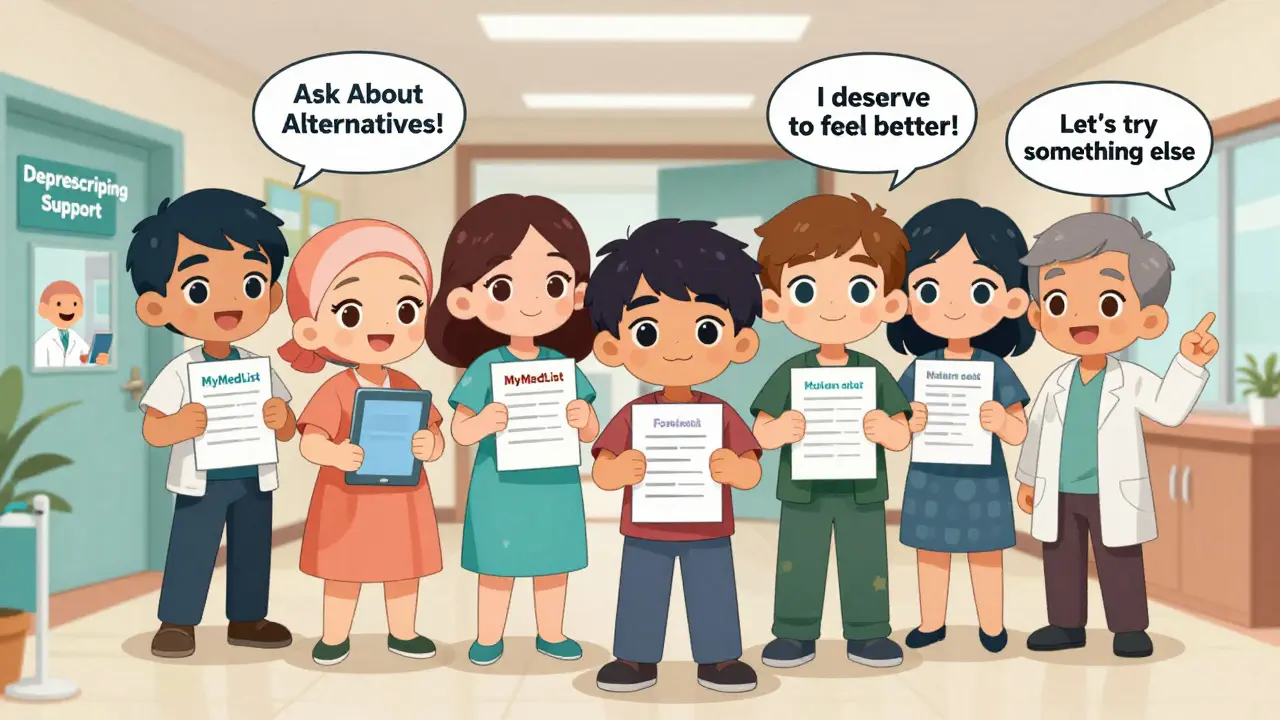
Use Your Patient Portal
Most clinics now have secure online portals. Use them. You can send a message ahead of your visit with your symptom log, list of meds, and questions. University Health data shows this increases medication safety by 27%. Some systems, like Epic’s “MyMedList,” now let you flag concerns directly in your record before your appointment. Your doctor sees it before they walk into the room. That gives them time to think, research, and come prepared.What If Your Doctor Says No?
Some patients report feeling dismissed. A 2023 Healthline survey found that 41% felt their concerns were ignored or interpreted as non-compliance. If that happens, stay calm but firm. Say: “I understand you think this is the right choice, but I’ve been consistent with it and still not seeing improvement. Can we look at other options together?” If you’re still not heard, ask for a referral to a specialist or a pharmacist who specializes in medication reviews. The Deprescribing Network has trained providers in 47 major U.S. health systems specifically for this kind of conversation.It’s Your Health-You Have the Right to Ask
You’re not being difficult. You’re being smart. The American Medical Association says patient-centered communication is now a standard of care. That means your input isn’t optional-it’s required. The National Institute on Aging says you’re 35% more likely to stick with a treatment when you understand it and helped choose it. And Dr. Barbara Farrell, who helped start the Deprescribing Network, found that patients who actively ask about alternatives are 3.2 times more likely to safely stop medications they don’t need.Medication isn’t magic. It’s a tool. And like any tool, it only works if it fits. If it’s not working, it’s not your fault. It’s not your doctor’s fault either. It’s just a mismatch. And you have the power-and the right-to fix it.
Richard Harris
March 15, 2026 AT 06:29Kandace Bennett
March 15, 2026 AT 06:54douglas martinez
March 15, 2026 AT 14:46Devin Ersoy
March 16, 2026 AT 17:14Scott Smith
March 17, 2026 AT 03:44Sally Lloyd
March 18, 2026 AT 05:17Rosemary Chude-Sokei
March 18, 2026 AT 12:21rakesh sabharwal
March 18, 2026 AT 13:35Kathy Leslie
March 18, 2026 AT 22:55Amisha Patel
March 20, 2026 AT 17:40