 by
by How to Manage Medication Adherence When Traveling or Changing Time Zones
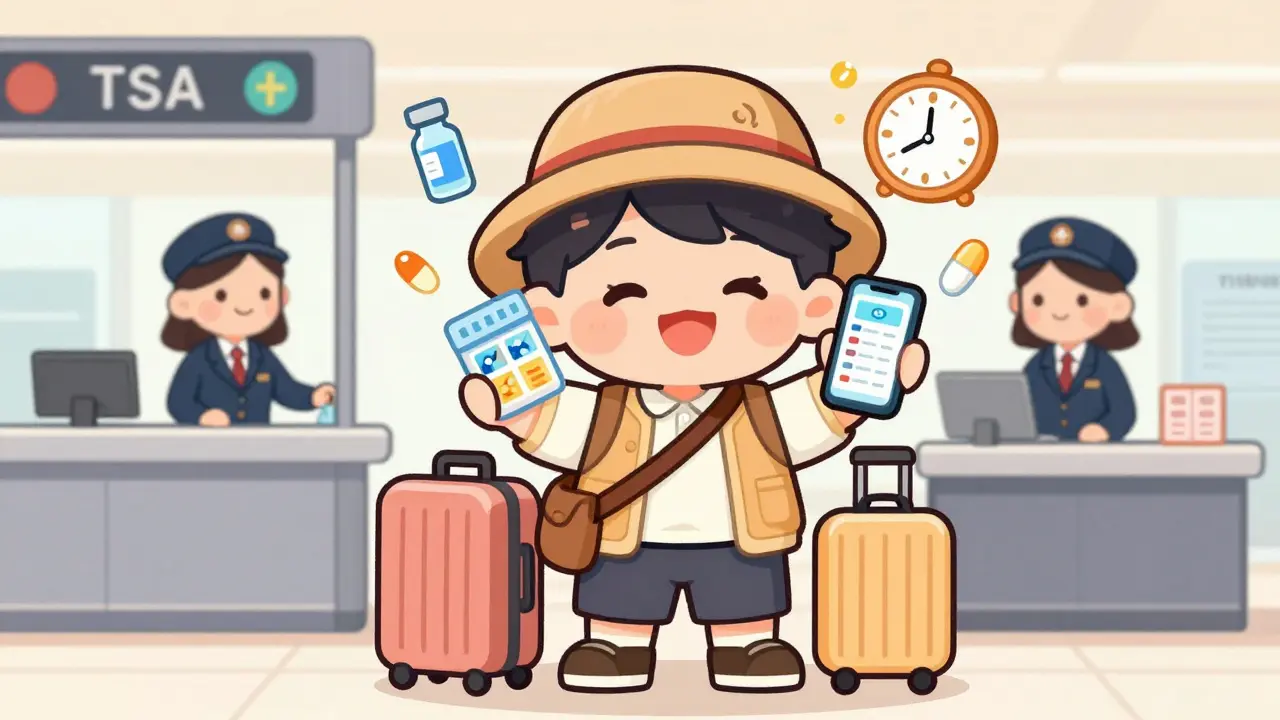
25 Feb, 2026When you're on the move-whether it's a weekend getaway or a month-long international trip-your body doesn't care about jet lag, time zones, or delayed flights. But your medication does. Skipping a dose, taking it at the wrong time, or packing it in checked luggage can throw off your whole treatment plan. For people managing chronic conditions like diabetes, epilepsy, or heart disease, even a small timing mistake can lead to serious consequences. The good news? With the right plan, you can stay on track no matter where you are.
Know Your Medication’s Tolerance for Timing
Not all medications are created equal when it comes to timing. Some can be taken up to two hours before or after your usual time without losing effectiveness. Others? Not so much. According to the University of California San Francisco’s 2023 research, most common medications-like blood pressure pills or cholesterol drugs-can safely be taken within a four-hour window. But for drugs with narrow therapeutic windows, even a one-hour shift can make a difference.Here’s what to watch out for:
- Insulin: Even a 30-minute delay can spike your blood sugar. If you’re crossing five or more time zones, basal insulin doses may need to be adjusted by 20% per additional time zone beyond three.
- Anti-seizure medications: Deviating more than two hours from your schedule increases seizure risk by 3.7 times, according to Johns Hopkins University.
- Oral contraceptives: A delay of more than 12 hours reduces effectiveness. Use backup contraception if you miss a pill.
- Anticoagulants (like warfarin): Changes in diet, hydration, and timing can alter INR levels. Get tested within 72 hours of returning home.
- HIV antiretrovirals: These require near-perfect adherence. If you miss a dose, take it as soon as you remember-even if it’s close to the next one.
Always check with your doctor before traveling. Don’t assume your regular schedule works everywhere.
Plan Ahead-At Least Four Weeks Before You Go
Waiting until the day before your flight to think about your meds? That’s how emergencies start. The American Pharmacists Association recommends scheduling a pre-travel consultation with your doctor or pharmacist at least four to six weeks ahead. This gives you time to:- Get refills if your trip is longer than your current supply.
- Adjust your schedule if needed-especially for time-sensitive meds.
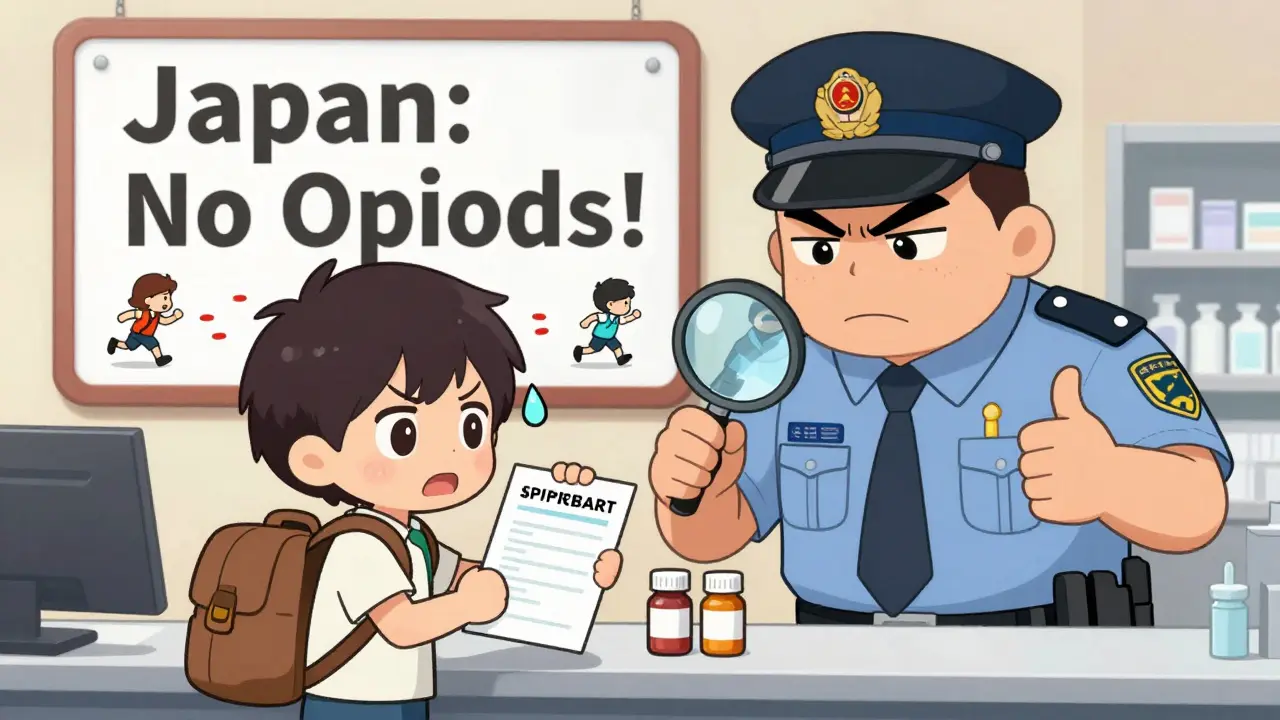
- Obtain a doctor’s letter if you’re carrying controlled substances like opioids, stimulants, or strong sedatives.
Why the letter? Because 19 countries-including Japan, South Korea, and the UAE-treat common U.S. prescriptions as illegal narcotics. A letter from your doctor explaining why you need the medication can save you from detention or confiscation.
Pack Smart-Don’t Risk Losing Your Meds
Chemique Pharm’s 2024 survey found that 63% of medication-related travel emergencies happened because people packed pills in checked luggage. And 22% lost their entire supply when bags got delayed or stolen.Here’s how to pack safely:
- Keep all meds in your carry-on. TSA allows liquids and pills in quantities larger than 3.4 ounces if they’re for personal use. Just tell the agent at security.
- Use a pill organizer labeled with your name and the medication details. It’s easier to track doses and shows up clearly on X-ray.
- Bring extra. Pack at least seven days’ worth beyond your planned trip. For international travel, aim for 14 days. Delays happen.
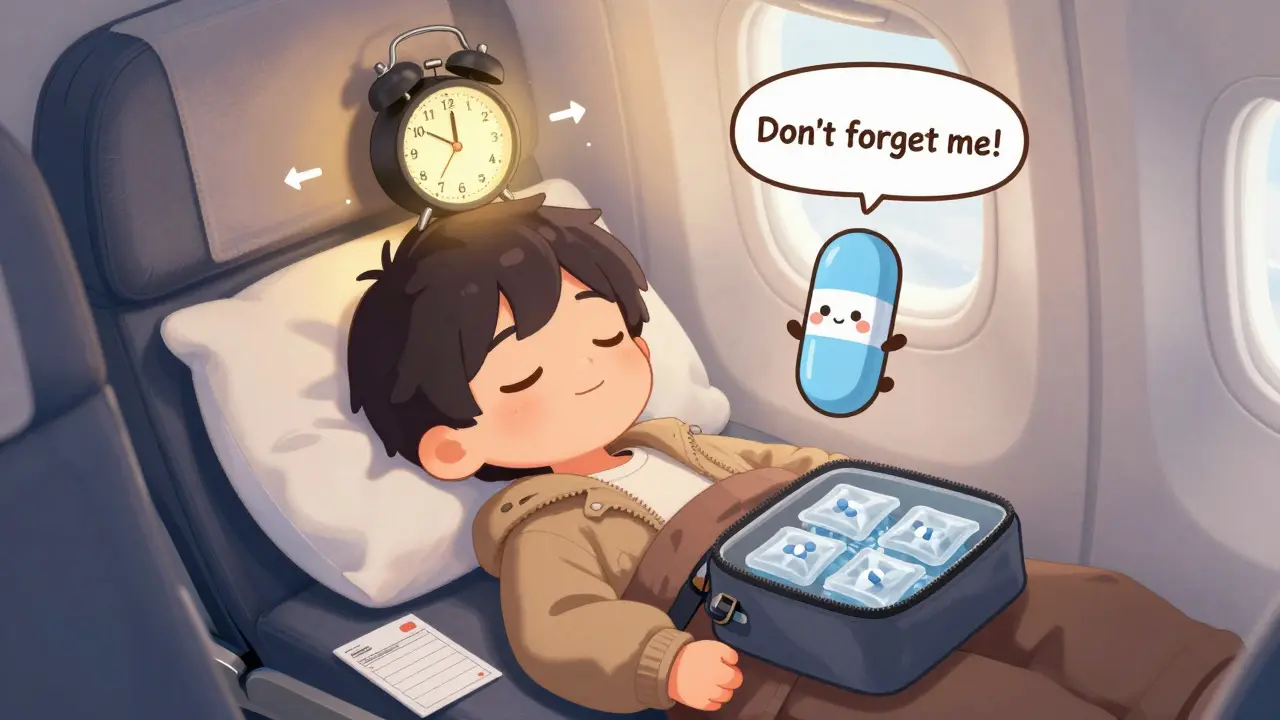
- Refrigerated meds? Use an insulated pouch with ice packs. Insulin exposed to temperatures above 86°F (30°C) for more than 24 hours can lose up to 27% of its potency.
Store your printed medication list in a separate bag from your pills. If you lose your bag, you still have proof of what you take.
Keep a Detailed Medication List
Village Medical’s 2024 advisory says every traveler should carry a written list that includes:- Brand and generic name of each medication
- Dosage and frequency
- Why you take it (e.g., "for high blood pressure")
- Your doctor’s name and contact info
- Allergies
Why? In a medical emergency abroad, 41% of complications involve confusion about medications or allergies. A clear list can mean the difference between proper treatment and a dangerous misstep.
Keep both a printed copy and a digital version-saved on your phone and emailed to a trusted contact. That way, you’re covered if your phone dies or gets stolen.
Adjust Your Schedule Based on Time Zone Changes
If you’re crossing three or fewer time zones, stick with your home schedule. No need to overcomplicate it. But if you’re crossing more than three, here’s what works best:- First dose at destination time: Take your first pill after you land-using the local time. Then continue on that new schedule.
- Gradual shift: For non-critical meds, start shifting your schedule by 30-60 minutes a day a few days before you leave. This eases your body into the new rhythm.
- Use countdown timers, not alarms: NimbleRx’s 2024 study found travelers who set timers (e.g., "Take pill in 6 hours") instead of timezone-based alarms improved adherence by 32%. Why? Timezone alarms often glitch when your phone switches time zones automatically.
- Try a smart app: Apps with automatic time zone adjustment cut missed doses by 47% compared to regular phone alarms. Look for ones that sync with your calendar and send reminders in local time.
What If You Miss a Dose?
Don’t panic. Don’t double up. That’s how overdoses happen. Mayo Clinic research shows doubling doses increases adverse events by 4.2 times.Here’s what to do:
- Most meds: If you realize you missed a dose within two hours of the scheduled time, take it. If it’s been more than two hours, skip it and wait for the next dose. Never double up.
- Antibiotics: Never double up. Inconsistent dosing raises antibiotic resistance risk by 18%, according to CDC data.
- HIV meds: Take the missed dose as soon as you remember-even if it’s close to the next one. Maintaining blood levels is critical.
- Insulin: If you miss a basal dose, contact your doctor. Don’t guess. If you miss a meal-time dose, check your blood sugar and follow your correction plan.
Special Cases: Insulin, Seizure Meds, and Birth Control
These aren’t just "take once a day" meds. They need precision.Insulin: If you’re flying east (losing hours), you may need to reduce your basal insulin slightly to avoid low blood sugar. Flying west (gaining hours)? You might need to split a dose or adjust timing. Always consult your endocrinologist.
Seizure meds: The Epilepsy Foundation says even a 2-hour delay can trigger breakthrough seizures. Set two alarms: one 15 minutes before, one at the exact time. Use a pill box with compartments for morning, afternoon, and night.
Birth control pills: Take your pill at the same local time each day. If you’re more than 12 hours late, use condoms or another form of contraception for the next seven days. Don’t rely on "I’ll just take two tomorrow." It doesn’t work that way.
What’s New in Travel Medication Management
In 2024, things are changing fast:- Airlines now allow larger medical liquids: IATA requires all member airlines to let passengers carry medically necessary liquids beyond the 3.4-ounce limit without extra screening.
- Pharmacies offer pre-travel consultations: CVS and Walgreens saw a 23% jump in these services since 2021. Ask if they can review your meds before you go.
- Chronotherapy is emerging: Mayo Clinic’s 2024 research suggests tailoring doses to your personal circadian rhythm could boost effectiveness by up to 31%. It’s still experimental, but it’s the future.
Bottom line? Don’t wing it. Planning isn’t extra work-it’s part of your treatment.
What if I forget my meds at home?
If you realize you left your meds behind, contact your pharmacy immediately. Many chains can send a replacement to your destination or a nearby pharmacy. If that’s not possible, visit a local clinic or urgent care. Bring your medication list and doctor’s contact info-they can help you get a temporary supply. Never go without critical meds like insulin or seizure drugs.
Can I split my pill to adjust the dose while traveling?
Only if your pill is scored (has a line down the middle) and your doctor approves. Many pills have coatings or timed-release mechanisms that break if split. Never split pills without checking first-doing so can change how the drug is absorbed. For insulin or seizure meds, splitting is never safe without medical guidance.
Do I need to declare my meds at customs?
You’re not required to declare prescription meds at customs unless asked. But if you’re carrying controlled substances, having a doctor’s letter and original packaging reduces risk. Some countries, like Japan and the UAE, actively check for certain medications. If you’re unsure, research the destination’s rules at least 30 days before you go.
Is it okay to take my meds with alcohol while traveling?
It depends on the medication. Alcohol can dangerously interact with blood pressure drugs, sedatives, antidepressants, and diabetes medications. Even a single drink can increase dizziness, lower blood sugar too much, or raise the risk of liver damage. When in doubt, skip the alcohol. Your health isn’t worth the risk.
How do I handle time zone changes when I have multiple daily doses?
For multiple daily doses, the safest approach is to use a countdown timer for each pill. Set the first dose at your destination time, then space the rest based on hours-not clock time. For example, if you take a pill every 12 hours, set timers for "Take next in 12 hours" rather than "Take at 8 AM." This avoids confusion when clocks jump forward or backward. Apps like Medisafe or MyTherapy automate this.
David McKie
February 25, 2026 AT 11:55Southern Indiana Paleontology Institute
February 26, 2026 AT 01:45Anil bhardwaj
February 27, 2026 AT 02:23lela izzani
February 27, 2026 AT 12:37Dinesh Dawn
February 28, 2026 AT 12:02Vanessa Drummond
March 1, 2026 AT 02:10Nick Hamby
March 1, 2026 AT 17:26kirti juneja
March 1, 2026 AT 22:09Haley Gumm
March 3, 2026 AT 10:00Gabrielle Conroy
March 4, 2026 AT 12:43Spenser Bickett
March 5, 2026 AT 21:08Christopher Wiedenhaupt
March 6, 2026 AT 05:21