
 by
by How to Prevent Diabetic Kidney Disease, Neuropathy, and Eye Damage
8 Jan, 2026Diabetes doesn’t just mean high blood sugar. Left unmanaged, it quietly damages your kidneys, nerves, and eyes-often long before you feel anything wrong. The good news? You can stop most of this damage. Not all of it, but enough to live decades longer without blindness, dialysis, or foot amputations. The key isn’t just taking your pills. It’s doing the right things, every day, with consistency.
Why These Three Complications Matter Most
Kidney disease, nerve damage, and eye damage are the top three silent killers in diabetes. They don’t hurt at first. That’s why they’re so dangerous. By the time you feel numbness in your feet or blurry vision, the damage is often advanced.One in three adults with diabetes will develop kidney disease. That’s not a small risk-it’s a real threat. Your kidneys filter waste from your blood. High blood sugar clogs those filters. Over time, they leak protein into your urine and lose function. Without action, this leads to dialysis or transplant.
Neuropathy affects nearly half of all people with diabetes. It starts as tingling or burning in the toes, then spreads. The worst part? You lose feeling. A cut on your foot goes unnoticed. It gets infected. Then it won’t heal. About 15% of people with diabetes end up with a foot ulcer. Some lose a toe-or worse.
Eye damage, called diabetic retinopathy, attacks the tiny blood vessels in your retina. It’s the leading cause of blindness in working-age adults. But here’s the catch: if you catch it early, you can prevent 95% of vision loss. That’s not a guess. It’s what the American Diabetes Association says.
The ABCs of Prevention: What You Must Control
You can’t fix everything at once. But you can fix the big three: A1C, blood pressure, and cholesterol. These are the ABCs-and they’re non-negotiable.A is for A1C. This test shows your average blood sugar over three months. Most people should aim for below 7%. But if you’re older or have other health issues, your doctor might say 7.5% is fine. The goal isn’t perfection. It’s staying out of the danger zone. Every 1% drop in A1C cuts your risk of eye and kidney damage by 30-40%.
B is for blood pressure. Keep it under 140/90. For kidney protection, even lower is better-130/80 if your doctor recommends it. High blood pressure crushes the delicate filters in your kidneys and bursts tiny vessels in your eyes. It’s like driving with bad brakes: even if your sugar is okay, your body is still getting damaged.
C is for cholesterol. LDL (bad cholesterol) should be under 100. If you’ve had heart problems, aim for under 70. High cholesterol clogs arteries. That means less blood flow to your nerves, kidneys, and eyes. It’s not just about heart attacks-it’s about keeping every part of your body fed with clean, oxygen-rich blood.
Medicines That Do More Than Lower Sugar
Gone are the days when the only tools were metformin and insulin. Today, two classes of drugs do something revolutionary: they protect your organs even if your sugar isn’t perfect.SGLT2 inhibitors (like empagliflozin, dapagliflozin) make your kidneys flush out extra sugar through urine. But they also lower blood pressure, reduce heart failure risk, and slow kidney disease by 30-40%. In trials, people on these drugs were far less likely to need dialysis.
GLP-1 receptor agonists (like semaglutide, liraglutide) don’t just lower sugar. They help you lose weight, reduce inflammation, and protect your heart and kidneys. One study showed a 26% drop in major heart events. These aren’t side effects-they’re the main benefit.
These aren’t magic pills. But if you’re on them, they’re part of your shield. Talk to your doctor if you’re not already on one. If you’re not, ask why.

Foot Care: The Daily Check That Saves Limbs
Your feet are ground zero for diabetic damage. You need to inspect them every single day. No excuses.Use a mirror or ask someone to help. Look for:
- Cuts, blisters, or sores
- Redness or swelling
- Calluses or cracks
- Changes in color or temperature
Wash your feet daily with warm (not hot) water. Dry them gently-especially between the toes. Moisturize, but never between the toes. That’s where fungus grows.
Wear shoes that fit. Never walk barefoot-not even indoors. A step on a Lego or a hot floor can burn you without you feeling it. If a wound doesn’t heal in a few days, see a podiatrist. Don’t wait. Don’t hope. Act.
And get your feet checked by a professional at least once a year. That’s not optional. It’s your lifeline.
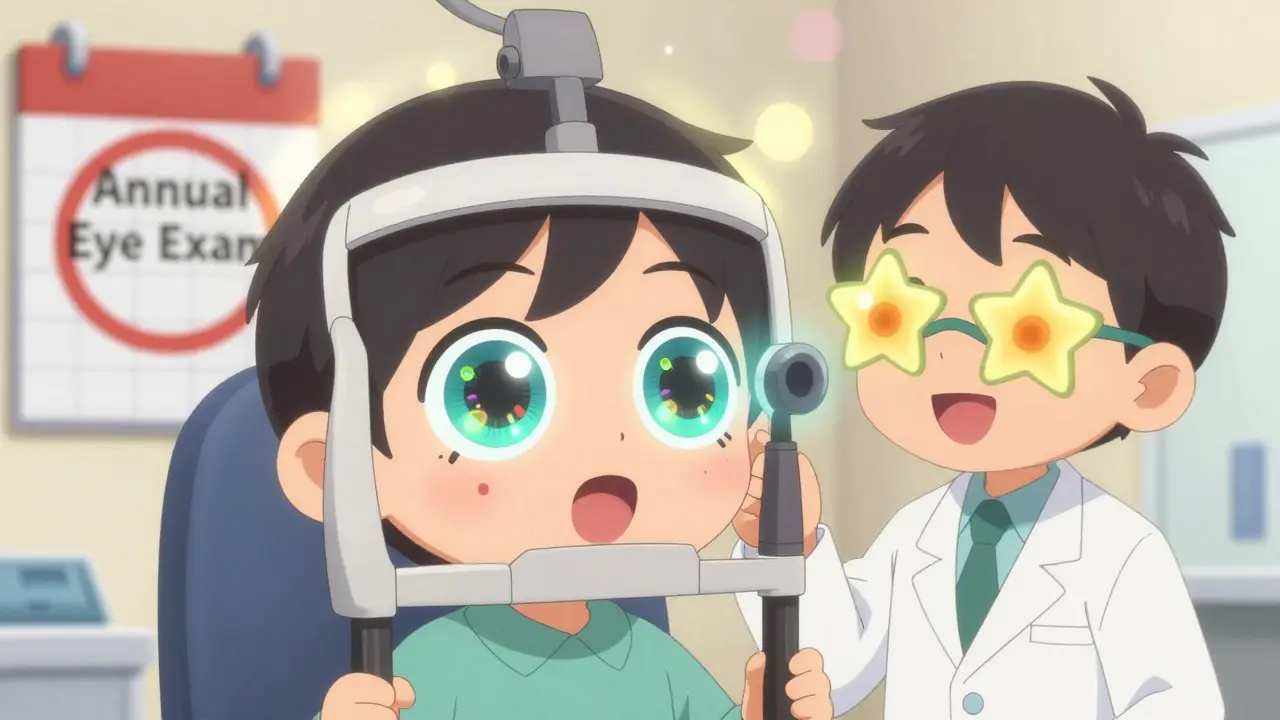
Eye Exams: The One Appointment That Prevents Blindness
You don’t need to wait for blurry vision. By then, it’s too late.Get a comprehensive dilated eye exam every year. That means drops to widen your pupils so the doctor can see the back of your eye. They’re looking for leaking blood vessels, swelling, or new abnormal vessels-signs of retinopathy.
If you’re pregnant or have existing eye damage, you might need more frequent exams. If your eyes are healthy and your sugar is stable, your doctor might say every two years. But never skip it.
And yes, this isn’t a routine vision test. It’s a medical scan. Insurance usually covers it. If you’re worried about cost, ask your clinic about low-cost programs. Your sight is worth it.
Move More, Eat Smarter, Lose Weight
You’ve heard this a thousand times. But here’s what you don’t hear: losing just 5-10% of your body weight can reverse early kidney damage and improve nerve function.That’s not a miracle. It’s science. When you lose weight, your body becomes more sensitive to insulin. Your blood pressure drops. Your cholesterol improves. All three ABCs get better at once.
Exercise isn’t about running marathons. It’s about moving. Aim for 150 minutes a week. That’s 30 minutes, five days a week. Walk. Swim. Dance. Ride a bike. Gardening counts.
Food matters more than you think. Skip sugary drinks. Cut back on processed carbs. Eat more vegetables, lean protein, and healthy fats. You don’t need a fancy diet. You need consistency. A plate with half veggies, a quarter protein, and a quarter whole grains is a solid rule.
And stop smoking. Smoking doubles your risk of kidney disease and speeds up nerve damage. It’s not just about lungs. It’s about your whole body.
What If You’re Doing Everything Right and Still Have Problems?
Some people do everything: they take their meds, eat well, walk daily, and still get complications. Why?Genetics. Age. How long you had undiagnosed diabetes. Stress. Sleep. These things matter too. You’re not failing. Your body is fighting a complex disease.
But here’s the truth: even if you get complications, you can still slow them down. Good control after damage starts means you live longer with better quality of life. You might need more frequent tests, special shoes, or eye injections. But you’re not doomed.
The biggest mistake? Giving up. If one thing doesn’t work, try another. Talk to your doctor. Find a diabetes educator. Join a support group. You’re not alone.
What to Do Next: Your 30-Day Action Plan
Start small. Pick one thing and stick with it for 30 days.- Get your A1C tested if you haven’t in the last 3 months.
- Check your blood pressure at home or at the pharmacy. Write it down.
- Look at your feet every day for a week. Just look. No need to fix anything yet.
- Schedule your eye exam. Don’t wait for symptoms.
- Walk 20 minutes, three times this week. Just walk.
After 30 days, add one more. Then another. Progress isn’t about perfection. It’s about showing up.
Can diabetic kidney disease be reversed?
Early-stage kidney damage can be slowed or even improved with strict control of blood sugar, blood pressure, and cholesterol. Medications like SGLT2 inhibitors and GLP-1 agonists help protect kidney function. But once significant scarring occurs, it can’t be undone. The goal shifts to preventing further damage and avoiding dialysis.
Is neuropathy always permanent?
Nerve damage from diabetes can improve if caught early and blood sugar is tightly controlled. Tingling and pain may lessen over time. But lost sensation-like not feeling a cut-is often permanent. That’s why daily foot checks are critical. Prevention beats reversal every time.
Do I need to see a specialist for eye exams?
Yes. A regular optometrist can check your vision, but only an ophthalmologist can do a full dilated eye exam to detect diabetic retinopathy. These exams look deep into the retina for signs of damage that a simple vision test won’t catch. Make sure your appointment is labeled as a "comprehensive dilated eye exam."
Can I prevent complications if I have type 1 diabetes?
Absolutely. While type 1 diabetes requires insulin, the same rules apply: control your A1C, blood pressure, and cholesterol. SGLT2 inhibitors are now approved for some people with type 1, and GLP-1 agonists are being studied. Daily foot checks and annual eye exams are just as vital. The principles of prevention don’t change based on type.
How often should I get my kidneys checked?
At least once a year, you should have two tests: a urine test for albumin (UACR) and a blood test for estimated glomerular filtration rate (eGFR). These show how well your kidneys are filtering waste. If results are abnormal, your doctor may test you more often. Don’t wait for symptoms-this damage happens silently.
Are there new treatments coming for diabetic complications?
Yes. Research is focused on drugs that target inflammation and tissue repair, not just sugar. New medications are being tested to reverse early nerve damage and repair kidney filters. Wearable tech for foot pressure monitoring and AI-powered eye scan analysis are also in development. But the most powerful tool right now is still consistent, daily management.
Jenci Spradlin
January 10, 2026 AT 11:05man i just found out my A1C was 8.2 last month and i felt fine… like wtf how is this a thing? i’ve been eating pizza like it’s my job. guess i gotta start checking my feet now…
RAJAT KD
January 11, 2026 AT 22:36Consistency beats perfection. A1C under 7, BP under 130/80, daily foot checks. Do these three and you’re already ahead of 80% of diabetics.
Lindsey Wellmann
January 13, 2026 AT 17:13okay but like… i cried reading this. 😭 i lost my uncle to a diabetic foot amputation and i never knew it could’ve been prevented. i’m scheduling my eye exam tomorrow. thank you for this.
Micheal Murdoch
January 14, 2026 AT 04:06There’s a quiet dignity in showing up every day-even when you’re tired, even when you’re scared, even when the scale doesn’t move. Diabetes doesn’t care about your excuses. But your body? It remembers every good choice. Every walk. Every time you chose water over soda. Every time you checked your feet. It’s not about being perfect. It’s about being present. And presence, over time, becomes protection.
These aren’t just medical facts-they’re acts of love. For your future self. For your kids. For the person who still believes they can outlive their diagnosis. You’re not fighting a disease. You’re building a life. One careful step at a time.
Drew Pearlman
January 14, 2026 AT 04:53I know it’s easy to feel overwhelmed, but think of it this way: you’re not trying to fix everything today. You’re just planting seeds. Maybe today you just write down your blood pressure. Tomorrow you take a 10-minute walk. Next week, you call your doctor about that SGLT2 med. Progress isn’t loud. It’s quiet. It’s in the small things you do when no one’s watching. And eventually? Those small things become your safety net. You’ve got this. Really, you do.
Chris Kauwe
January 16, 2026 AT 01:10Let’s be real-this is why America’s healthcare system is broken. If you had to pay out of pocket for these meds, you’d be bankrupt. SGLT2 inhibitors cost $800/month? That’s not healthcare, that’s extortion. And don’t get me started on the ‘eat vegetables’ advice-when your neighborhood only has corner stores selling soda and chips, what’s the point? This isn’t about willpower. It’s about systemic neglect. The real solution isn’t foot checks-it’s policy change.
Ian Long
January 16, 2026 AT 04:57I used to think ‘just take your meds’ was enough. Then my mom lost her vision. Now I get it: meds are just one tool. The real work is the daily grind-the foot checks, the walks, the reading labels, the saying no to birthday cake. It’s exhausting. But it’s worth it. I’m not here to shame anyone. I’m here to say: you’re not alone in this grind. And you’re stronger than you think.
Jacob Paterson
January 17, 2026 AT 05:09Wow. So you’re telling me if I don’t check my feet every day, I deserve to lose a toe? Nice. Thanks for the guilt trip, Dr. Feelgood. Some of us work two jobs and can’t afford a podiatrist. Maybe if the system didn’t make insulin a luxury, we wouldn’t need to be ‘perfect’ just to stay alive.
Johanna Baxter
January 18, 2026 AT 13:08i hate this so much. why does everything have to be so hard? i just want to eat a donut and not feel like a monster. i’m tired of being told what to do. i’m tired of being scared. i just want to be normal.
Kiruthiga Udayakumar
January 18, 2026 AT 15:38My cousin in India got diabetic retinopathy because she skipped her eye exam for 5 years. Now she can’t see her grandchildren. Don’t wait. Do it now. It’s not about fear-it’s about love.
Patty Walters
January 18, 2026 AT 18:18i started walking 15 min after dinner and my a1c dropped 0.8 in 3 months. no meds changed. just movement. also… i stopped weighing myself. focus on energy, not numbers.
Phil Kemling
January 18, 2026 AT 19:39It’s strange, isn’t it? We treat diabetes like a personal failure, when it’s really a biological betrayal. Our bodies, once obedient, now rebel in silence. We’re taught to control, to fix, to optimize-but what if the real answer is not control, but coexistence? To live not in defiance of diabetes, but alongside it-with grace, with grief, with stubborn hope?
Darren McGuff
January 20, 2026 AT 01:07Just read this after my annual kidney scan. My UACR was normal. I cried. Not because I’m ‘cured’-I’m not. But because I did the work. Walked. Ate the veggies. Took the pill. Didn’t skip the exam. This isn’t about being perfect. It’s about being faithful to yourself. One day at a time.