 by
by How to Understand Narrow Therapeutic Index Drugs and Generics
22 Jan, 2026When you’re prescribed a medication like warfarin, cyclosporine, or levothyroxine, you might assume that the generic version is just as safe and effective as the brand name. But for narrow therapeutic index drugs, that assumption can be dangerous. These aren’t your typical pills. A tiny change in dose - even 5% - can mean the difference between healing and hospitalization. And when it comes to generics, the rules aren’t the same as for other medications.
What Makes a Drug Have a Narrow Therapeutic Index?
A narrow therapeutic index (NTI) drug has a very small window between the dose that works and the dose that harms you. Think of it like walking a tightrope. One step too far, and you fall. These drugs don’t give you room for error. If your blood level is just a little too low, the drug won’t work. If it’s a little too high, you could have a life-threatening reaction.
The U.S. Food and Drug Administration (FDA) defines NTI drugs as those where small changes in dose or blood concentration can cause serious side effects - like organ rejection, toxic heart rhythms, seizures, or dangerous bleeding. That’s why doctors and pharmacists treat them differently. You won’t find these drugs on the same shelf as ibuprofen or amoxicillin. They’re reserved for critical conditions: transplant patients on immunosuppressants, people with epilepsy on anticonvulsants, or those with heart rhythm problems on antiarrhythmics.
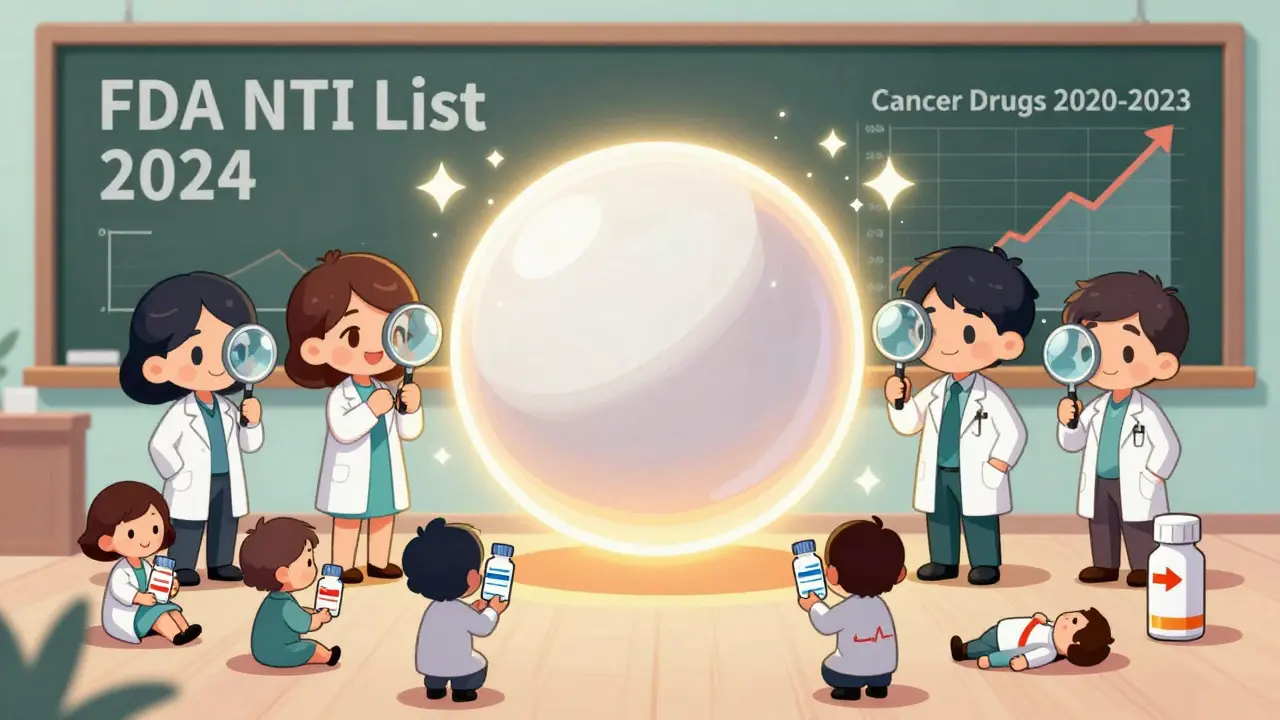
There are 33 approved drug products (from 14 active ingredients) officially listed as NTI by the FDA as of early 2024. That includes:
- Warfarin (blood thinner)
- Tacrolimus and cyclosporine (transplant drugs)
- Phenytoin and carbamazepine (seizure meds)
- Levothyroxine (thyroid hormone)
- Digoxin (heart medication)
- Flecainide (heart rhythm control)
- Aminoglycosides (antibiotics like gentamicin)
- Targeted cancer drugs like axitinib and nilotinib
These aren’t old drugs. The list keeps growing. Between 2020 and 2023, the FDA added 14 new active ingredients to the NTI list, mostly cancer therapies that target specific cells but have zero tolerance for dosing mistakes.
Why Generic NTI Drugs Are Not Like Other Generics
Most generic drugs must prove they’re bioequivalent to the brand - meaning their blood levels fall within 80% to 125% of the original. That’s a wide range. For a drug like atorvastatin, it’s fine. But for a drug like warfarin? That’s too risky.
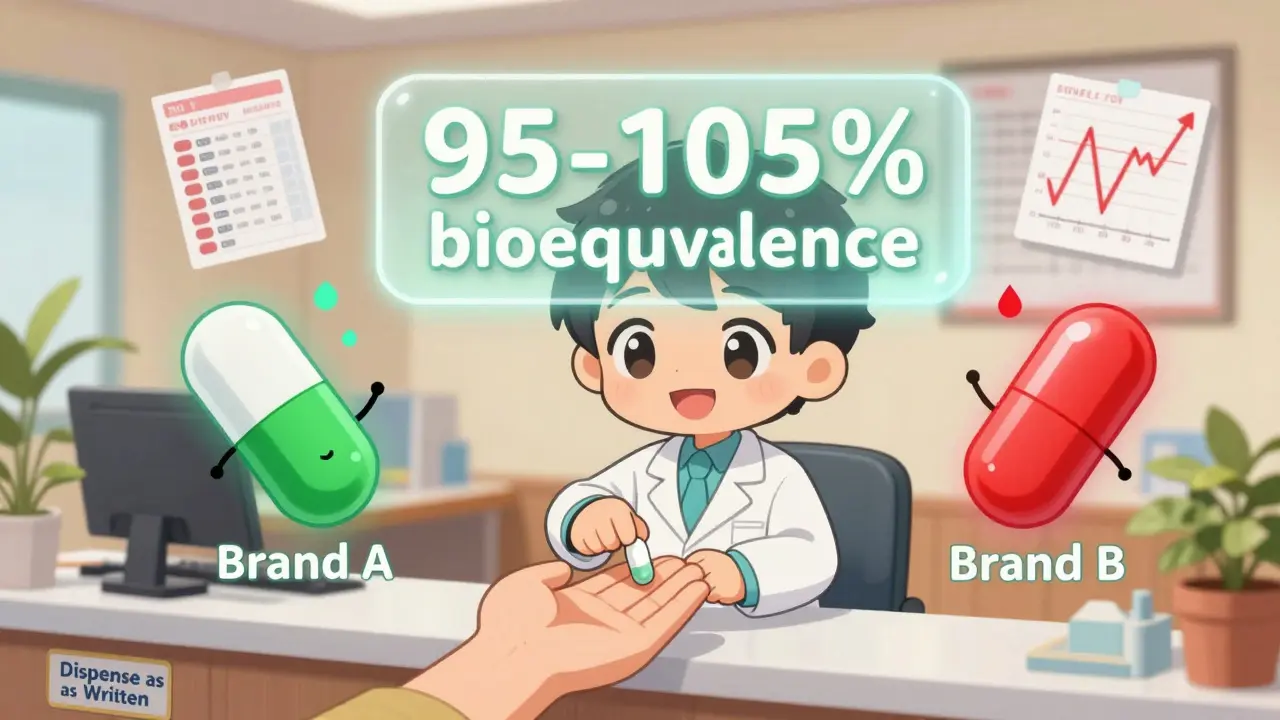
For NTI drugs, the FDA demands much tighter standards. Instead of 80-125%, the acceptable range for bioequivalence is often 90-111%. For some drugs with very low variability, like levothyroxine, it can be as narrow as 95-105%. That’s a huge difference. It means manufacturers must prove their generic version behaves almost identically to the brand - not just in average levels, but across every patient, every time.
This isn’t just paperwork. It requires more complex testing. Instead of a single-dose study, regulators now require replicate designs - giving the same dose multiple times to the same person to measure consistency. That’s expensive and time-consuming. That’s why there are fewer generic NTI drugs on the market than you might expect.
What Happens When You Switch Generics?
Patients often get switched from brand to generic - or from one generic to another - because of insurance rules or cost-cutting. For most drugs, it’s seamless. For NTI drugs? Not so much.
Pharmacists report real problems. One hospital pharmacist on Reddit shared: “I’ve seen patients on levothyroxine have TSH levels swing wildly after a generic switch. One patient went from 2.1 to 8.9 in two weeks. They needed three dose adjustments.”
Transplant patients have similar stories. A kidney transplant recipient wrote on a patient forum: “After my insurance switched me from Prograf to generic tacrolimus, my creatinine levels doubled. I ended up in the hospital.”
But it’s not all bad. Another patient with epilepsy said: “I’ve been on generic phenytoin for five years. No seizures. Stable levels. Saved $300 a month.”
The pattern? The biggest issues come from switching between different manufacturers - not from brand to generic. Two generics made by different companies may both meet FDA standards, but they’re not identical. And for NTI drugs, that’s enough to cause trouble.
How Doctors and Pharmacists Handle NTI Drugs
Healthcare providers don’t treat NTI drugs like other prescriptions. They take extra steps:
- Therapeutic Drug Monitoring (TDM): Blood tests are routine. For tacrolimus, levels are checked weekly at first, then monthly. For warfarin, INR checks happen every 1-4 weeks.
- Dispense as Written: Many doctors write “DAW” or “dispense as written” on the prescription to prevent automatic substitution. This is especially common for transplant and epilepsy patients.
- Same Manufacturer: Once a patient is stable on a specific brand or generic, providers try to keep them on it. Switching manufacturers - even if both are “generic” - is avoided unless absolutely necessary.
- Education: Pharmacists complete at least 16 hours of continuing education each year on NTI drugs, according to the American Society of Health-System Pharmacists (ASHP).
State laws also play a role. As of 2023, 42 U.S. states have laws that restrict or ban automatic substitution of NTI drugs. But the rules vary. Some states require prescriber consent. Others only apply to certain drugs. There’s no national standard.
The Cost vs. Safety Trade-Off
Generics save money. That’s why they exist. But with NTI drugs, the cost savings can come with hidden risks. A generic version of tacrolimus might cost $150 instead of $600 for the brand. But if switching causes rejection, the hospital bill could be $100,000.
Insurance companies often push for generics. But many hospitals and clinics have policies that block automatic substitution for NTI drugs. Some pharmacies refuse to fill substitutions without explicit approval from the prescriber.
The FDA acknowledges this tension. They’ve said that while generics are safe when properly tested, “the movement from ‘one size fits all’ to product-specific standards for NTI drugs is a sign of the maturation of the generic drug program.” In other words: we’re getting smarter about this.
What You Should Do If You Take an NTI Drug
If you’re on one of these drugs, here’s what matters most:
- Know your drug. Is it on the FDA’s NTI list? Ask your pharmacist or check the FDA’s website.
- Ask for consistency. Request that your prescription be written “dispense as written.” Don’t let your pharmacy switch brands without telling you.
- Track your levels. If you’re on warfarin, tacrolimus, or phenytoin, know your target range. Keep a log of your blood test results.
- Report changes. If you feel different after a refill - fatigue, dizziness, new seizures, unusual bruising - call your doctor. Don’t wait.
- Don’t assume all generics are equal. Even if two pills say “tacrolimus,” they might be made by different companies. Stick with the one that works.
Some patients worry that brand-name drugs are always better. That’s not true. Many people do fine on generics - as long as they stay on the same one. The problem isn’t generics. It’s switching.
The Future of NTI Drugs
The FDA plans to release 12 new product-specific guidances by 2025, mostly for cancer drugs with narrow therapeutic indices. That means more drugs will be added to the list.
Genetic testing is also coming into play. By 2028, experts predict 40% of NTI drug prescriptions will include pharmacogenomic testing - checking your genes to see how you metabolize the drug. That could make dosing even more precise.
Internationally, there’s still confusion. The U.S., Europe, and Japan all have different ways of defining NTI drugs. That makes global drug development harder. But progress is being made.
The goal isn’t to stop generics. It’s to make sure they’re safe. For NTI drugs, that means stricter rules, better monitoring, and more communication between you, your doctor, and your pharmacist.
Are all generic drugs the same as brand-name drugs?
For most drugs, yes. But for narrow therapeutic index (NTI) drugs, the answer is more complicated. While generics must meet FDA standards, the allowed variation in blood levels is much tighter than for regular drugs. Even small differences between two generic versions can affect safety. That’s why sticking with the same manufacturer is often recommended.
Can I switch from brand to generic for an NTI drug?
It’s possible - but only under close supervision. Your doctor should monitor your blood levels before and after the switch. Never switch on your own. If you’re stable on a brand or generic, staying on it is usually safer than switching, even to another generic.
Why do some pharmacists refuse to substitute NTI drugs?
Because the risks are real. Studies show that switching NTI drugs - even between generics - can lead to dangerous changes in blood levels. One survey found 64% of pharmacists believe substitution could cause therapeutic failure, compared to just 22% for non-NTI drugs. Many pharmacists won’t substitute unless the prescriber says it’s okay.
What should I do if I think my generic NTI drug isn’t working?
Contact your doctor immediately. Don’t adjust your dose yourself. Keep a record of your symptoms and when they started. If you recently switched medications, tell your provider. Blood tests may be needed to check your drug levels. Your doctor might switch you back to your previous version.
Is it legal for my pharmacy to switch my NTI drug without telling me?
It depends on your state. In 42 U.S. states, laws restrict or require prescriber approval for automatic substitution of NTI drugs. In others, pharmacists can switch unless the prescription says “dispense as written.” Always check your prescription label and ask your pharmacist if a substitution was made.
Anna Pryde-Smith
January 22, 2026 AT 19:48This is why I lost my cousin to a transplant rejection - insurance switched her from Prograf to some generic tacrolimus without telling her family. She was stable for years. Then one day she just... stopped responding. No warning. No notice. They didn't even test her levels before the switch. I swear, if the FDA had a 'danger zone' sticker for these drugs, I'd put it on every pharmacy counter. This isn't about cost. It's about people dying because someone in an office thought $450 was too much to pay.
Vanessa Barber
January 24, 2026 AT 14:19Interesting. But I’ve been on generic levothyroxine for 8 years. Same dose. Same lab results. No issues. Maybe the problem isn’t generics - it’s people who don’t get monitored.
Dawson Taylor
January 25, 2026 AT 19:38The systemic failure lies not in the pharmacology, but in the economic incentives that prioritize cost over clinical precision. The FDA’s tightened bioequivalence thresholds represent a necessary evolution, yet enforcement remains fragmented across state lines. Without uniform federal mandates, patient safety becomes a lottery.
Sallie Jane Barnes
January 26, 2026 AT 00:57As a nurse practitioner, I’ve seen too many patients panic because their TSH jumped after a pharmacy switch. I always write DAW on NTI scripts. I also hand them a printed list of the active ingredients and manufacturer names. Knowledge is power - and in this case, it’s life-saving.
Laura Rice
January 27, 2026 AT 17:18OMG I just found out my mom’s generic warfarin was switched last month and she’s been dizzy and bruising everywhere!! I’m calling her doctor RIGHT NOW. Why does this even happen?? Why don’t they just tell us?? This is terrifying. I feel like I’m living in a medical horror movie.
charley lopez
January 27, 2026 AT 18:27Pharmacokinetic variability in NTI agents is compounded by inter-individual CYP450 polymorphisms, rendering even compliant bioequivalence studies insufficient for predicting therapeutic outcomes in heterogeneous populations. The current regulatory paradigm remains inadequate for drugs exhibiting nonlinear clearance kinetics.
Kerry Evans
January 29, 2026 AT 05:41People who complain about generic switches are just lazy. If you can’t handle a tiny change in blood levels, maybe you shouldn’t be on a drug that requires monitoring. I’ve been on generic phenytoin since 2010. No seizures. No problems. Stop whining.
Susannah Green
January 30, 2026 AT 12:15PLEASE, if you're on an NTI drug - write "DO NOT SUBSTITUTE" on your prescription. Even if it says "dispense as written," pharmacists sometimes ignore it. I keep a laminated card in my wallet with my meds, doses, and manufacturer names. I show it to every pharmacist. It’s not paranoid - it’s survival.
Kerry Moore
February 1, 2026 AT 09:51Thank you for this comprehensive overview. The anecdotal evidence from transplant and epilepsy communities underscores the need for standardized, nationwide protocols. I hope regulatory bodies prioritize patient-centered frameworks over cost-driven substitution policies.
Sue Stone
February 1, 2026 AT 12:30My aunt switched generics for levothyroxine and gained 20 lbs in 3 months. No one told her it could happen. She just thought she was getting older. I’m telling everyone I know now.
Oladeji Omobolaji
February 3, 2026 AT 07:15Here in Nigeria, we don’t even have generics for these drugs. If you need cyclosporine, you pay full price or don’t get it. So I’m kinda glad y’all have the option - even if it’s risky. At least you can test your levels.
Janet King
February 3, 2026 AT 22:47Doctors should be required to document the manufacturer name on every NTI prescription. It’s not complicated. Just write it. Then everyone - patient, pharmacist, insurance - knows what to expect. Simple. Effective. Life-saving.