 by
by How Your Gut Bacteria Affect Drug Side Effects and Metabolism
14 Jan, 2026Gut Bacteria Drug Risk Calculator
Select Your Medication
Choose a drug from our database to see how your gut bacteria might affect it
Your Gut Health Factors
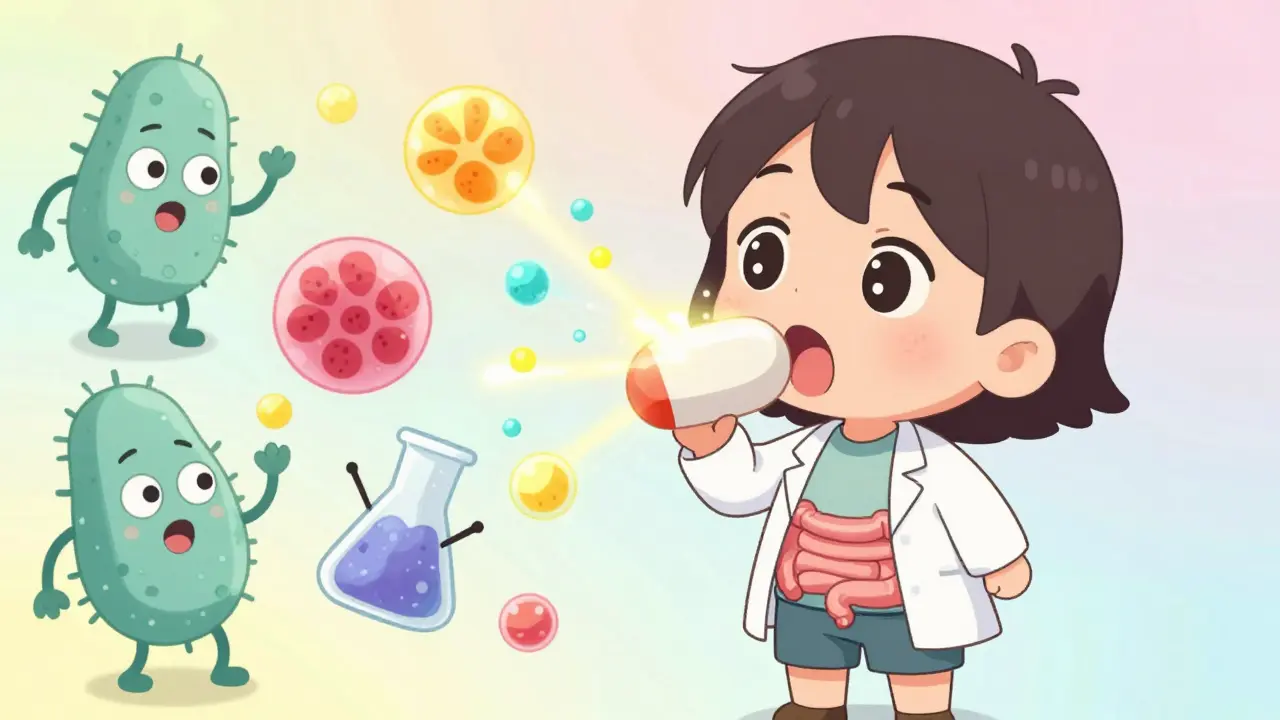
When you take a pill, you assume it’s just your body breaking it down. But what if your gut bacteria were also in on the process-changing the drug before your cells even see it? That’s not science fiction. It’s happening right now, and it’s why two people taking the same dose of the same medicine can have wildly different reactions-one feels better, the other ends up in the ER.
Why Your Gut Bacteria Are Secret Drug Chemists
Your gut is home to trillions of bacteria. They help digest food, train your immune system, and even make some vitamins. But they also act like tiny chemical factories, modifying drugs in ways doctors never accounted for. These microbes don’t just sit there-they actively break down, activate, or even poison medications through enzymes that your own body doesn’t have. A landmark 2019 study from Yale found that gut bacteria transformed three common drugs into toxic metabolites responsible for 20% to 80% of the harmful compounds circulating in patients’ blood. That means for some people, the side effects aren’t from the drug itself-they’re from what the bacteria turned it into. This isn’t rare. Around 63 of the most commonly prescribed drugs are now known to be affected by gut microbes. Take irinotecan, a chemotherapy drug used for colon cancer. About 30-40% of patients suffer severe diarrhea because gut bacteria produce an enzyme called beta-glucuronidase. This enzyme reactivates a toxic byproduct (SN-38) that was supposed to be safely eliminated. In patients with high levels of this enzyme, the diarrhea is so bad it forces doctors to reduce the dose-or stop treatment entirely. Studies show that blocking this enzyme cuts diarrhea severity by 60-70%.Drugs That Get Altered by Gut Bacteria
It’s not just chemotherapy. Many everyday medications are changed by your microbiome:- Digoxin (used for heart failure): In some people, a bacterium called Eggerthella lenta inactivates the drug. That’s why 30% of patients need higher doses-because their bacteria are neutralizing it.
- Clonazepam (an anti-seizure drug): Germ-free mice had 40-60% higher drug levels in their blood than normal mice. That means gut bacteria help clear it out. If you’ve taken antibiotics recently, your body might hold onto this drug longer, increasing drowsiness or dizziness.
- Prontosil (an old antibiotic): This drug doesn’t work at all unless gut bacteria split it open to release the active ingredient. Antibiotics can wipe out these bacteria-and make the drug useless.
- Lovastatin (a cholesterol-lowering statin): Long-term antibiotics can reduce its effectiveness by up to 35%. That’s because gut bacteria help convert it into its active form.
- Nitrazepam (a sedative): In animal studies, antibiotics reduced birth defects caused by this drug by 78%. The bacteria were turning it into a teratogen-and removing them stopped the damage.
These aren’t edge cases. A 2023 review in Nature identified 117 drugs where gut bacteria significantly alter how they work. In 82% of those cases, the microbiome reduced effectiveness. In 18%, it made side effects worse.
Why This Changes Everything About Medicine
For decades, doctors assumed drug responses depended mostly on liver enzymes, kidney function, and genetics. But that model doesn’t explain why identical twins can react differently to the same pill. Now we know: their gut bacteria might be completely different. This isn’t just academic. In the U.S. alone, over 1.3 million emergency room visits each year are caused by adverse drug reactions. Many of these could be prevented if we knew how a person’s microbiome was handling their medication. Andrew Goodman, lead researcher at Yale, put it simply: “If we can understand the microbiome’s contributions to drug metabolism, we can decide which drugs to give to patients-or even alter the microbiome so patients have a better response.” That’s the future of medicine: not one-size-fits-all prescriptions, but treatments tailored to your gut. Imagine a blood test that also checks your microbiome profile before prescribing a drug. Or a probiotic you take alongside chemotherapy to block the enzyme that causes diarrhea.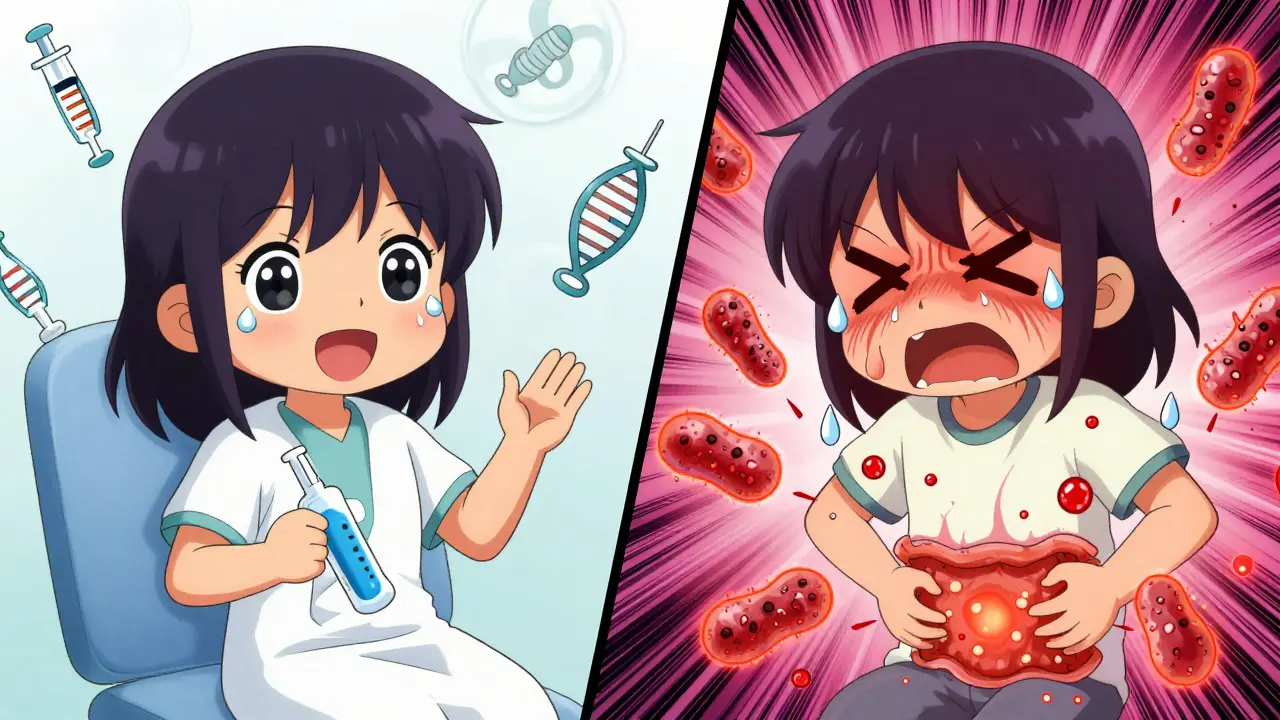
How Scientists Are Measuring Microbiome Drug Reactions
Researchers don’t guess anymore. They test. Here’s how:- Fecal samples: A small stool sample can be analyzed for microbial genes that code for drug-metabolizing enzymes. Metagenomic sequencing can identify these with 95% accuracy-and costs $300-$500 per test.
- Gnotobiotic mice: These are mice raised without any microbes. Scientists transplant human gut bacteria into them, then give the mice drugs to see how the human microbiome reacts. It’s expensive ($850-$1,200 per mouse), but it’s the gold standard for proving cause and effect.
- In vitro tests: Lab dishes with human fecal samples and drugs. If the drug disappears or changes, bacteria are doing something to it. These tests take 48 hours and need just 3 mL of stool.
Since 2020, big pharma companies like Pfizer and Merck have started including microbiome screening in early drug trials. It adds $2.5 million to development costs-but saves an estimated $500 million by avoiding dangerous side effects after the drug hits the market.
What’s Being Done to Fix This Now
Scientists aren’t just identifying the problem-they’re building solutions:- Beta-glucuronidase inhibitors: These are pills designed to block the enzyme that turns irinotecan into a toxin. In Phase II trials, they’ve cut chemotherapy diarrhea by 60%.
- Personalized probiotics: Researchers are testing custom probiotics that either add helpful bacteria or remove harmful ones. One trial (NCT05102805) is testing a mix designed to reduce clonazepam metabolism in patients prone to drowsiness.
- Fecal transplants: Already used for C. diff infections, they’re now being tested to reset a patient’s microbiome before starting a new drug. Costs range from $3,000 to $6,000, but for some cancer patients, it’s life-changing.
Regulators are catching up too. The FDA issued draft guidance in 2022 asking drugmakers to test for microbiome interactions, especially for drugs with narrow safety margins. The European Medicines Agency now requires this testing for all new cancer drugs.
The Big Catch: Drugs Change Your Gut Too
Here’s the twist: it’s not a one-way street. Drugs don’t just get changed by your microbiome-they change your microbiome. Antibiotics are the obvious example. But even non-antibiotic drugs like metformin (for diabetes), SSRIs (for depression), and NSAIDs (like ibuprofen) alter gut bacteria composition. That means taking a drug today might affect how you respond to another drug next month. It’s a feedback loop. Your medication changes your bacteria. Your bacteria change how your next medication works. And we’re only starting to map it.What This Means for You
If you’re on long-term medication, especially for cancer, heart disease, seizures, or chronic pain, your gut bacteria might be silently affecting your treatment. Here’s what you can do:- Don’t take antibiotics unless necessary. They can wipe out bacteria that help metabolize your drugs-and it can take months to recover.
- Track side effects. If you notice new or worsening symptoms after starting a new drug, consider whether your gut might be involved. Tell your doctor.
- Ask about microbiome testing. It’s not routine yet-but it’s becoming available in specialized clinics and research hospitals.
- Be cautious with probiotics. Not all are created equal. Some might interfere with your meds. Talk to your pharmacist before starting any.
This isn’t about fear. It’s about awareness. Your gut isn’t just for digestion. It’s a silent partner in every pill you swallow. And now that we’re learning how to listen, we’re finally starting to understand why some people respond-and others don’t.
Andrew Freeman
January 16, 2026 AT 03:57Susie Deer
January 16, 2026 AT 22:24TooAfraid ToSay
January 18, 2026 AT 00:34Vicky Zhang
January 19, 2026 AT 13:54Allison Deming
January 19, 2026 AT 20:02Sarah Triphahn
January 21, 2026 AT 18:57Robert Way
January 22, 2026 AT 13:23Dylan Livingston
January 23, 2026 AT 13:12says haze
January 24, 2026 AT 02:11Anna Hunger
January 25, 2026 AT 23:30shiv singh
January 27, 2026 AT 18:25Alvin Bregman
January 27, 2026 AT 19:32Sarah -Jane Vincent
January 27, 2026 AT 19:44Henry Sy
January 29, 2026 AT 18:07