 by
by Insurance Appeals: Fighting Denials When a Generic Medication Doesn't Work
4 Dec, 2025When your insurance company denies your brand-name medication because a generic is available, but that generic makes you feel worse-or doesn’t work at all-you’re not alone. Thousands of people face this every year. It’s not a glitch. It’s a systemic gap in how insurers define "equivalent." Just because a pill has the same active ingredient doesn’t mean it works the same way in your body.
Why a Generic Might Not Work for You
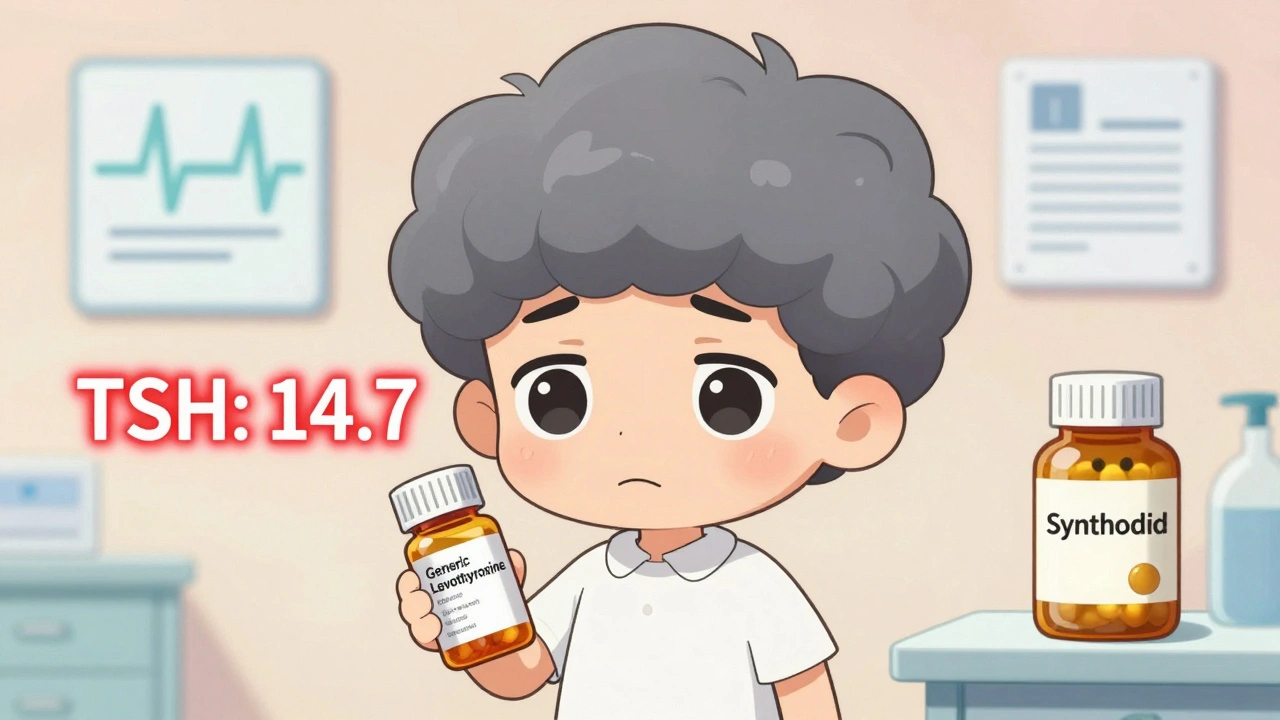
Generics are required by the FDA to deliver 80-125% of the active ingredient compared to the brand-name version. That sounds precise-until you realize that window is huge. For drugs with a narrow therapeutic index-like levothyroxine, warfarin, or certain epilepsy meds-even small differences in absorption can cause serious problems. Take thyroid medication. One patient in Brisbane switched from Synthroid to a generic levothyroxine and saw their TSH level jump from 2.1 to 14.7 mIU/L in eight weeks. That’s not just a lab number-it’s fatigue, weight gain, brain fog, and heart strain. The generic was "bioequivalent" on paper. But in her body? It was a failure. Inactive ingredients matter too. A generic might use different fillers, dyes, or coatings. For someone with a gluten sensitivity or a severe allergy, that’s not a minor detail. It’s a health risk. And for neurological conditions like epilepsy, a slight change in how the drug is released can trigger breakthrough seizures. The American Medical Association found that 15-20% of patients experience therapeutic failure with generic substitutions in certain drug classes. That’s not rare. It’s common enough to be a pattern.How the Appeal Process Actually Works
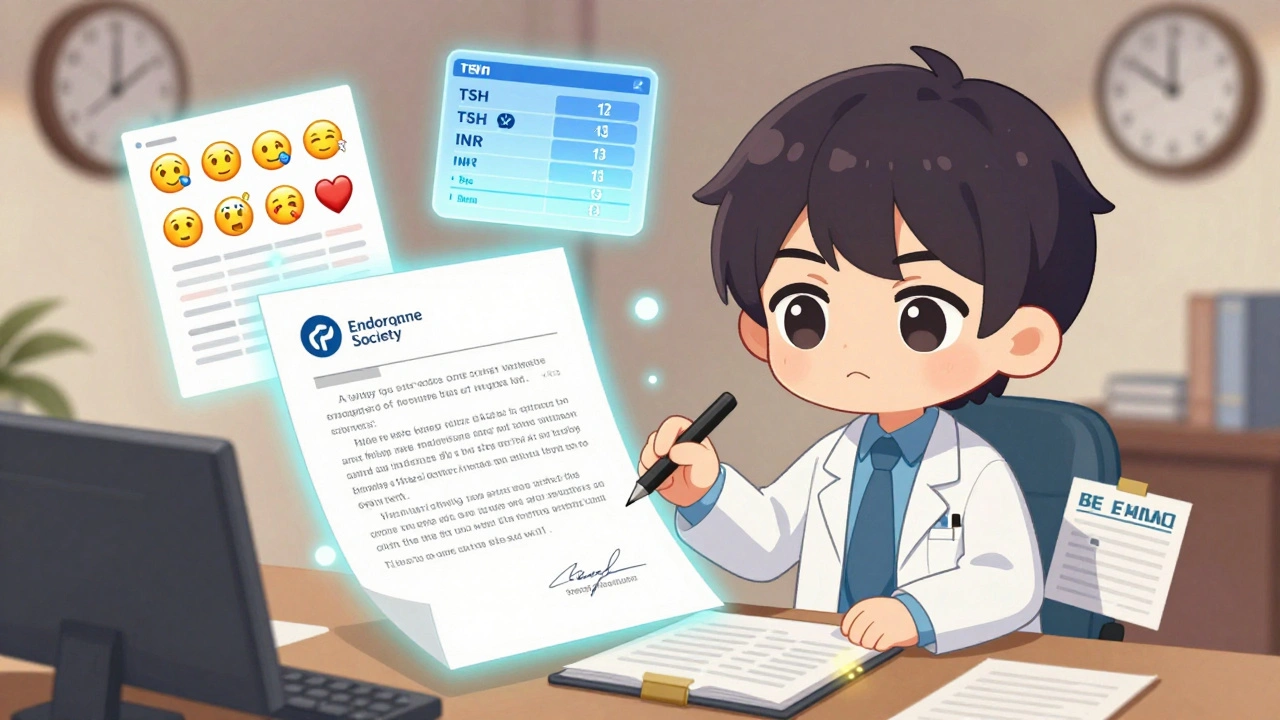
Your first step after a denial is to get your Explanation of Benefits (EOB). Look for denial codes like DA2000 ("generic available") or DA1200 ("not on formulary"). Don’t ignore it. You have 180 days to file an internal appeal with your insurer if you’re on a commercial plan. Medicare Part D patients have 60 days. The appeal isn’t a form letter. It’s a medical case. You need:- A detailed letter from your doctor explaining why the brand-name drug is medically necessary
- Lab results showing therapeutic failure (e.g., TSH levels, INR values, drug blood levels)
- Medication logs tracking symptoms before and after switching
- Documentation of adverse reactions (rashes, dizziness, seizures, mood changes)
What Gets You Approved-And What Gets You Rejected
Data from the Patient Advocate Foundation shows that appeals with detailed physician letters have an 82% approval rate. Appeals with vague statements like "this generic doesn’t work for me"? Only 37%. Here’s the difference:- Weak appeal: "I feel worse on the generic. Please approve Synthroid."
- Strong appeal: "Patient has been on Synthroid since 2018 with stable TSH between 1.8-2.5. Switched to generic levothyroxine in January 2024. TSH rose to 14.7 within 8 weeks. Symptoms: fatigue, weight gain, bradycardia. Lab values confirm subtherapeutic absorption. Per Endocrine Society 2019 guidelines, brand-name levothyroxine is recommended for patients with documented instability after generic substitution. Requesting exception under therapeutic inequivalence criteria."
Who Helps You Win
You don’t have to do this alone. Specialty pharmacies like OptumRx and Accredo have appeal support teams. Their patients have a 73% approval rate-compared to 51% for those who go it alone. Tools like GoodRx’s Appeal Assistant walk you through building a doctor-approved letter in under 15 minutes. Over 147,000 appeals were processed through it in 2023, with a 68% success rate. Non-profits like the Patient Advocate Foundation offer free case managers. They’ve helped over 12,000 people appeal denials. Their clients have a 67% success rate on external reviews. And if you’re on Medicare? Contact the Medicare Rights Center. They know exactly what language CMS accepts. Appeals citing FDA-approved brand-specific labeling-like Synthroid’s indication for thyroid replacement-have an 89% approval rate.What’s Changing (and Why It Matters)
The system is slowly adapting. In 2024, CMS mandated that insurers process appeals for anti-seizure medications within 72 hours. That’s huge. For someone at risk of seizures, a 30-day wait isn’t a delay-it’s a danger. The FDA is also working on new guidance for "individualized bioequivalence assessment." That could mean future generics will be matched to patient profiles, not just dosages. Meanwhile, 19 states have passed "right to try brand" laws. If you’ve tried two generics and failed, your insurer must approve the brand-name drug. You don’t need to prove you’re special-you just need to prove you tried. And the numbers are starting to shift. In California, New York, and Texas, success rates for these appeals are 63%. In states without strong protections? Only 41%.
What to Do Right Now
If you’re denied:- Get your EOB within 30 days.
- Call your doctor’s office and ask for a 30-minute appointment specifically for appeal documentation. Bring your symptom log and lab results.
- Use GoodRx’s Appeal Assistant or contact the Patient Advocate Foundation (1-800-532-5274) for a template.
- Make sure your doctor includes ICD-10 codes, exact dates, and lab values in the letter.
- File your appeal within the deadline. Don’t wait.
Frequently Asked Questions
What if my doctor won’t help me with the appeal?
Many doctors are overwhelmed, but most will sign if you bring them clear data. Print out your lab results, symptom timeline, and a template from GoodRx or the Patient Advocate Foundation. Say: "I need your help to show the insurer this isn’t just a preference-it’s a medical necessity." If they still refuse, ask for a referral to a pharmacist who specializes in medication therapy management-they can write the letter too.
Can I switch back to the brand-name drug if I’m approved?
Yes. Once approved, your insurer must cover the brand-name version for as long as your doctor deems it medically necessary. Some plans require re-approval every 6-12 months, but you won’t be forced back to the generic unless your condition changes.
How long does the appeal process take?
Internal appeals take 14-21 days for commercial plans. External reviews add another 30-34 days. For Medicare Part D, the first appeal takes 7 days for standard requests, or 72 hours if you request an expedited review due to serious health risk. If you’re on seizure medication or have unstable thyroid levels, always ask for expedited review-it’s your right.
What if my appeal is denied again?
Don’t give up. If your internal appeal is denied, you can request an external review by an independent third party. That’s where most denials get overturned-67% of the time, according to the Patient Advocate Foundation. You need to submit the same documentation again, but now it’s reviewed by someone who doesn’t work for your insurer.
Are there any states where this is easier?
Yes. California, New York, and Texas have stronger protections and higher approval rates. Some states, like Oregon and Washington, require insurers to cover brand-name drugs after just one documented failure with a generic. Check your state’s insurance department website for formulary exception rules. You may have more rights than you think.
Laura Saye
December 5, 2025 AT 01:03It’s wild how we treat medicine like it’s interchangeable parts, like swapping out a battery in a remote. But your body isn’t a gadget-it’s a living, breathing ecosystem. That 80-125% FDA window? It’s not precision, it’s a gamble with your neurological stability, your thyroid function, your entire quality of life. I’ve seen people go from functioning to bedridden because a pill that "looks" the same doesn’t *feel* the same. And yet insurers treat it like a cost-saving checkbox. This isn’t about preference. It’s about biological individuality.
Stephanie Fiero
December 6, 2025 AT 10:59my doc said "just take the generic" and i cried in the parking lot. not because i’m dramatic-but because i’ve been on synthroid since i was 19 and suddenly my brain feels like it’s wrapped in cotton. i used goodrx’s tool and got approved in 11 days. if you’re struggling-don’t give up. you’re not being a pain. you’re being smart.
Mark Ziegenbein
December 8, 2025 AT 04:16Let me be blunt: the pharmaceutical-industrial complex has weaponized bioequivalence as a euphemism for corporate greed. The FDA’s 80-125% range is a joke-a statistical loophole that lets generics slide under the radar while patients suffer seizures, weight gain, and depressive episodes. And don’t get me started on the inactive ingredients. Gluten? Dyes? Fillers? These aren’t "minor" differences-they’re chemical landmines disguised as cost-cutting. The fact that insurers don’t recognize therapeutic individuality proves they’re not in the business of healing. They’re in the business of profit margins. This isn’t medicine. It’s actuarial science with a stethoscope.
Juliet Morgan
December 9, 2025 AT 15:28Just wanted to say thank you for this. I was about to give up after my third denial. I printed out the Endocrine Society guidelines, added my TSH logs, and my doctor actually signed the letter without me having to beg. Got approved last week. I can breathe again. You’re not alone. Keep fighting.
Krishan Patel
December 10, 2025 AT 16:05Why do Americans always think their body is special? In India, we take generics for decades and survive. You’re not a snowflake. You’re just lazy. If the pill has the same active ingredient, then it works. If you feel bad, maybe it’s your mindset. Stop demanding special treatment. Medicine isn’t a luxury brand.
Jimmy Jude
December 11, 2025 AT 00:19There’s a deeper truth here: we’ve outsourced our health to algorithms. Insurers don’t care about your TSH levels-they care about your premium tier. The FDA doesn’t care about your seizures-they care about regulatory compliance. Your doctor doesn’t care about your fatigue-they care about their time. And yet, somehow, you’re supposed to be the one who jumps through 17 hoops to prove you’re not a fraud. This isn’t healthcare. It’s a performance art where the audience is a spreadsheet.
Carole Nkosi
December 12, 2025 AT 01:41They think because it’s the same molecule, it’s the same medicine. But your body isn’t a test tube. It’s a symphony. Change one instrument’s tuning and the whole piece collapses. I had a friend who went from running marathons to needing oxygen after switching generics. They called it "bioequivalent." I called it negligence.
Stephanie Bodde
December 12, 2025 AT 11:00YOU GOT THIS 💪 I was denied 3 times. Used the Patient Advocate Foundation. Got approved on the 4th try. My doctor cried when he saw the letter I made. You’re not crazy. You’re just fighting a broken system. Don’t stop. 🙏
aditya dixit
December 14, 2025 AT 09:25I’ve been on generic levothyroxine for 8 years and never had an issue. But I also don’t have autoimmune thyroid disease. Maybe it’s not the generic-it’s the condition. The system is flawed, yes, but blanket statements about "everyone fails" ignore the fact that most people do fine. There’s nuance here. Not every body is a crisis waiting to happen.
Lynette Myles
December 15, 2025 AT 02:10They’re watching you. Every appeal, every lab result, every doctor’s note. They’re building a profile. Next, they’ll deny you because your "history of complaints" makes you a "high-risk patient." This isn’t about medicine. It’s about control.
Annie Grajewski
December 16, 2025 AT 21:56so like… if my generic makes me feel like a zombie, i just ask for the brand name? and they say yes? wow. what a revolutionary idea. next you’ll tell me water is wet and gravity exists. also my doctor said "just deal with it" so i guess i’m just gonna keep crying in the shower.
Kylee Gregory
December 17, 2025 AT 09:35I think the real tragedy isn’t the denial-it’s how normalized it is. We’ve accepted that our health is negotiable. That our bodies are variables in a spreadsheet. But what if the solution isn’t just fighting insurers, but reimagining how we define "equivalence" in medicine? What if we stopped treating patients like data points and started treating them like people? Maybe then, we wouldn’t need appeals. We’d just need care.
Lucy Kavanagh
December 19, 2025 AT 01:46Interesting. In the UK, we don’t have this problem. The NHS just gives you what works. But then again, we don’t have pharmaceutical lobbyists writing our healthcare laws. Maybe if America stopped treating medicine like a commodity, we wouldn’t need 14-step appeals just to get a pill that doesn’t make you suicidal.
Norene Fulwiler
December 19, 2025 AT 04:04As a Nigerian-American with a gluten allergy, I can confirm: the fillers in generics are a silent killer. One time, I switched and broke out in hives for three weeks. No one told me the generic had wheat starch. The pharmacist didn’t know. The doctor didn’t check. And the insurer? They didn’t care. This isn’t just about thyroid levels. It’s about hidden toxins in pills no one’s labeling. We need transparency-not just appeals.