
 by
by Medications Safe During Pregnancy: A Complete Patient List
1 Dec, 2025When you’re pregnant, even a simple headache or stuffy nose can feel like a crisis. You want relief, but you’re terrified of harming your baby. The truth is, you don’t have to suffer - and you don’t have to guess. Many common medications are safe during pregnancy, but only if you know which ones, how much to take, and when to avoid them.
What Makes a Medication Safe During Pregnancy?
There’s no such thing as a 100% risk-free drug in pregnancy. But safety isn’t about zero risk - it’s about balancing the harm of untreated illness against the possible harm of treatment. For example, uncontrolled high blood pressure or severe depression can be far more dangerous to your baby than the right medication. That’s why doctors don’t just say “avoid everything.” They look at real data - from decades of tracking thousands of pregnancies - to tell you what’s likely safe. The old A, B, C, D, X letter system from the FDA is gone because it was too confusing. Today, drug labels give clear, plain-language summaries: what’s known, what’s not known, and what to watch for. The key is using medications only when needed, at the lowest effective dose, and for the shortest time possible.Safe Allergy Medications During Pregnancy
Allergies don’t take a break during pregnancy - and neither should your relief. The most consistently recommended antihistamines are:- Cetirizine (Zyrtec): 10 mg once daily. Used by over 90% of OB-GYNs as first-line treatment. No increased risk of birth defects in over 1,500 documented cases.
- Loratadine (Claritin): 10 mg once daily. Also well-studied and safe. Avoid Claritin-D - it contains pseudoephedrine.
- Fexofenadine (Allegra): 180 mg once daily. Non-drowsy option. Only use the plain version, not multi-symptom formulas.
Even Benadryl (diphenhydramine) is considered safe for occasional use, but newer guidelines from ACOG (November 2023) suggest limiting it because it may cause drowsiness that affects alertness - and some early data hints at possible long-term cognitive effects with frequent use. Stick to the non-sedating options unless you need help sleeping.
Saline nasal sprays? Totally safe. Use them as often as you need. They hydrate your nasal passages without any drug exposure. Neti pots? Fine too - just use distilled or boiled water.
Cold, Cough, and Congestion Relief
You can treat cold symptoms without risking your baby - but you have to be picky about what you choose.- Guaifenesin (Mucinex): Safe at standard doses (600-1200 mg every 12 hours). Only use the plain version. Avoid anything labeled “Multi-Symptom,” “Day/Night,” or “Cold & Flu” - those often contain unsafe decongestants or cough suppressants.
- Dextromethorphan (Robitussin DM): Maximum 120 mg in 24 hours. Used for dry cough. Not linked to birth defects in large studies.
- Saline nasal spray: Again, your best friend. Use it multiple times a day. It’s drug-free and works.
Pseudoephedrine (Sudafed) is tricky. Some providers say it’s okay after the first trimester. Others say avoid it entirely. Why? It can raise blood pressure and reduce blood flow to the placenta. If you must use it, check with your doctor first. And in some states, you can’t even buy it without showing ID - because of its link to meth production.
Never use phenylephrine (found in many OTC cold medicines). Studies suggest it may not even work well for congestion - and there’s no proven safety data in pregnancy.
Pain Relief: Acetaminophen Is Your Go-To
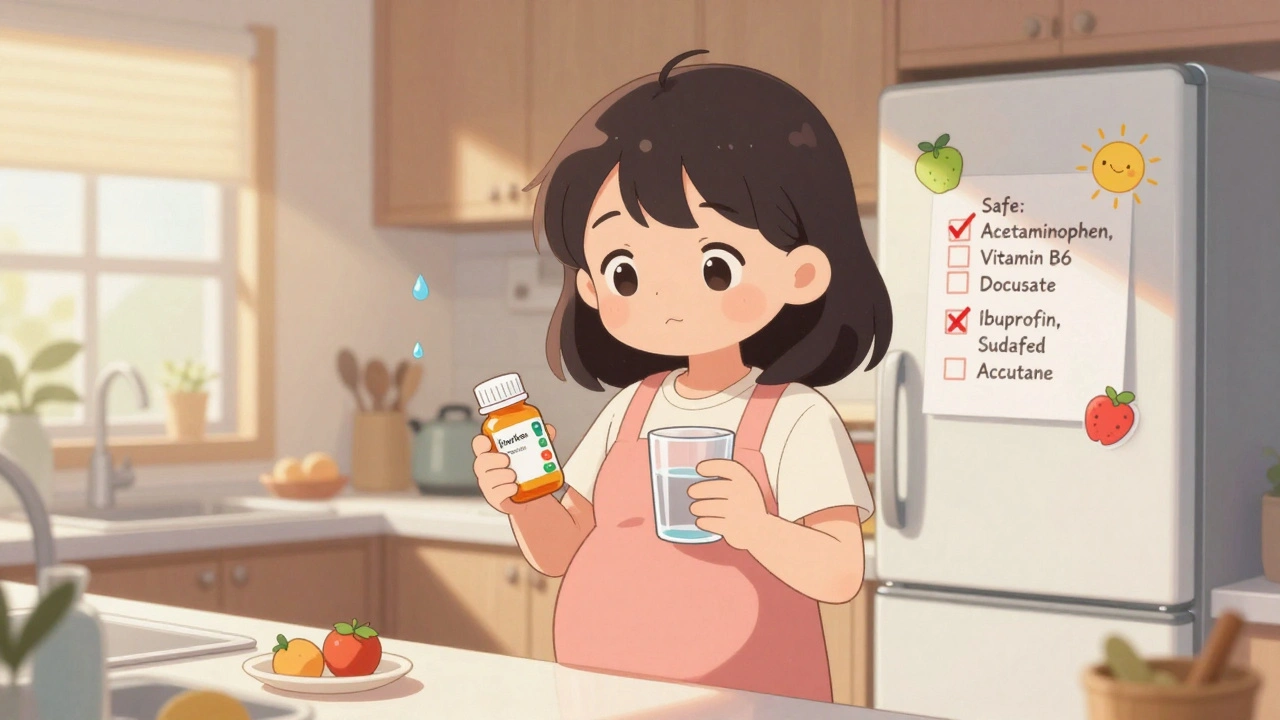
This is the one thing every expert agrees on: acetaminophen (Tylenol) is the safest pain reliever and fever reducer during pregnancy.- Dosage: Do not exceed 3,000 mg per day (that’s six 500 mg tablets).
- Form: Avoid Tylenol PM. It contains diphenhydramine (an antihistamine) and extra acetaminophen - you could accidentally overdose.
- Timing: Safe in all trimesters. Use only when needed. Don’t take it daily for weeks unless your doctor says so.
Why not ibuprofen or naproxen? Because after 20 weeks, these NSAIDs can cause serious problems in your baby’s kidneys and heart. They can also lead to low amniotic fluid levels. Even a single dose after 30 weeks can be risky. Skip Advil, Aleve, Motrin - and don’t assume “natural” pain relief like willow bark is safer. It contains salicin, which acts like aspirin - and aspirin is not safe in pregnancy.
Heartburn and Nausea: Common Problems, Simple Solutions
Heartburn affects up to 80% of pregnant people. Nausea? Up to 90%. Both are miserable - but both are treatable.- Calcium carbonate (Tums): Safe and effective. You can take it as needed. Just don’t go over 1,500 mg of elemental calcium per day - too much can cause constipation.
- Famotidine (Pepcid): 20 mg twice daily maximum. Reduces stomach acid without crossing the placenta in large amounts. Often recommended if Tums aren’t enough.
- Vitamin B6 + Doxylamine: This combo - 25 mg of vitamin B6 three times daily plus 25 mg of doxylamine (Unisom) up to three times daily - is the exact formula in Diclegis, the only FDA-approved medication for morning sickness. It works. Studies show it cuts vomiting by 70% or more. If your nausea is severe, ask your provider about this. It’s not “just a sleep aid.” It’s a proven treatment.
Don’t try ginger supplements or acupuncture without talking to your doctor first. While many find them helpful, there’s no standard dose, and some herbal products can interfere with pregnancy hormones.
Constipation: Don’t Ignore It
Hormones slow digestion. Iron supplements make it worse. But you don’t have to suffer.- Polyethylene glycol (Miralax): 17 grams once daily. Safe, non-absorbed, gentle. Works in 1-3 days.
- Docusate sodium (Colace): Safe for occasional use. Helps soften stool but doesn’t cause contractions.
- Water, fiber, movement: Drink half your body weight in ounces of water daily. Eat prunes, beans, oats. Walk 20 minutes after meals.
Avoid stimulant laxatives like senna or bisacodyl unless prescribed. They can cause cramping and dehydration.
What About Antidepressants and Other Chronic Medications?
This is where things get personal - and why you need your doctor’s input.- Sertraline (Zoloft): The most studied SSRI in pregnancy. Most experts recommend continuing it if you were on it before pregnancy. Stopping suddenly can trigger relapse - which is riskier than the medication.
- Fluoxetine (Prozac): Also well-studied. Safe for long-term use.
- Paroxetine (Paxil): Avoid if possible. Some data links it to a small increase in heart defects.
For asthma, diabetes, thyroid disorders, seizures - never stop your medication without talking to your provider. Uncontrolled asthma can starve your baby of oxygen. High blood sugar can cause birth defects. Low thyroid can affect brain development. The risks of stopping often outweigh the risks of continuing.
The FDA updated its warning on sertraline in October 2023, noting a small risk of neonatal adaptation syndrome (jitteriness, feeding trouble) in babies exposed late in pregnancy. But this is temporary - not permanent - and manageable with monitoring after birth.
What to Avoid Completely
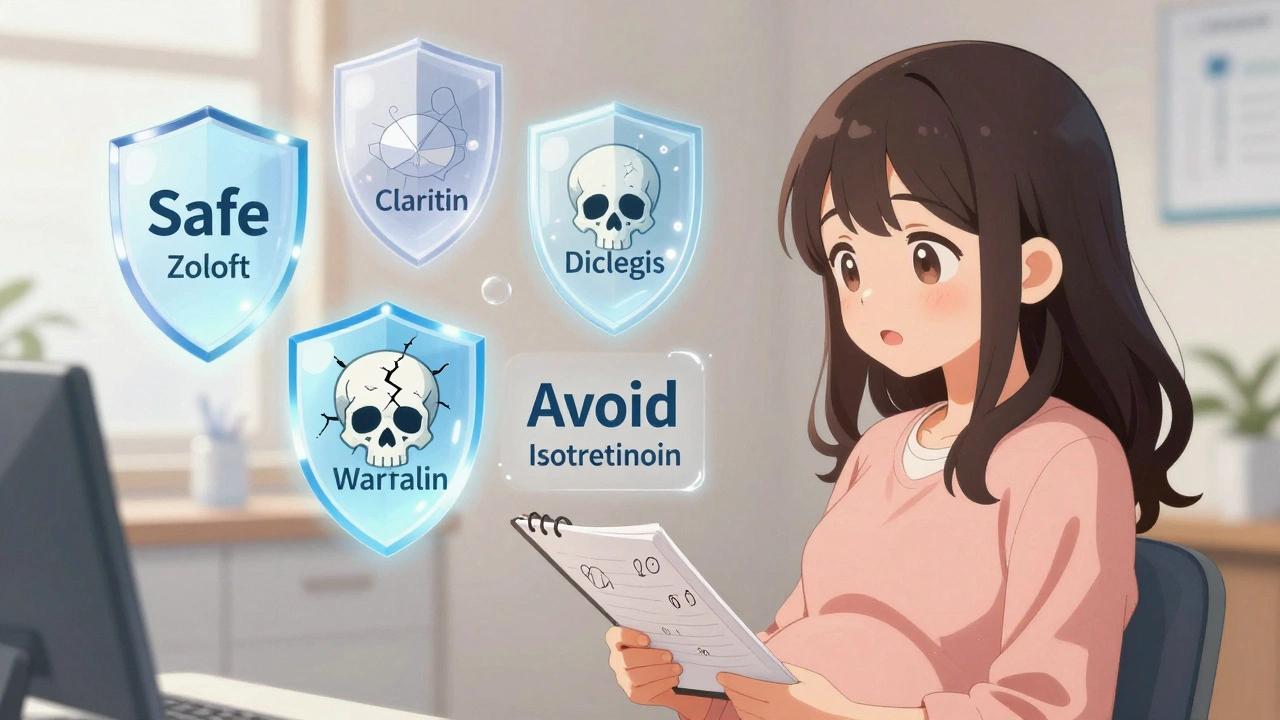
Some medications have clear, serious risks:- Isotretinoin (Accutane): Causes severe birth defects. Must avoid completely.
- ACE inhibitors (Lisinopril, Enalapril): Can cause kidney damage and low amniotic fluid in the fetus.
- Warfarin (Coumadin): Can cause bleeding and bone problems in the baby.
- High-dose vitamin A supplements: More than 10,000 IU/day can be toxic.
- Herbal teas and supplements: Many contain unknown ingredients. Avoid chamomile, black cohosh, dong quai, and others unless approved by your provider.
And remember: “natural” doesn’t mean safe. Essential oils, CBD, and cannabis are not regulated and can cross the placenta. Skip them.
Real-Life Challenges: Why People Struggle
Many pregnant people stop taking necessary medications because they’re scared. One survey found 41% of pregnant users discontinued antidepressants, pain meds, or asthma drugs - even when their doctor said it was safe. Why? Confusion. Mixed messages. Fear. A Reddit user in Texas said her pharmacist refused to sell her Sudafed without extra paperwork - even though her doctor approved it. Another mom said she took Tylenol every day for weeks because she had migraines - and didn’t realize she was nearing the daily limit. The gap between guidelines and real life is wide. Your provider might say “it’s safe,” but your friend’s cousin heard “it causes autism.” Your pharmacist might say “don’t take that,” but your OB says “take it.” That’s why you need to write down your questions. Bring your pill bottles. Take pictures of labels. Ask: “Is this safe? How much? For how long?” Don’t assume. Don’t guess.Final Advice: What to Do Today
1. Make a list of every medication, supplement, and OTC product you’re taking - even herbal teas. 2. Call your OB or midwife and ask: “Which of these are safe?” Don’t wait for your next appointment. 3. Use trusted sources: MotherToBaby.org, ACOG.org, and the FDA’s Medicines in Pregnancy app are free and updated regularly. 4. Don’t use multi-symptom products. Pick one thing at a time. More ingredients = more risk. 5. Track your doses. Use a notebook or phone app. Write down what you took, when, and why. 6. When in doubt, skip it. If you’re unsure, wait. Try saline spray instead of decongestant. Try rest and ice instead of ibuprofen. Your body is resilient - but so is your baby.Pregnancy isn’t the time to experiment. But it’s also not the time to suffer. With the right information, you can feel better - safely.
Is Tylenol safe during pregnancy?
Yes, acetaminophen (Tylenol) is the safest pain reliever and fever reducer during pregnancy. The maximum daily dose is 3,000 mg - that’s six 500 mg tablets. Avoid Tylenol PM because it contains diphenhydramine. Do not use it daily for weeks without talking to your provider.
Can I take Zyrtec or Claritin while pregnant?
Yes. Both cetirizine (Zyrtec) and loratadine (Claritin) are considered safe at standard doses (10 mg daily). Avoid Claritin-D or Zyrtec-D - those contain pseudoephedrine, which should be avoided in early pregnancy. Stick to the plain, non-drowsy versions.
Is ibuprofen safe during pregnancy?
No. Ibuprofen (Advil, Motrin) and naproxen (Aleve) should be avoided after 20 weeks of pregnancy. They can cause kidney problems in the baby, reduce amniotic fluid, and affect heart development. Even occasional use in the third trimester carries risk. Use acetaminophen instead.
What’s the best remedy for morning sickness?
The most effective, FDA-approved treatment is vitamin B6 (25 mg) plus doxylamine (Unisom), taken up to three times daily. This combo is the active ingredient in Diclegis. Many women report a dramatic drop in vomiting - from 10+ times a day to just 1-2. Ginger and acupressure wristbands may help mildly, but this combination has the strongest evidence.
Are antidepressants safe during pregnancy?
Some are. Sertraline (Zoloft) and fluoxetine (Prozac) are the most studied and generally considered safe. Stopping them suddenly can lead to depression relapse, which is more dangerous than the medication. If you’re on an antidepressant, talk to your provider before making any changes. Never stop cold turkey.
Can I use nasal sprays like Afrin while pregnant?
No. Oxymetazoline (Afrin) and other decongestant nasal sprays can cause rebound congestion if used longer than 3 days. They’re not proven safe in pregnancy. Use saline sprays instead - they’re drug-free and safe for daily use.
Is it safe to take prenatal vitamins with extra iron?
Yes, if your provider prescribed them. Most prenatal vitamins contain 27-30 mg of iron, which is safe and needed to support increased blood volume. But don’t take extra iron supplements unless told to. Too much can cause constipation and stomach upset. Talk to your provider about your iron levels before adding more.
What if I took something unsafe before I knew I was pregnant?
Most early exposures don’t cause harm. Before 4 weeks, the embryo is either unaffected or the exposure causes a miscarriage - there’s no “partial” damage. If you took a medication before realizing you were pregnant, don’t panic. Call MotherToBaby (1-866-626-6847) or your OB. They can review what you took and give you specific, evidence-based advice.
Anthony Breakspear
December 3, 2025 AT 12:30Man, I wish I had this when I was pregnant with my first. Took Zyrtec like candy and didn’t think twice - turns out I was lucky as hell. Now my kid’s 4 and still thinks bananas are the only thing that counts as breakfast. But hey, no birth defects, right? 🤷♂️
Zoe Bray
December 3, 2025 AT 19:40While the article provides a comprehensive overview of pharmacological safety profiles during gestation, it is imperative to underscore the clinical nuance inherent in the FDA’s transition from the letter-based classification system to the Pregnancy and Lactation Labeling Rule (PLLR). The absence of categorical risk stratification necessitates individualized risk-benefit analysis grounded in teratogenicity data, pharmacokinetic parameters, and gestational phase-specific placental transfer kinetics.
Girish Padia
December 5, 2025 AT 10:39Why do people even need meds when pregnant? Just eat right, drink water, sleep well. All this science talk is just fear-mongering. Back in my village, women worked fields till delivery and never took a single pill. Your body knows what to do.
Saket Modi
December 6, 2025 AT 17:14Ugh. Another ‘safe meds’ list. I took Tylenol every day for 3 months and now my kid’s 8 and still won’t eat broccoli. Coincidence? I think not. 😴
Chris Wallace
December 7, 2025 AT 18:34I just want to say how much I appreciate the balance here - the acknowledgment that untreated illness carries its own risks, and that safety isn’t about perfection but about proportion. I was terrified to take sertraline during my second trimester, but after talking to my OB and reading the MotherToBaby data, I realized my anxiety was doing more harm than the medication. I’m so glad I didn’t listen to the Reddit trolls who said ‘just meditate and it’ll go away.’
william tao
December 8, 2025 AT 00:54This is dangerously oversimplified. You’re telling people to take Tylenol up to 3,000 mg daily? That’s a pharmaceutical gamble wrapped in a wellness blog. The 2023 JAMA Pediatrics meta-analysis on prenatal acetaminophen exposure and neurodevelopmental outcomes was not a fluke. You’re normalizing chronic use under the guise of ‘safe.’
Elizabeth Farrell
December 9, 2025 AT 23:39Thank you for writing this. I was so scared to ask my doctor about my daily Zyrtec and Tums - I thought I was being ‘that mom.’ But now I feel empowered. I’ve been using saline sprays like they’re oxygen, and honestly? I feel like a new person. You don’t have to suffer. You just have to know what’s safe. 💛
Saravanan Sathyanandha
December 10, 2025 AT 01:25As someone from India where herbal remedies are often preferred over pharmaceuticals, I find this guide incredibly valuable. My sister-in-law took neem leaf tea for nausea - and ended up in the ER with uterine contractions. This list helps bridge cultural gaps. Please share this with more families who think ‘natural’ means ‘no risk.’
alaa ismail
December 11, 2025 AT 15:51Saline spray is a miracle worker. I used it 10 times a day during my third trimester. No drugs, no guilt, just relief. Also, walking after meals? Changed my life. Who knew movement could fix constipation better than a pill?
ruiqing Jane
December 13, 2025 AT 02:08Correction: The maximum daily dose of acetaminophen is 4,000 mg for most adults, but 3,000 mg is the recommended ceiling during pregnancy per ACOG 2023 guidelines. Precision matters - this isn’t just advice, it’s a safety protocol. Always cite the source. Thank you for the detailed list, but please ensure accuracy.
Fern Marder
December 14, 2025 AT 07:50OMG YES to the Diclegis tip! 🙌 I was puking every 2 hours until I tried B6 + Unisom. Now my toddler calls me ‘Super Mom’ because I don’t cry during diaper changes anymore. 🤰💖
Carolyn Woodard
December 14, 2025 AT 08:05It’s fascinating how the medical community has moved from paternalistic prohibition (‘avoid everything’) to nuanced risk stratification - yet public understanding lags behind. The real challenge isn’t the pharmacology; it’s the epistemological dissonance between clinical evidence and anecdotal fear. Why do we trust Instagram influencers more than peer-reviewed teratology studies? Is it the comfort of simplicity? The seduction of moral absolutism? Or the quiet terror of being responsible for another life?