
 by
by Mirtazapine and Weight Gain: What You Need to Know
29 Jan, 2026Mirtazapine Weight Gain Estimator
Estimate your potential weight gain while taking mirtazapine based on clinical study data. Note: Individual results vary significantly.
Estimated Weight Gain
Based on clinical studies:
• 7.5 mg: 3-5% of body weight (average 4.5 lbs for 150 lb person)
• 30 mg: 4-8% of body weight (average 6-12 lbs for 150 lb person)
When you start taking mirtazapine for depression, you might not expect to gain weight. But for many people, it happens - sometimes quickly, sometimes slowly. It’s not a rare side effect. In fact, it’s one of the most common reasons people stop taking it. If you’ve noticed your clothes fitting tighter after a few weeks on mirtazapine, you’re not alone. And you’re not imagining it. There’s solid science behind why this happens.
Why Does Mirtazapine Make You Gain Weight?
Mirtazapine doesn’t just lift your mood - it also changes how your body handles food, hunger, and energy. The main reason? It blocks histamine H1 receptors. This is the same mechanism that makes some allergy meds make you sleepy. But in mirtazapine, that same action turns up your appetite like a dial. You start craving carbs, especially sweets. Studies show people on mirtazapine report stronger urges for ice cream, cookies, and bread - even when they’re not hungry.
It’s not just about eating more. Mirtazapine also shifts how your body uses energy. Research from 2019 found that even when people ate the same amount of calories, their bodies started burning more carbohydrates and storing more fat. Insulin levels rose by almost 20%, and triglycerides climbed too - all before any significant weight gain occurred. That means your body is changing how it stores energy, not just how much you eat.
Another factor is reduced energy expenditure. Mirtazapine lowers norepinephrine activity, which can slightly slow your resting metabolism. You might not feel sluggish, but your body is burning fewer calories at rest. Combine that with increased hunger, and weight gain becomes almost predictable.
How Much Weight Do People Actually Gain?
There’s a big difference between what people expect and what actually happens. Many assume they’ll gain 20 or 30 pounds. But the average is much lower. In clinical trials, most people gain between 4 and 8 pounds over the first 6 to 12 weeks. For a 150-pound person, that’s about 3 to 5% of body weight - noticeable, but not dramatic.
Still, some people gain a lot more. About 25% of users gain 7% or more of their body weight - which is over 10 pounds for someone who weighs 150. A small number report extreme gains: 30, 50, even 100 pounds. But these cases are outliers. A 2022 survey of over 1,800 people in a dedicated mirtazapine support group found only 12% gained more than 20 pounds.
One key point: weight gain tends to slow down after the first few months. Most people stabilize around the 12-week mark. The body adjusts. That’s why some doctors say it’s not a lifelong problem - but it can be a tough first few months.
Mirtazapine vs Other Antidepressants
If you’re comparing medications, mirtazapine stands out. A major 2020 study looked at 21 antidepressants and ranked them by weight gain risk. Mirtazapine came in second - only paroxetine caused more. It caused significantly more weight gain than sertraline, escitalopram, and fluoxetine.
On the other end of the spectrum, bupropion (Wellbutrin) actually leads to weight loss. In one trial, people lost an average of 1.3 pounds over 12 weeks. If weight is a major concern, that’s a real alternative.
Even among the group that causes weight gain, mirtazapine is unique. Other SSRIs might make you feel full or nauseated at first. Mirtazapine does the opposite - it makes you hungry. That’s why it’s sometimes prescribed off-label for people with cancer or eating disorders who’ve lost too much weight. In a 2024 trial, cancer patients on mirtazapine ate more protein and fat - and while they didn’t gain much weight, they gained strength and energy, which helped them finish treatment.
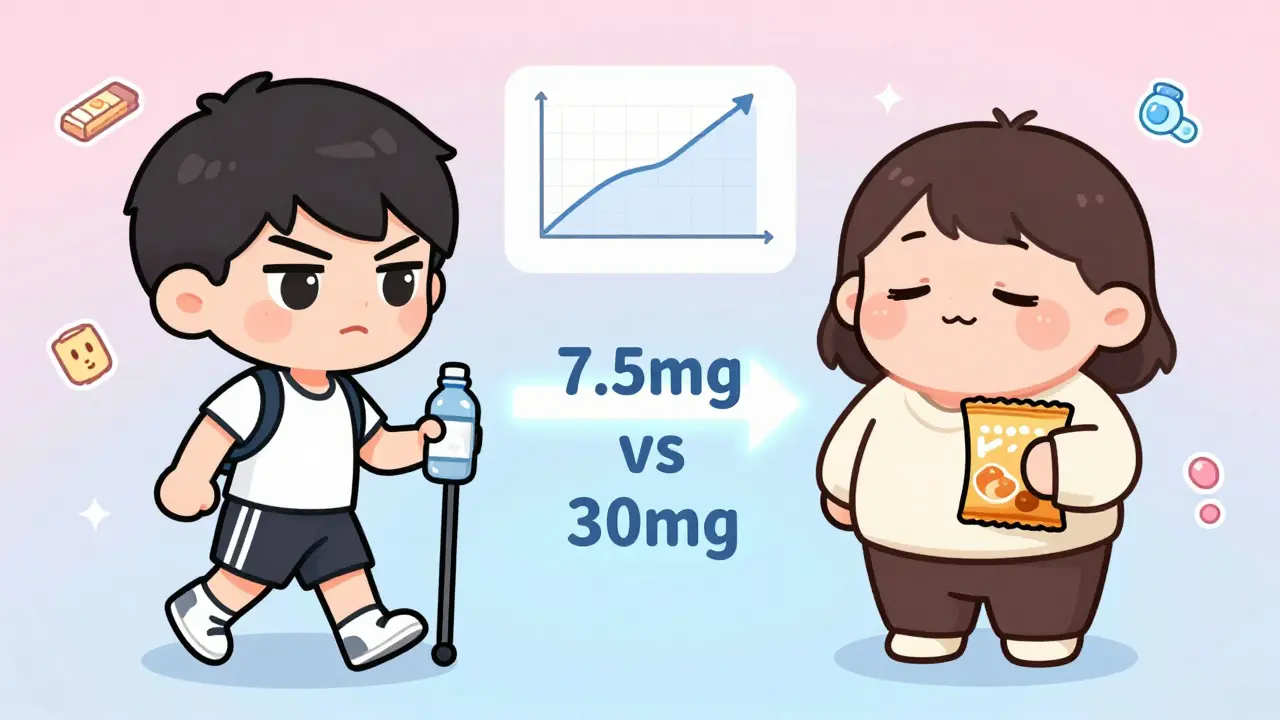
Dose Matters - But Not the Way You Think
You’ve probably heard that lower doses of mirtazapine are better for sleep and appetite, while higher doses are for depression. That’s partly true - but not because the drug works differently. At 7.5 mg, the sedative effect is stronger because the histamine-blocking effect dominates. At 30 mg, more norepinephrine kicks in, which can reduce drowsiness. But the appetite-stimulating effect? It’s still there at every dose.
Here’s what the data shows: a 2017 study found people on 7.5 mg gained about 2.6 pounds in 12 weeks. Those on 30 mg gained 4.6 pounds. That’s 42% less weight gain at the lower dose. If you’re worried about weight, starting low - and staying low if your depression improves - can make a real difference.
What You Can Do About It
Stopping mirtazapine isn’t always the answer. If it’s working for your depression, there are ways to manage the weight gain without ditching the medication.
- Start low, go slow. Begin with 7.5 mg. Only increase if needed. Many people never need more than 15 mg.
- Time your dose. Take it at night. This helps with sleep and may reduce daytime cravings for snacks.
- Focus on protein. A small 2022 study found that people who ate 1.2 to 1.6 grams of protein per kilogram of body weight gained 63% less weight than those who didn’t. Protein keeps you full longer and helps preserve muscle.
- Track your food. Use a simple app or journal. You don’t need to count calories obsessively, but knowing you’re eating more sweets than usual helps you adjust.
- Move your body. Even walking 30 minutes a day can help offset the metabolic shift. You don’t need to run marathons - just stay active.
Some people also benefit from working with a dietitian who understands psychiatric meds. They can help you build meals that satisfy cravings without packing on pounds.

When to Talk to Your Doctor
Not every weight gain is harmless. Mirtazapine can raise triglycerides and slightly increase HbA1c - markers linked to heart disease and diabetes. That’s why doctors are supposed to check your weight, waist size, and blood work before you start and again after 3 months.
If you’ve gained more than 5% of your body weight in 3 months, or if your blood pressure, cholesterol, or blood sugar levels have changed, talk to your doctor. There are options: switching to another antidepressant, adding a medication like naltrexone (currently being tested to block food cravings), or lowering your dose.
Don’t stop mirtazapine on your own. Even if you’re gaining weight, the depression might be under control. Work with your doctor to find a balance.
Is Mirtazapine Still Worth It?
Yes - for some people. If you’ve tried other antidepressants and they didn’t work, or if you have trouble sleeping and eating, mirtazapine can be a lifeline. It’s especially helpful for older adults, people with cancer, or those with treatment-resistant depression.
But it’s not ideal as a first choice if weight is a concern. If you’re young, active, or already struggling with body image, you might want to try something else first - like sertraline or bupropion.
The key is knowing what you’re signing up for. Mirtazapine isn’t a magic pill. It’s a tool. And like any tool, it works best when you understand how to use it - and how to manage its downsides.
For many, the trade-off is worth it. Depression is exhausting. Losing your appetite, sleep, and motivation is worse than gaining a few pounds. But if you’re aware of the risks and have a plan, you can take mirtazapine and still stay healthy.
Adarsh Uttral
January 30, 2026 AT 05:11April Allen
January 30, 2026 AT 17:28Sheila Garfield
February 1, 2026 AT 11:13Shawn Peck
February 3, 2026 AT 07:48Holly Robin
February 4, 2026 AT 05:29Shubham Dixit
February 5, 2026 AT 02:46KATHRYN JOHNSON
February 6, 2026 AT 05:44Jodi Olson
February 6, 2026 AT 18:19Carolyn Whitehead
February 7, 2026 AT 00:54