 by
by Never Use Household Spoons for Children’s Medicine Dosing
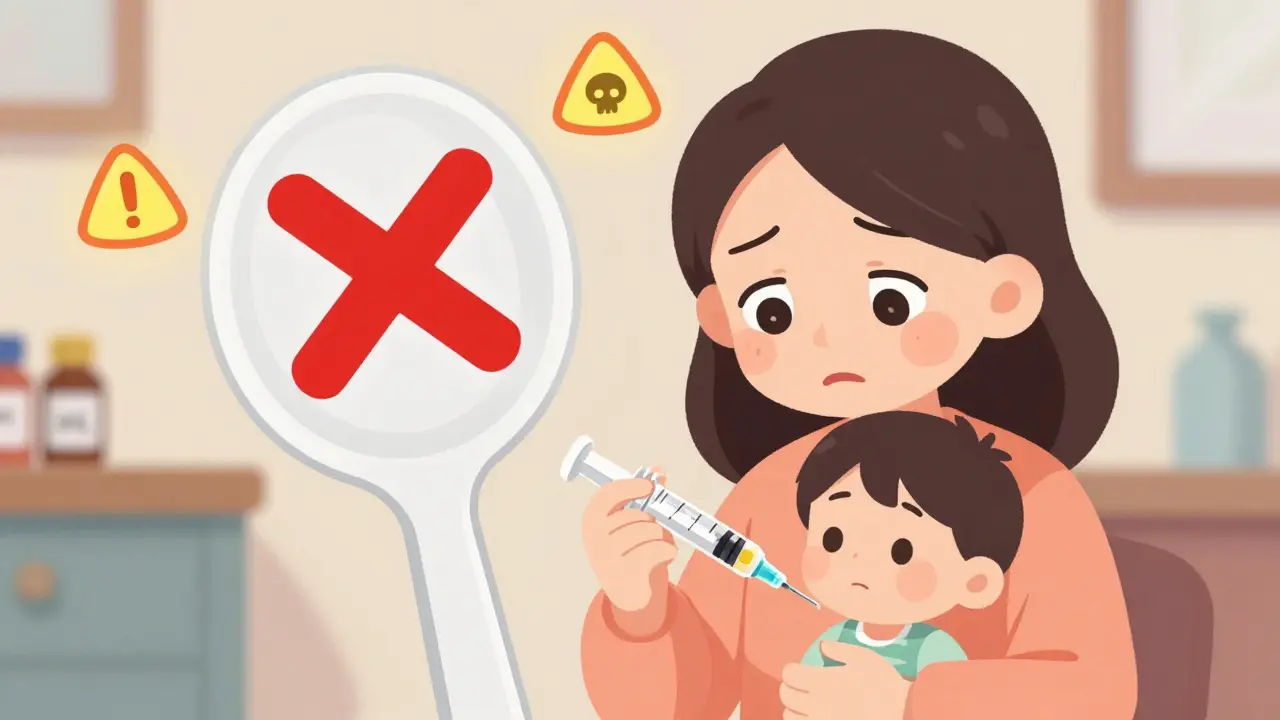
11 Mar, 2026Every year, thousands of children end up in emergency rooms because of a simple mistake: someone gave them medicine using a kitchen spoon. It sounds harmless, even practical. But using a teaspoon or tablespoon from your drawer to measure liquid medicine for your child isn’t just inaccurate-it’s dangerous.
Why Household Spoons Are a Risk
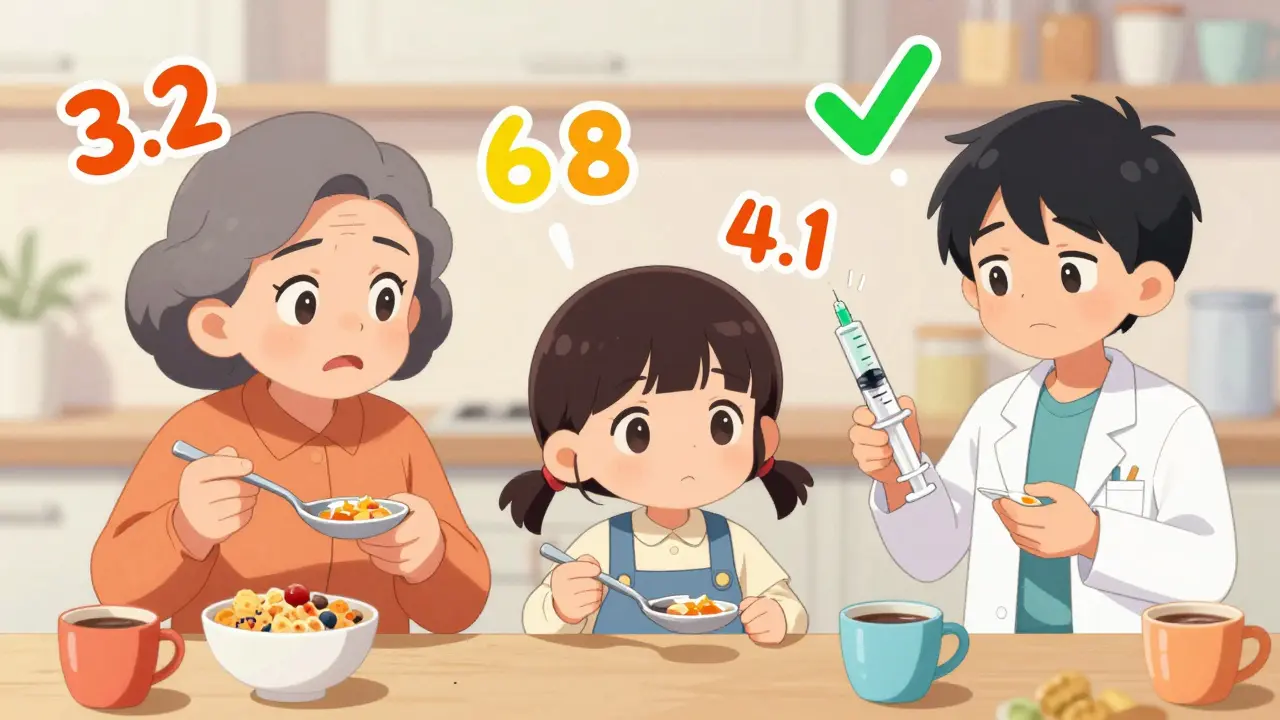
A teaspoon isn’t a teaspoon when it comes to medicine. A medical teaspoon holds exactly 5 milliliters (mL). But the one you use for your cereal? It could hold anywhere from 3 mL to 7 mL. That’s a 40% difference. For a child, even a 2 mL overdose can mean the difference between a sleepy kid and a child needing urgent care. Research from the Pediatrics a peer-reviewed journal published by the American Academy of Pediatrics in 2014 found that nearly 40% of parents gave the wrong dose when using kitchen spoons. Over 41% made mistakes measuring the exact amount prescribed. And it’s not just parents-grandparents, babysitters, and even older siblings often grab the nearest spoon without thinking. The CDC Centers for Disease Control and Prevention put it bluntly: "Spoons are for soup. Milliliters are for medicine." This isn’t a slogan-it’s a lifesaving rule.What Happens When You Get the Dose Wrong
Children aren’t small adults. Their bodies process medicine differently. Too little medicine might mean the infection keeps spreading. Too much? That’s when things turn serious. A child given an overdose of acetaminophen (Tylenol) can suffer liver damage. An overdose of cough syrup with antihistamines can cause seizures or breathing problems. Underdosing antibiotics can lead to antibiotic resistance or a lingering illness that turns into pneumonia. Each year, poison control centers in the U.S. receive over 10,000 calls about incorrect dosing of children’s liquid medicine. Many of these calls come from families who thought they were being careful-just using the spoon they always used.The Right Tools for the Job
You don’t need fancy gear. You need the right tools. Here’s what works:- Oral syringes - These are the most accurate. They come with your medicine or can be bought at any pharmacy. Look for ones marked in milliliters (mL), not teaspoons. You can measure down to 0.1 mL. They’re perfect for small doses like 3.5 mL or 1.2 mL.
- Dosing cups - These are okay if they’re clearly marked in mL and come with the medicine. But avoid them if you need to measure less than 5 mL. Most cups only have lines at 5, 10, 15 mL-you can’t eyeball 3.7 mL accurately.
- Medicine droppers - These are fine for babies and small doses. Make sure they’re labeled in mL. Never use a dropper that came with a different medicine.
None of these tools should ever be replaced by a kitchen spoon, coffee spoon, or dessert spoon. Even if it looks like the right size, it’s not calibrated. And never guess.
Label Confusion Is a Major Problem
Here’s something surprising: the way the prescription is written affects whether parents use spoons. A 2016 study in Academic Pediatrics a peer-reviewed journal focused on pediatric care found that when labels said "give 5 tsp," one-third of parents chose to use a kitchen spoon. But when the label said "give 25 mL," fewer than 10% did. That’s a 23-point drop in risky behavior just by changing the unit. Even spelling out "teaspoon" instead of "tsp" made a difference. People are more likely to grab a spoon if the word "teaspoon" is written out. That’s why the FDA U.S. Food and Drug Administration and the American Academy of Pediatrics AAP, the leading authority on child health now recommend that all pediatric liquid medications be labeled only in milliliters (mL). No more "tsp," no more "teaspoon." Just mL.How to Give Medicine Safely
Follow these steps every time:- Check the label - Look for mL, not teaspoons or tablespoons. If it says "tsp," ask the pharmacist to clarify.
- Use the right tool - Always use the syringe, dropper, or cup that came with the medicine. If you lost it, ask your pharmacist for a new one. They’re free.
- Measure at eye level - Hold the syringe or cup at eye level. Don’t tilt it. Look straight at the line. A slight angle can throw off your dose.
- Don’t force it - Gently squirt the medicine between your child’s cheek and gums, not straight down the throat. This helps prevent choking and gagging.
- Double-check - Read the dose twice. Write it down if you need to.
Pharmacies like Aspirus now include oral syringes with every pediatric liquid prescription. They also train staff to explain how to use them. You don’t have to figure it out alone.
Why This Rule Doesn’t Change
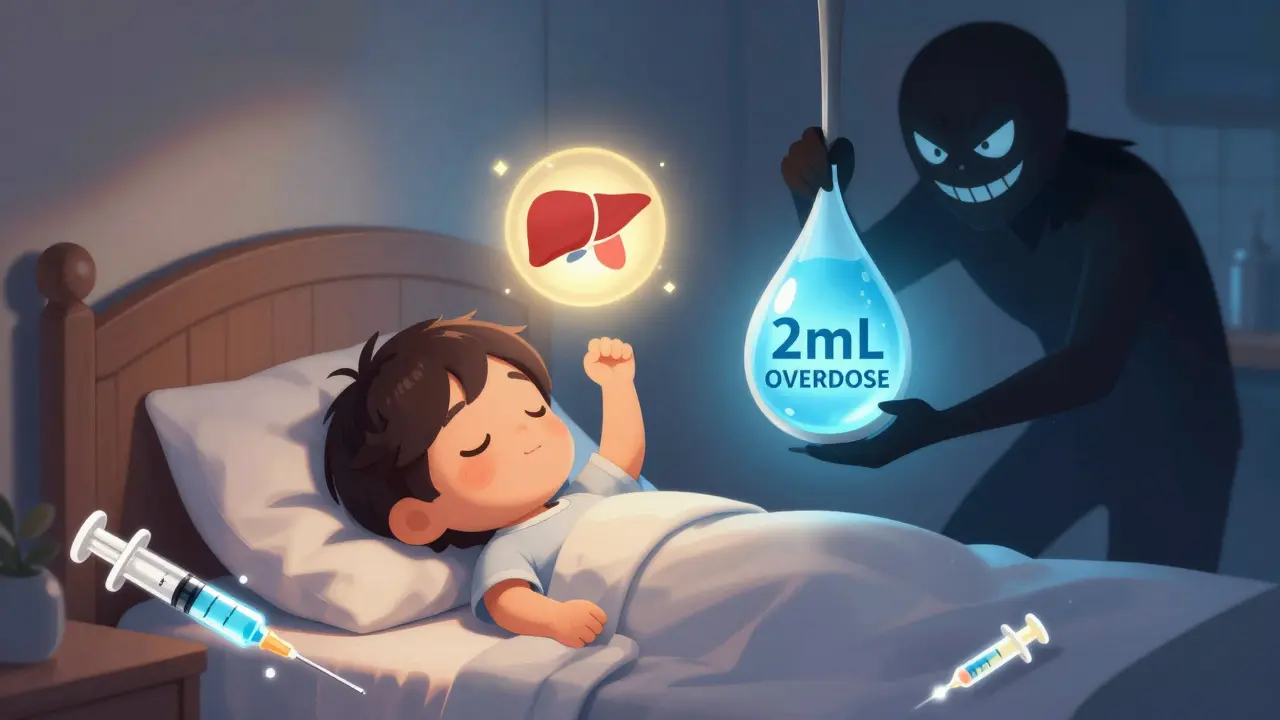
Some people say, "I’ve been using a spoon for years. My kids were fine." That’s luck, not safety. Many overdoses don’t cause immediate symptoms. A child might seem fine after a 2 mL overdose-until their liver starts to fail hours later. The CDC estimates that 75% of Americans still use kitchen spoons to measure medicine. That’s three out of four families. Despite warnings since 1978 from the American Academy of Pediatrics, the habit persists. Why? Because it’s easy. Because we’ve always done it. Because we don’t realize how dangerous it is. But here’s the truth: you wouldn’t use a coffee mug to measure gas for your car. You wouldn’t use a bathroom scale to weigh a newborn. Why take the same risk with medicine?What to Do If You’ve Been Using a Spoon
If you’ve used a kitchen spoon in the past, don’t panic. But here’s what to do now:- Call your pharmacist. Ask for a free oral syringe.
- Throw away any dosing spoons that came with old medicine. They’re not reliable.
- Write down the dose in mL next to the medicine bottle.
- Teach other caregivers-grandparents, babysitters, daycare staff-how to measure correctly.
Medicine isn’t a guessing game. It’s science. And science needs precision.
Can I use a regular syringe from the pharmacy for medicine?
No. Regular syringes (like insulin syringes) are designed for injections and have different markings. Always use an oral syringe labeled for liquid medicine. They’re designed to be safe for the mouth and marked in milliliters (mL). You can get them for free at any pharmacy.
What if my child’s medicine doesn’t come with a measuring tool?
Ask your pharmacist for one. They’re required to provide an accurate measuring device with all pediatric liquid medications. If they don’t offer one, ask again. You have the right to get it. Many pharmacies keep extra oral syringes on hand just for this reason.
Are dosing cups ever okay?
Only if they’re labeled in milliliters (mL) and you’re measuring 5 mL or more. For doses under 5 mL, like 2.5 mL or 1.8 mL, dosing cups are too imprecise. Oral syringes are always better for small amounts.
Why can’t we just use teaspoons if we know it’s 5 mL?
Because kitchen teaspoons aren’t standardized. One might hold 4 mL, another 6.5 mL. Even if you think you’re using the right one, you can’t be sure. Medicine isn’t a game of "close enough." It needs exact measurements. That’s why we use mL and calibrated tools.
What if my child spits out the medicine?
Don’t give another full dose. Call your pharmacist or doctor. They’ll tell you whether to give more, wait, or skip the dose. Giving extra medicine because your child spit it out is a common cause of overdose.