 by
by Patent Term Restoration (PTE): How Drug Patents Get Extra Time
20 Mar, 2026When a pharmaceutical company spends over a decade and $2.6 billion to develop a new drug, they don’t just need a patent-they need enough time to make their investment pay off. That’s where patent term restoration comes in. It’s not a loophole. It’s a legal tool built into U.S. law to fix a real problem: the time lost waiting for the FDA to approve a drug. Without this system, many life-saving medications would lose patent protection before they even hit the market.
Why Patent Term Restoration Exists
The clock on a drug patent starts ticking the day you file it. But getting FDA approval can take 10 to 15 years. During that time, no one else can make the drug-even if they have the formula. That’s fine until the patent expires before approval is granted. Imagine spending 12 years in clinical trials, then finding out your patent runs out in six months. You’d have no time to recoup costs, let alone profit. That’s exactly what happened before 1984. The Hatch-Waxman Act, passed that year, fixed it. Officially called the Drug Price Competition and Patent Term Restoration Act, it was designed to balance two goals: get generics to market faster and give innovators a fair shot. The law lets patent holders apply for extra time to make up for delays caused by government review.How PTE Works: The Math Behind the Extension
The extension isn’t automatic. It’s calculated using a strict formula: PTE = RRP - PGRRP - DD - ½(TP - PGTP). Let’s break that down simply.- RRP is the total time the FDA spent reviewing your product.
- PGRRP is the time before you filed for FDA approval (like early trials).
- DD stands for days you didn’t show due diligence-meaning gaps in your progress.
- The last part adjusts for how long your patent was active before approval.
Who Qualifies for PTE?
Not every patent gets this. The law only covers:- Human drugs
- Medical devices
- Food additives
- Color additives
- Animal drugs (added in 1988)
The Application Process: Timing Is Everything
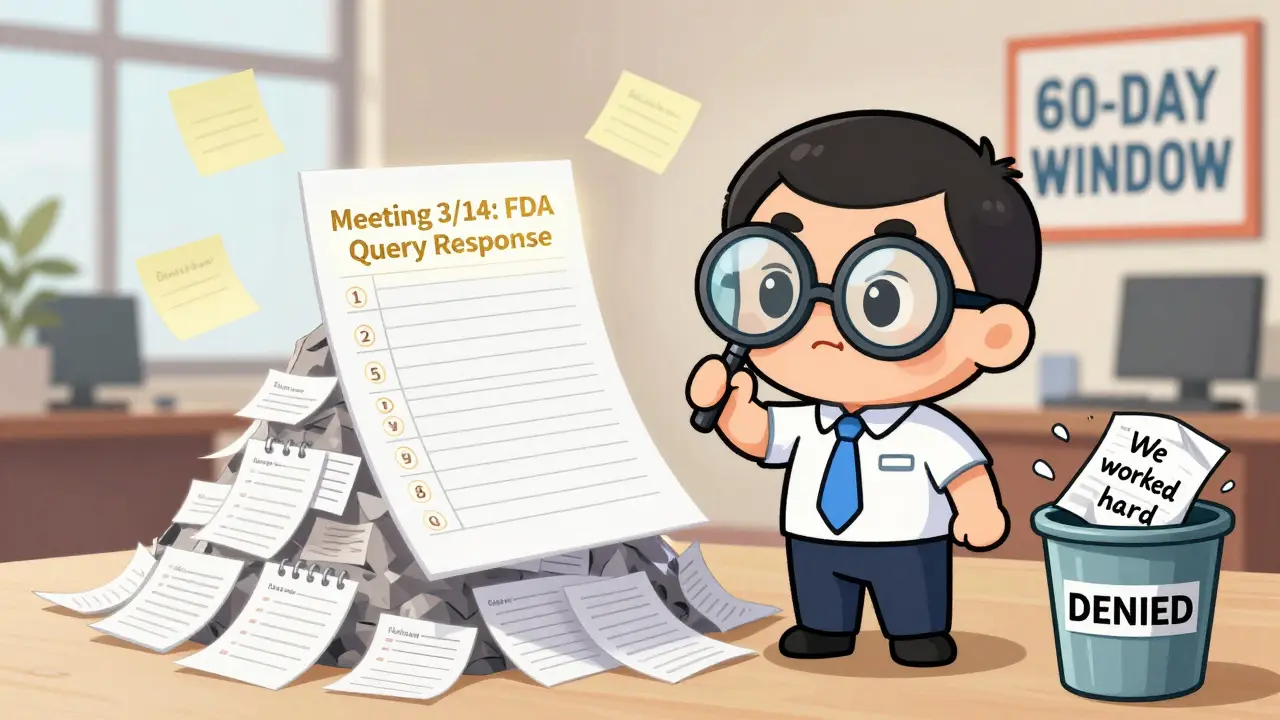
You have just 60 days after FDA approval to file your PTE application. Miss that window? You lose your chance forever. That’s why big pharma companies have teams working in sync-patent lawyers, regulatory experts, and clinical staff all coordinating. The FDA reviews the application and tells the USPTO how long the regulatory delay was. Then the USPTO decides the actual extension. But here’s the catch: you have to prove you didn’t waste time. That means every email, every submission, every meeting with the FDA must be documented. No vague summaries. Day-by-day records. A 2023 survey found that 67% of patent attorneys call PTE applications “high-risk.” Why? Because 12.7% of them get denied. The most common reason? Poor documentation of due diligence. One senior patent specialist on Reddit said, “We’ve seen companies submit a single letter saying ‘we worked hard.’ That’s not enough. We need dated logs, meeting minutes, FDA response receipts.”Interim Extensions: A Lifeline for Late-Stage Drugs
Sometimes, a drug is approved just weeks before the patent expires. That’s where the interim extension comes in. You can apply six months before expiration and up to 15 days before it runs out. This keeps your patent active while the FDA finishes its review. It’s a temporary fix-but it keeps competitors out during the final stretch.Controversy and Criticism
PTE isn’t without its critics. A 2022 Yale Law Review study found that 91% of drugs that got extensions kept their monopoly long after the extension ended-using secondary patents, data exclusivity, or patent thicketing. In fact, 78% of PTE applications now involve secondary patents, not the original compound patent. Critics say this defeats the original purpose of Hatch-Waxman. The law was meant to speed up generics. Instead, it’s become a tool to delay them. The Congressional Budget Office estimates PTE adds $4.2 billion a year to U.S. drug spending. The FTC says drugs with extensions keep 92% of their market share during the extra time. That’s a huge advantage. Some companies use the system smartly. Others exploit it. The 2024 Federal Circuit ruling in Eli Lilly v. USPTO tightened the rules on proving due diligence, which could shrink future extensions by 8-12 months. That’s a sign regulators are paying attention.
What’s Changing in 2025-2026?
The FDA plans to launch a digital submission platform for PTE applications by Q2 2026. Right now, paperwork is still mostly paper-based or PDFs sent by email. That slows things down. A digital system will cut processing time and reduce errors. Also, biologics-complex drugs made from living cells-are getting more extensions. In 2018, only 19% of PTE applications were for biologics. By 2023, that jumped to 34%. That’s because biologics take even longer to develop and approve than traditional drugs. The Government Accountability Office is set to release a major review in December 2025. It could lead to new laws that limit how PTE is used-especially for secondary patents.What This Means for Patients and Generic Manufacturers
For patients, PTE means delayed access to cheaper generics. But it also means companies keep investing in new drugs. Without the promise of extended exclusivity, many wouldn’t risk the billion-dollar gamble. For generic makers, PTE is a hurdle. They have to wait longer before launching their versions. But once the extension ends, they can enter the market quickly-thanks to the Hatch-Waxman framework that lets them rely on the original company’s safety data.Key Takeaways
- Patent Term Restoration (PTE) gives drug makers extra time to make up for FDA delays.
- The maximum extension is five years, with a 14-year cap after FDA approval.
- You must file within 60 days of approval-no exceptions.
- Documentation of daily progress is critical. Missing records = denied application.
- Only one patent per product can be extended, usually the core compound patent.
- PTE is controversial: it helps innovation but can delay generic competition.
- Biologics and medical devices are using PTE more than ever.
Can I get a patent term extension for a medical device?
Yes. Medical devices are explicitly covered under the Hatch-Waxman Act. The same rules apply: you must show regulatory review delay, file within 60 days of FDA approval, and prove continuous due diligence. Device manufacturers often use PTE for complex implants or diagnostic tools that take years to clear the FDA.
What’s the difference between PTE and PTA?
PTE (Patent Term Extension) makes up for delays caused by the FDA. PTA (Patent Term Adjustment) makes up for delays caused by the USPTO. If the patent office took too long to examine your application, you get PTA. If the FDA took too long to approve your drug, you get PTE. They’re separate processes, handled by different agencies, and serve different purposes.
Do all drugs get patent extensions?
No. Only drugs that went through a formal FDA review process qualify. Over-the-counter drugs, supplements, and drugs approved under emergency protocols like the EUA (Emergency Use Authorization) during COVID-19 generally don’t qualify. The product must have undergone the full approval pathway, including clinical trials and a New Drug Application (NDA) or Biologics License Application (BLA).
How long does the PTE application process take?
On average, it takes about 217 days from submission to decision, according to FDA data from 2023. But the clock starts the moment you file. If you’re missing documents or can’t prove due diligence, the process can drag longer-or get denied. Some companies use a six-month suspension rule to delay the review until their reissue patent is granted, giving them more control over timing.
Can I extend a patent that’s already expired?
No. The patent must still be active when you apply. If it expired before you submitted your PTE request, you’re out of luck. That’s why timing is so critical. Companies often file the PTE application the same day they receive FDA approval-sometimes within hours.
Chris Dwyer
March 20, 2026 AT 12:15And yeah, the docs have to be perfect. One missing email log? Denied. No second chances.
trudale hampton
March 21, 2026 AT 17:25Natali Shevchenko
March 23, 2026 AT 09:10Johny Prayogi
March 25, 2026 AT 02:40Thomas Jensen
March 26, 2026 AT 13:39Shaun Wakashige
March 27, 2026 AT 20:53Solomon Kindie
March 28, 2026 AT 20:14Nishan Basnet
March 30, 2026 AT 11:51Casey Tenney
April 1, 2026 AT 08:28Allison Priole
April 2, 2026 AT 19:34Sandy Wells
April 4, 2026 AT 18:31Bryan Woody
April 5, 2026 AT 09:42Timothy Olcott
April 6, 2026 AT 19:24