 by
by Pharmacy Reimbursement Models: How Laws Shape Generic Drug Payments
15 Dec, 2025When you pick up a generic prescription at the pharmacy, you might think the price is simple: cheaper than the brand, end of story. But behind that low copay is a tangled web of federal and state laws, payment formulas, and corporate contracts that determine exactly how much the pharmacy gets paid-and whether they can even afford to fill your script. This isn’t just about drug prices. It’s about who wins, who loses, and why some pharmacies are barely scraping by while others thrive.
How Generic Drugs Are Paid For (And Why It’s Not What You Think)
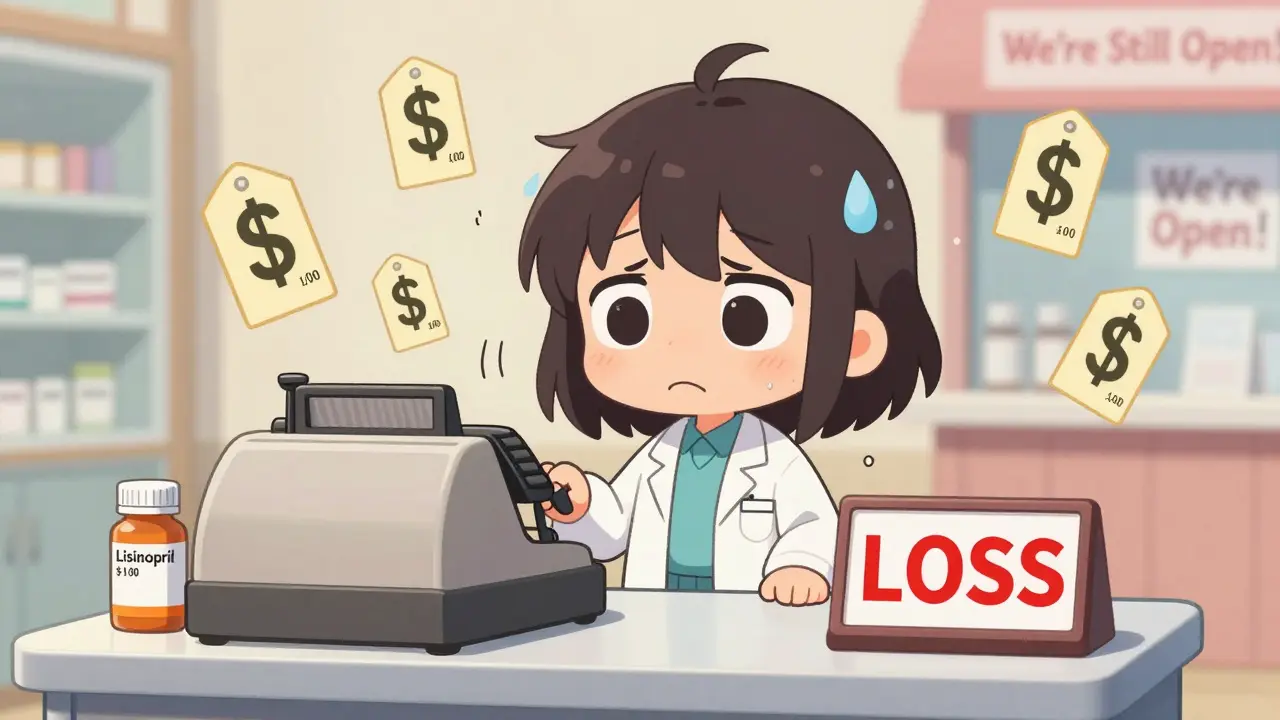
Pharmacies don’t get paid the same way for every drug. For brand-name medications, reimbursement often uses the Average Wholesale Price (AWP)-a list price set by manufacturers that has little to do with what pharmacies actually pay. But for generics? That’s where things get real. Most plans use something called Maximum Allowable Cost (MAC) lists. These are price caps set by pharmacy benefit managers (PBMs) based on what they believe is the lowest price a pharmacy can buy a generic drug for. If a pharmacy pays $1.20 for a 30-day supply of lisinopril and the MAC is $1.00, they lose 20 cents on that script. No markup. No profit. Just a loss. This system was designed to save money for insurers and patients. And it works-up to a point. But it’s created a dangerous imbalance. Independent pharmacies, especially in rural areas, often buy generics from distributors at higher prices than big chains. They’re stuck between a MAC rate that doesn’t reflect their real cost and the pressure to stay in network. In 2023, the average profit margin on generic drugs for independent pharmacies was just 1.4%. In 2018, it was 3.2%. That’s not a trend. That’s a slow squeeze.The Hidden Players: PBMs and the Spread That Breaks Pharmacies
You’ve probably never heard of pharmacy benefit managers (PBMs), but they control 80% of all prescription claims in the U.S. CVS Caremark, Express Scripts, and OptumRX are the big three. They negotiate with drugmakers, set reimbursement rates, and decide which drugs are covered under your plan. Their revenue doesn’t come from insurance premiums-it comes from the spread. Here’s how it works: Your insurer agrees to pay $10 for a generic drug. The pharmacy gets paid $7. The PBM keeps the $3 difference. That’s the spread. And until 2018, they were legally allowed to hide this from you. Pharmacists couldn’t tell you that paying cash-$5 for the same drug-would be cheaper than using your insurance. That’s called a gag clause. It’s banned now, but the spread still exists. And it’s why some plans make you pay more out-of-pocket for generics than you would if you paid cash. PBMs also push pharmacies to use specific generics-even when others are cheaper. Why? Because they’ve struck deals with manufacturers for rebates. The more they steer you toward a certain drug, the more money they make. It’s not about what’s best for you. It’s about what’s best for their bottom line.Medicare Part D: A System Built for Savings-But Not Always for Access
Medicare Part D covers nearly 51 million people. It’s supposed to make drugs affordable. But the reality is messier. Part D plans have formularies-lists of covered drugs-and they’re divided into tiers. Generics usually sit on Tier 1, with the lowest copay. Sounds good, right? Except here’s the catch: 28% of Part D plans required prior authorization for at least one generic drug in 2022. That means your doctor has to jump through hoops just to get you a $2 medication. Why? Because the plan wants to make sure you’ve tried another, slightly more expensive generic first. Or because the drug isn’t on their preferred list. Or because the PBM got a better rebate on a different version. The new Medicare $2 Drug List Model is trying to fix this. Starting in 2025, it will create a standardized list of about 100-150 low-cost, high-use generics-like metformin, levothyroxine, and atorvastatin-with a flat $2 copay for everyone. No formulary tiers. No prior auth. No surprise bills. It’s modeled after what Walmart and Costco already do: fixed low prices for essential meds. If it works, it could become the new standard.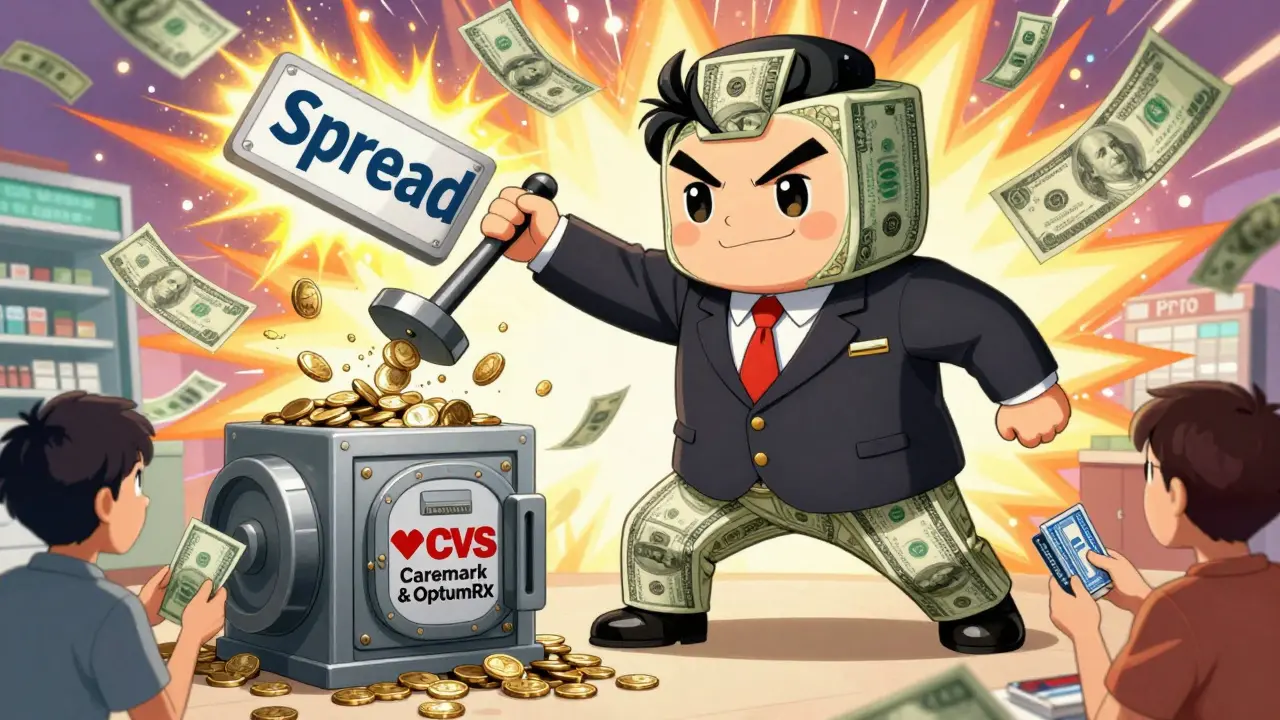
State Laws Are Changing the Game
While federal rules set the baseline, states are stepping in. As of 2023, 44 states passed laws regulating how PBMs reimburse pharmacies. Some require PBMs to pay pharmacies at least what they paid for the drug. Others ban spread pricing entirely. A few even mandate that pharmacists be paid a minimum dispensing fee-not just a percentage of the drug cost. In California, for example, pharmacies can now challenge MAC rates if they prove the listed price is below their actual acquisition cost. In New York, PBMs must disclose their reimbursement formulas to pharmacies. These laws don’t fix everything, but they give pharmacies a fighting chance. Meanwhile, Medicaid programs use Preferred Drug Lists (PDLs) to steer patients toward cheaper generics. Each state’s Pharmacy and Therapeutics Committee decides which drugs get preferred status. That means the same generic drug might be free in one state and have a $5 copay in another-depending on which manufacturer gave the state the best rebate.Why Authorized Generics Are Hurting Competition
Here’s one of the most confusing parts: sometimes, the brand-name company itself releases a “generic” version of its own drug. That’s called an authorized generic. It looks like a generic. It’s sold under a different label. But it’s made by the same company, in the same factory. Why do they do this? To block real generic competitors. If the brand-name maker releases an authorized generic the day the patent expires, it can capture 80% of the market before any other generic even gets to shelves. That’s not competition-it’s a legal loophole. Studies show this practice delays the entry of multiple generic competitors, keeping prices higher than they should be. The FDA’s Generic Drug User Fee Amendments (GDUFA) tried to fix this by lowering fees for small generic manufacturers. But big companies still have the capital to flood the market with authorized versions before anyone else can respond.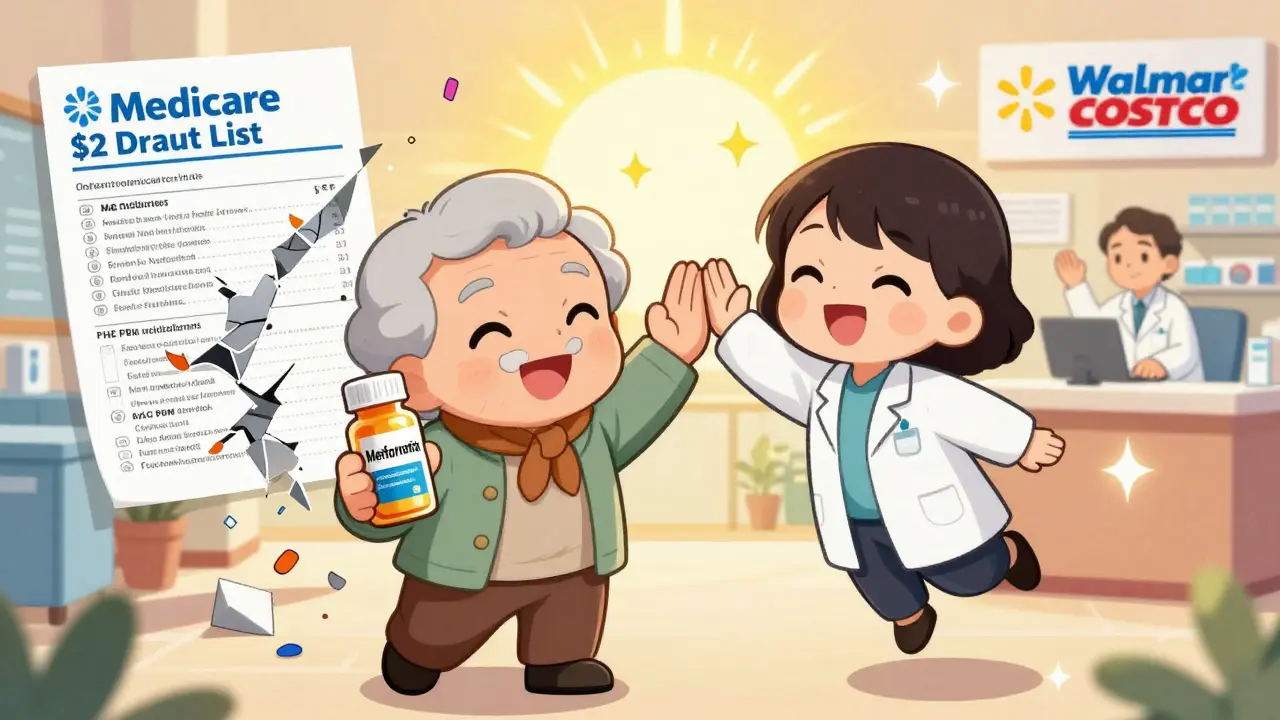
What This Means for You
If you’re on Medicare or have insurance, here’s what you need to know:- Always ask your pharmacist: “Is this cheaper if I pay cash?” Even if you have insurance, paying out-of-pocket for common generics can save you 50-80%.
- Check your plan’s formulary. If your generic isn’t on Tier 1, ask your doctor if there’s an alternative that is.
- If you’re denied a generic drug, appeal. You have the right to challenge prior authorization denials.
- Use mail-order pharmacies or big-box retailers like Costco. They often have better pricing on generics than local pharmacies.
- Sign up for Medicare’s Extra Help program if you qualify. In 2024, it caps generic copays at $4.50.
The Future: Value-Based Payments and the End of Fee-for-Service
Right now, pharmacies are paid per prescription. That’s called fee-for-service. It rewards volume, not outcomes. But the system is shifting. The CMS Innovation Center is testing value-based payment models-where pharmacies get paid based on how well patients stick to their meds, not how many scripts they fill. Imagine a pharmacy getting paid extra if patients taking metformin for diabetes see better blood sugar control. Or if patients on warfarin have fewer hospital visits. That’s the future. It’s still years away, but it’s coming. And when it does, pharmacies will be measured on health outcomes-not just how much they paid for a pill. For now, the system is still broken. But awareness is growing. Patients are asking more questions. Pharmacies are pushing back. And lawmakers are finally starting to listen.Why is my generic drug more expensive with insurance than without?
Many insurance plans, especially those run by PBMs, have reimbursement structures where the pharmacy gets paid less than the cash price. The difference-called the spread-goes to the PBM. So even though you think you’re using insurance to save money, you’re actually paying more because your plan is structured to profit from the gap. Always ask your pharmacist: "Can I pay cash instead?" You might save half the price.
What is MAC pricing, and why does it matter?
MAC stands for Maximum Allowable Cost. It’s the highest amount a pharmacy benefit manager will pay a pharmacy for a generic drug. If the pharmacy paid more than the MAC to buy the drug, they lose money on that prescription. MAC lists are often set below what small pharmacies actually pay distributors, squeezing their margins. This is why some pharmacies struggle to stay open, especially in rural areas.
Do all states regulate pharmacy reimbursement the same way?
No. As of 2023, 44 states have passed laws to regulate how PBMs reimburse pharmacies. Some ban spread pricing. Others require transparency in MAC lists. A few mandate minimum dispensing fees. States like California and New York have stronger protections, while others still have few rules. This creates a patchwork system where your out-of-pocket cost for the same generic can vary dramatically depending on where you live.
What’s the Medicare $2 Drug List Model?
The Medicare $2 Drug List Model is a new voluntary program launching in 2025. It will offer about 100-150 essential generic drugs-like metformin, atorvastatin, and levothyroxine-with a flat $2 copay for all Medicare Part D beneficiaries. The goal is to simplify costs, reduce confusion, and improve adherence. It’s based on what big retailers like Walmart already do: fixed low prices for high-use generics. If successful, it could become the new standard.
Can pharmacies refuse to fill a prescription because they’re losing money?
Legally, no. Pharmacies must fill valid prescriptions, even if they lose money on them. But many independent pharmacies are forced to operate on razor-thin margins, and some have stopped accepting certain insurance plans because the reimbursement rates are unsustainable. This can limit your access to care, especially in rural areas. If your pharmacy stops taking your insurance, ask if they can help you switch to a plan with better generic coverage.
Kitty Price
December 17, 2025 AT 08:43So basically, your pharmacy is losing money every time they fill your $2 generic… and you’re still paying $5 because insurance? 😅 This system is wild. I just asked my pharmacist last week and paid cash for metformin - saved $12. I’m never using insurance for generics again. 🤷♀️
Randolph Rickman
December 19, 2025 AT 01:02This is exactly why I started teaching my elderly patients to always ask, ‘Is this cheaper cash?’ Most don’t know. PBMs are middlemen who don’t touch the drugs but pocket the difference. It’s like a toll booth on the highway to your medicine. The Medicare $2 list is a start, but we need to cut out the middlemen entirely. Pharmacies should get paid a fair dispensing fee - not a percentage of a manipulated MAC rate. It’s not rocket science. It’s basic fairness.
Kayleigh Campbell
December 20, 2025 AT 10:15So let me get this straight - the same pill that costs $1.50 at Walmart is $8 with insurance because someone named ‘OptumRX’ decided to keep $6.50 for themselves? 🤡 I feel like I’m in a dystopian sitcom where the punchline is ‘your health plan is a scam.’
Dave Alponvyr
December 21, 2025 AT 13:38Ask for cash price. Always. It’s not complicated. If your pharmacy says no, find one that will. Done.
sue spark
December 22, 2025 AT 15:42I’ve been on levothyroxine for 12 years and never knew my copay was higher than cash… I just assumed insurance was helping. Turns out I’ve been paying $15 for a $3 pill. I’m going to ask my doc to switch me to the Walmart $2 version next refill. This changes everything
James Rayner
December 23, 2025 AT 21:19It’s strange, isn’t it? We live in a world where we can track every step we take, every calorie we eat, every dollar we spend - yet we’re told to trust a system that hides how much of our money vanishes into a black box called a PBM. Who benefits? Who suffers? And why does it feel like the only people who understand this are the ones standing behind the counter, quietly watching their margins disappear?
Joanna Ebizie
December 24, 2025 AT 11:54Wow so pharmacies are just losing money on generics? No wonder they look so miserable when you walk in. They’re not rude - they’re bankrupt. And you’re paying more because your insurance is in cahoots with some corporate middleman. You’re not saving money. You’re funding a pyramid scheme with your prescriptions.
Kim Hines
December 25, 2025 AT 03:25My mom’s pharmacy stopped taking her insurance last year. She had to drive 30 miles to Costco. Now she pays $4 for everything. I wish more people knew this was an option.
Cassandra Collins
December 26, 2025 AT 20:20Theyre not just hiding spreads… theyre using authorized generics to kill real competition. Big Pharma owns the PBM owns the pharmacy. Its all one big cartel. And the FDA lets them. Why? Because theyre paid off. You think this is about health? No. Its about control. They want you dependent. They want you paying more. And they want you too tired to fight back. Wake up.
Billy Poling
December 27, 2025 AT 12:50It is imperative to recognize that the structural inefficiencies embedded within the current pharmaceutical reimbursement framework are not merely fiscal anomalies but rather systemic failures of regulatory oversight and market governance. The Maximum Allowable Cost model, while ostensibly designed to contain costs, paradoxically incentivizes the suppression of competitive dynamics by artificially constraining reimbursement rates below the actual acquisition cost, thereby creating an untenable economic environment for independent community pharmacies, particularly in underserved geographic regions. Furthermore, the prevalence of spread pricing - wherein pharmacy benefit managers appropriate the differential between the insurer’s payment and the pharmacy’s reimbursement - constitutes a form of opaque rent extraction that undermines transparency, erodes consumer trust, and ultimately distorts the fundamental fiduciary relationship between patient, provider, and payer. The introduction of the Medicare $2 Drug List Model represents a commendable, albeit incremental, step toward equitable access; however, without comprehensive legislative intervention to mandate full disclosure of PBM financial arrangements and to establish binding minimum dispensing fees, any progress will remain superficial and susceptible to corporate circumvention. The ethical imperative is clear: healthcare must not be a profit-driven commodity, but a public good.
Elizabeth Bauman
December 29, 2025 AT 03:40Why is it that Americans let foreign companies dictate our drug prices? PBMs are mostly owned by big corporations with no loyalty to this country. We need to ban foreign ownership of PBM companies and make sure every pharmacy in America is owned by an American. This isn’t about drugs - it’s about national sovereignty. If we don’t fix this, next they’ll control our insulin, our vaccines, our cancer meds. This is how empires fall.
Josias Ariel Mahlangu
December 30, 2025 AT 03:33People who use insurance for generics are just lazy. If you can’t figure out to pay cash, you deserve to overpay. I’ve been doing this for 20 years. Cash all the way. No excuses.
Aditya Kumar
January 1, 2026 AT 00:29whatever
Arun ana
January 1, 2026 AT 09:48Hey I just found out my local pharmacy gives a 15% discount if you pay cash + sign up for their loyalty app. I didn’t even know that was a thing. Maybe more pharmacies should make this obvious. Also, big thanks to the OP - this is the clearest explanation I’ve ever read. 👏
Andrew Sychev
January 1, 2026 AT 22:56They're all in on this. The FDA, the PBMs, the big pharma CEOs - they're all sitting in a room laughing while you cry over your $12 insulin. They don't care. They're rich. You're not. And they're going to keep doing this until you stop being polite and start burning down the system. I'm not asking anymore. I'm done being a good citizen.