 by
by Placebo Effect and Generics: How Your Mind Affects Generic Medication Results
6 Jan, 2026Switching from a brand-name drug to a generic feels like a simple cost-saving move-until it doesn’t. You take the same pills, same dose, same manufacturer (sometimes even the same factory), yet something feels off. Your headache won’t go away. Your blood pressure creeps up. Your anxiety returns. You’re not imagining it. But it’s not the chemistry either. It’s your brain.
Why Generic Pills Sometimes Feel Less Effective
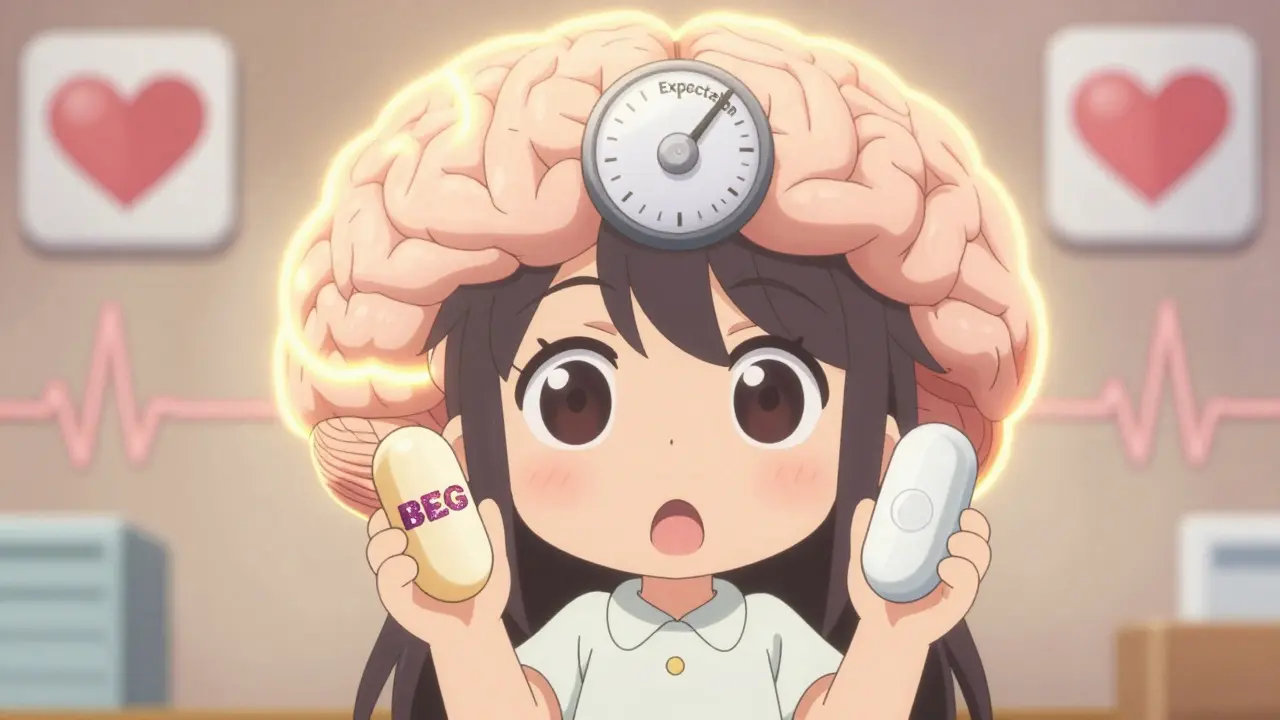
A 2014 study from the University of Auckland gave people identical placebo pills. One group was told they were getting a well-known brand-name painkiller. The other group was told they were getting a generic version. The brand-name placebo group reported pain relief just as strong as real ibuprofen. The generic placebo group? Half the relief. Same pill. Same ingredients. Different label. Different results. This isn’t an anomaly. It’s the placebo effect in action-your brain’s expectation shaping your body’s response. When you believe a pill is expensive, trusted, and powerful, your nervous system responds accordingly. Brain scans show the dorsolateral prefrontal cortex, the area tied to expectation and pain control, lights up 27% more when you think you’re taking a brand-name drug. That’s not magic. That’s biology. The effect isn’t just in painkillers. In antidepressant trials, patients on generic sertraline were 22% more likely to quit because they felt it “wasn’t working,” even though the chemical makeup was identical to the brand. In statin studies, people told they were on a generic version reported muscle pain at nearly 4 times the rate of those told they were on a brand-despite getting sugar pills.The Cost-Per-Pill Trap
Your brain doesn’t just respond to names. It responds to price. In one experiment, healthy volunteers received fake painkillers. Half were told the pill cost $2.50. The other half were told it cost 10 cents. The $2.50 pill reduced pain by 64% more. The same pill. Same placebo. Just a different price tag. This is why many patients resist switching to generics. They’ve been conditioned to believe that higher cost = higher quality. It’s a deep-rooted assumption. And it’s reinforced every time you see a $4.83 bottle of Lipitor next to a $0.08 bottle of atorvastatin. Your brain doesn’t know they’re the same molecule. It just knows one costs 60 times more. The financial impact is real. In the U.S., an estimated $1.4 billion is spent each year on unnecessary brand-name prescriptions because patients-and sometimes doctors-believe generics are inferior. That’s not just wasted money. It’s wasted health outcomes.When Perception Becomes Reality
The nocebo effect-the dark twin of the placebo effect-is where things get dangerous. It’s when expecting harm causes harm. A patient on generic levothyroxine sees their TSH levels rise after the switch. They feel tired. Their heart races. They blame the generic. But lab tests show identical blood levels to the brand. The issue? Their brain interpreted the switch as a threat. Stress hormones spiked. Thyroid function dipped-not because the drug failed, but because their mind believed it had. This isn’t rare. On Drugs.com, 78% of users who switched to generics reported reduced effectiveness. On Reddit, threads like “Generic sertraline made me feel worse” get hundreds of upvotes. These aren’t people being irrational. They’re experiencing real physiological changes triggered by belief. The most alarming part? These effects are strongest in chronic conditions-high blood pressure, depression, cholesterol. Where consistency matters most. A 2016 study found brand-name users had 18.3% higher adherence rates after 12 months, even though generics were chemically identical. That gap? It’s psychological.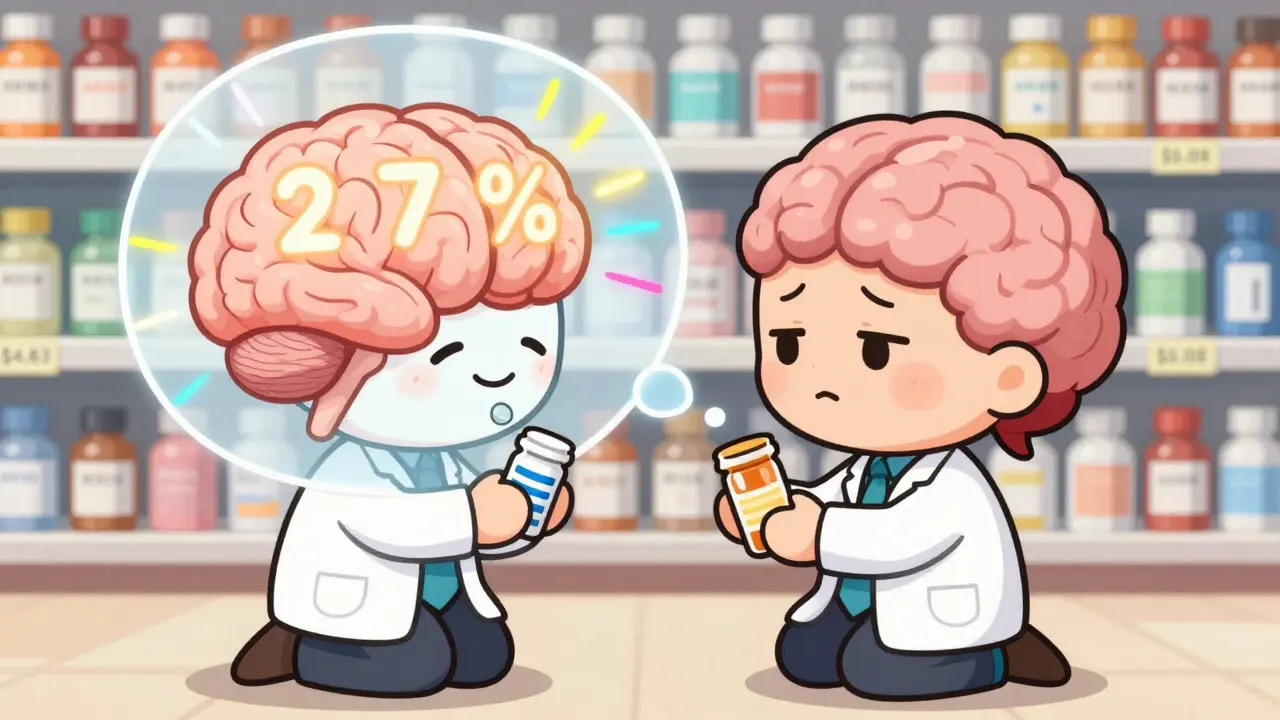
What Doctors Can Do (And What They Shouldn’t)
You can’t fix this by telling patients, “It’s the same thing.” That just makes them feel dismissed. The best approach? Acknowledge the feeling, then explain the science. A 2021 JAMA study tested a simple 3-minute conversation:- “The FDA requires generics to work the same as brand names. They must be absorbed into your blood at the same rate and amount-within 80% to 125% of the brand. That’s not a guess. It’s a strict, tested standard.”
- “Some people notice a difference in how they feel-not because the drug is weaker, but because their brain expects it to be. That’s normal.”
- “Give it two weeks. If you still feel off, we’ll talk. But let’s not assume it’s the medicine.”
What You Can Do as a Patient
If you’re switching to a generic:- Ask your pharmacist: “Is this made in the same factory as the brand?” (Many are.)
- Don’t switch during high-stress times-like after a diagnosis or during a life change. Your brain is already on edge.
- Track your symptoms before and after. Use a simple journal: “Day 1: Headache 7/10. Day 7: 5/10. Day 14: 3/10.” Numbers beat feelings.
- If you feel worse, don’t assume it’s the drug. Ask: “Could this be my mind reacting?” Then talk to your doctor.
The Bigger Picture: Why This Matters
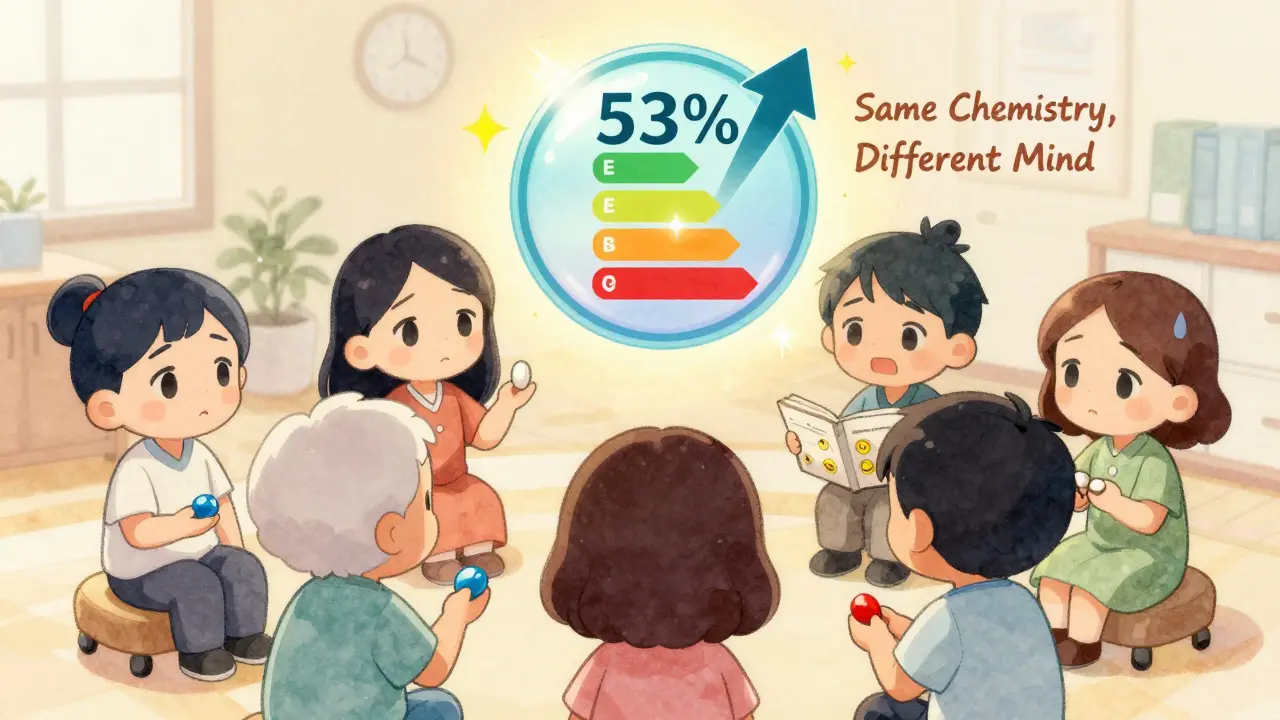
This isn’t just about saving money. It’s about access. Generics make life-saving drugs affordable for millions. Without them, insulin, blood pressure meds, and antidepressants would be out of reach for many. But if we keep letting perception override science, we risk creating a two-tier system: those who can afford to believe in their medicine, and those who can’t. The FDA is starting to act. In 2023, they launched a pilot program requiring generic manufacturers to keep pill color, shape, and markings consistent with the brand. Why? Because changing the look of a pill increases nocebo responses by 29%. A simple change in appearance can make patients think the drug is weaker-even when it’s not. In Europe, a €2.4 million study is now testing standardized educational materials to help patients understand generics. In the U.S., a 12-minute digital tool called the “Expectation Modulation Protocol” is under FDA review. Early results? It cuts nocebo responses by 53%.It’s Not About Deception. It’s About Trust.
The placebo effect isn’t a flaw in medicine. It’s proof that the mind and body are deeply connected. The problem isn’t that patients believe in the brand. The problem is that we never taught them how to believe in the science. You don’t need to be tricked into feeling better. You need to be informed. The next time you’re handed a generic pill, remember: it’s not cheaper because it’s worse. It’s cheaper because the patent expired. The science didn’t. Your brain did. You’re not taking a lesser drug. You’re taking the same one-with a different label. And your body? It’s ready to respond.Do generic drugs work as well as brand-name drugs?
Yes. By law, generic drugs must contain the same active ingredient, strength, dosage form, and route of administration as the brand-name version. The FDA requires them to be bioequivalent-meaning they’re absorbed into your bloodstream at the same rate and amount, within a tight 80-125% range. Thousands of studies confirm this. The difference isn’t in the chemistry. It’s in the perception.
Why do some people feel worse after switching to a generic?
It’s often the nocebo effect-your brain expecting the generic to be less effective, which triggers real physical symptoms. Studies show patients report more side effects and less relief when they know they’re on a generic, even if the pill is identical. This isn’t weakness. It’s how the mind works. The good news? Educating patients about bioequivalence reduces these effects by nearly half.
Can the color or shape of a generic pill affect how well it works?
Not pharmacologically-but psychologically, yes. Changing the appearance of a generic pill-like switching from a blue capsule to a white tablet-can increase nocebo responses by 29%. Patients associate familiar shapes and colors with effectiveness. That’s why the FDA now encourages manufacturers to keep generic pills looking as close as possible to the brand name.
Is it ethical for doctors to use the placebo effect to make generics work better?
It’s not about deception. It’s about transparency. Doctors aren’t lying when they explain that generics are just as effective. They’re helping patients understand why their brain might feel differently-even when the drug hasn’t changed. The goal isn’t to trick the mind. It’s to align the mind with the facts.
Should I avoid generics because of the placebo effect?
No. Avoiding generics because of fear of reduced effectiveness means paying more for the same medicine-and potentially going without treatment because it’s too expensive. The placebo effect is real, but it’s manageable. With the right information and support, most people do just as well on generics. The bigger risk? Not taking your medicine at all.
How long does it take for the mind to adjust to a generic drug?
Most people adapt within 2 to 4 weeks. The brain needs time to update its expectations. That’s why doctors often recommend a 2-week transition period with close monitoring. If symptoms persist beyond that, it’s worth checking with your provider-but don’t assume it’s the drug. Often, it’s just your brain catching up.
Alex Danner
January 6, 2026 AT 18:32That 2014 Auckland study still blows my mind. Same pill, same chemistry, but the brand-name placebo group got relief like it was magic. Your brain doesn't care about the FDA's bioequivalence charts-it cares about the label, the color, the price tag. It's not placebo, it's *neurobiology*. We're wired to respond to cues. The drug is just the delivery system. The real medicine is your expectation.
Katrina Morris
January 8, 2026 AT 17:27my grandma switched to generic blood pressure med and said she felt like she was floating away for a week then it just clicked. she didnt know why but she trusted the doctor so she stuck with it. now shes fine. sometimes your brain just needs time to catch up
Rachel Steward
January 10, 2026 AT 10:52Let’s be real-this isn’t about science. It’s about capitalism conditioning us to equate price with quality. You pay more, you feel better. That’s not placebo, that’s consumer programming. The FDA doesn’t regulate perception. Pharma does. And they’ve spent decades selling you the illusion that a $4.83 bottle is somehow superior to an 8-cent one. Wake up. You’re being manipulated by color psychology and brand loyalty. The pill doesn’t care if you think it’s expensive. Your nervous system does.
steve rumsford
January 11, 2026 AT 06:58i switched to generic adderall last year and thought i was gonna die. turned out my brain just missed the blue capsule. now i use the generic and dont even notice. weird how your mind clings to shapes
LALITA KUDIYA
January 12, 2026 AT 18:20in india we dont have brand vs generic like u do. same pill same box same price. people take it and feel better. maybe its not about the pill maybe its about the story we tell ourselves
Poppy Newman
January 14, 2026 AT 00:40🤯 the color change thing? 29% more nocebo? that’s wild. my anxiety med switched from purple to white and i swore it stopped working. turned out i just needed to retrain my brain. now i keep the old bottle next to the new one. weird ritual but it helps 🌿
Kamlesh Chauhan
January 15, 2026 AT 01:58so youre telling me my depression got worse because i saw the word generic on the bottle and my brain went full panic mode? cool. so the real drug is the label. the pill is just a prop. next theyll tell me my car runs better if i pay extra for the logo on the hood
Mina Murray
January 15, 2026 AT 23:32They’re lying. The FDA’s 80-125% bioequivalence range? That’s a loophole. That’s not the same. That’s a 45% swing in absorption. You think your body doesn’t notice that? You think the fillers and binders don’t matter? They do. And the doctors? They’re paid by Big Pharma to tell you it’s fine. I’ve been on 7 different generics. None worked like the brand. Don’t let them gaslight you.
Jonathan Larson
January 17, 2026 AT 19:19The profound implication here is that medicine has always been, at its core, a psychological transaction. The molecule is merely the vessel. The cure is the trust between patient and practitioner. To dismiss the placebo effect as mere illusion is to misunderstand the very architecture of healing. We are not machines. We are narrative beings. The label, the color, the price-these are not distractions. They are part of the therapeutic ritual. To ignore them is to treat the body as a disconnected organ system rather than an integrated, meaning-making organism.
Vince Nairn
January 19, 2026 AT 00:50so the solution is to make generics look exactly like the brand so people feel better about taking them? genius. next theyll make the generic insulin come in a fancy box with a little ribbon. we’re not fixing the problem. we’re just dressing it up like a placebo wedding
Kyle King
January 20, 2026 AT 02:00they’re testing a 12-minute digital tool? bro. they’re not fixing the placebo effect. they’re weaponizing it. this is how they keep you compliant. tell you it’s the same, make it look the same, charge you less, and then pat themselves on the back for saving money while your brain still screams ‘this is fake’
Jessie Ann Lambrecht
January 20, 2026 AT 07:54My cousin was on brand Zoloft for years. Switched to generic. Felt like a ghost for two weeks. Then she started journaling her mood daily-numbers, not feelings. By day 18, she was laughing again. She didn’t need a new pill. She needed to outsmart her own brain. You can retrain your expectations. It’s not magic. It’s mindfulness with a side of data.
Andrew N
January 21, 2026 AT 02:16studies say 22% more people quit generic antidepressants. but the data doesnt say if they actually felt worse or just thought they did. its all in the survey questions. people say what they think theyre supposed to say. placebo effect is just confirmation bias with a lab coat
Anthony Capunong
January 23, 2026 AT 00:47Why are we even talking about this? In America, if you can’t afford the brand, you don’t deserve to feel better. Generics are for losers. If you want to feel good, pay for it. That’s how the system works. Stop whining about your brain. Get a better job.