 by
by Presumed Consent in Pharmacy: When Pharmacists Can Switch Your Medication Without Asking
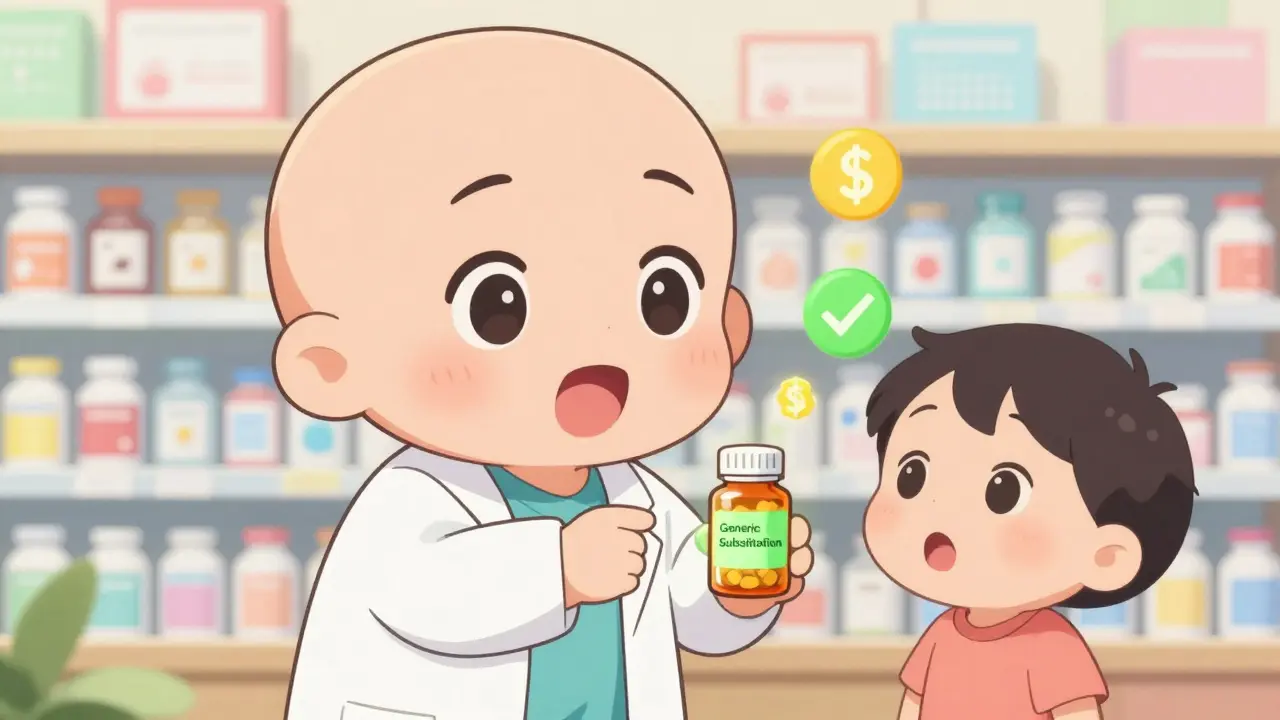
2 Feb, 2026Every time you pick up a prescription, there’s a good chance the pill in your hand isn’t the brand your doctor wrote on the slip. It’s probably a generic version-cheaper, just as effective, and legally allowed to be swapped in without you ever saying a word. That’s presumed consent, and it’s happening in 43 out of 50 U.S. states right now.
What Presumed Consent Actually Means
Presumed consent means pharmacists can swap your brand-name drug for a generic version without asking you first. They don’t need your signature, verbal okay, or even a nod. They just assume you’re okay with it. This isn’t some shady loophole-it’s written into state law. The idea? Save money. Generic drugs cost up to 85% less than brand-name versions, and the U.S. healthcare system saves over $1.6 trillion every decade because of them.The FDA says generics are just as safe and effective as brand drugs. They have to prove it through strict testing. The agency’s Orange Book lists every approved generic and rates them as therapeutically equivalent (an “A” rating). If your drug has an “A” rating, it’s legally interchangeable.
But here’s the catch: just because it’s legal doesn’t mean everyone’s comfortable with it.
How It Works in Practice
Let’s say your doctor prescribes Lipitor for cholesterol. Your pharmacy has the generic, atorvastatin, in stock. In a presumed consent state like Florida or Ohio, the pharmacist fills your script with the generic and hands it to you. No questions asked. You might not even notice unless you check the label.But they still have to tell you afterward. In 31 states plus D.C., pharmacists must give you a written notice-usually a small slip or a sticker on the bottle-that says, “This is a generic substitution.” It’s not a big deal for most people. But for others, it’s the first time they realize their medication changed without their permission.
Some states go further. California and New York now require electronic records of every substitution. That means your pharmacy’s system logs it automatically. If you ever have an issue, there’s a paper trail.
Where It Gets Complicated
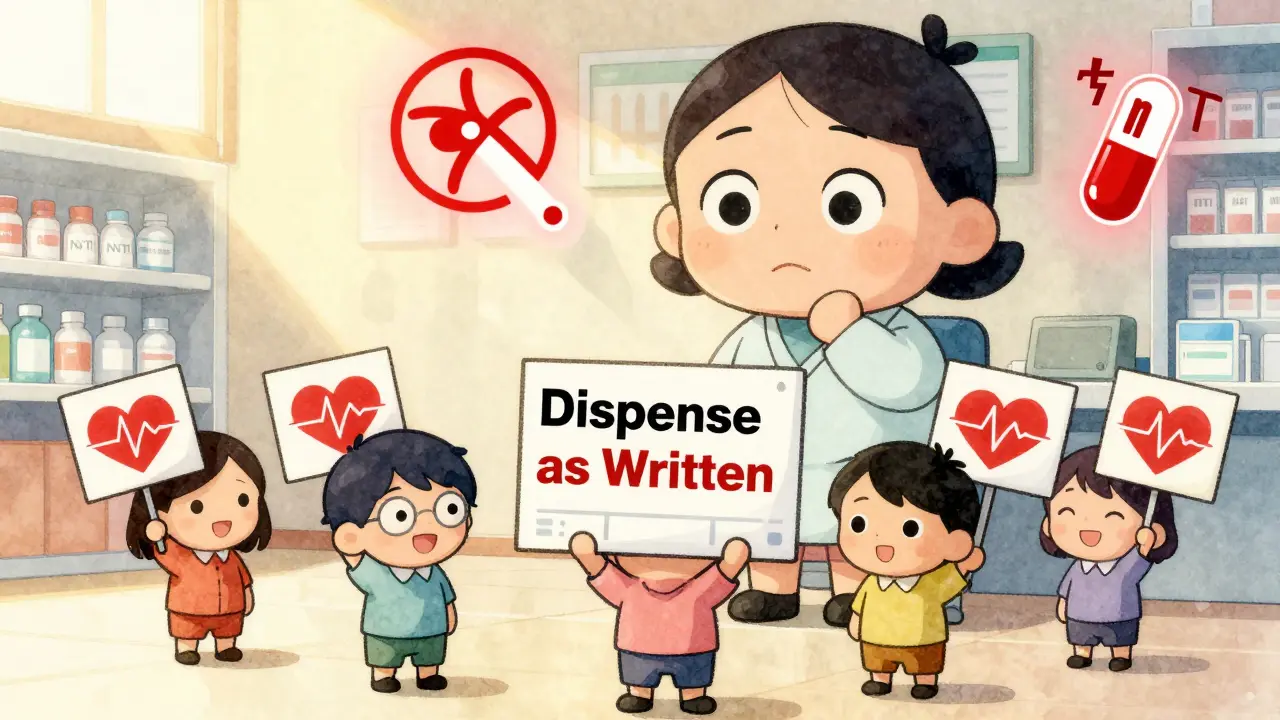
Not all drugs are created equal. For most medications-antibiotics, blood pressure pills, antidepressants-switching to a generic is smooth and safe. But for drugs with a narrow therapeutic index (NTI), even tiny differences in how the body absorbs the drug can cause serious problems.Think epilepsy meds like phenytoin or levetiracetam. Or thyroid drugs like levothyroxine. Or blood thinners like warfarin. If the generic version is absorbed just 5% differently, it could mean the difference between a seizure and control, or a clot and a stroke.
That’s why 15 states-including Tennessee, Hawaii, and Maryland-have special rules. In those places, pharmacists can’t swap NTI drugs without your explicit consent. Some even require the prescriber to write “Dispense as Written” on the prescription.
And it’s not just small-molecule drugs. Biosimilars-generic versions of complex biologic drugs like Humira or Enbrel-are a whole new ballgame. Only six states let pharmacists automatically substitute them. The rest require extra steps: patient consent, prescriber notification, or even a new prescription. That’s because biologics are made from living cells, not chemicals. Their structure is harder to copy exactly.
Why Pharmacists Support It
Most pharmacists back presumed consent. Why? Because it saves time-and lives.A 2022 study found that presumed consent cuts prescription processing time by about 1.7 minutes per script. That might not sound like much, but multiply that by millions of prescriptions a day, and you’re talking $2.8 billion in labor savings nationwide. Pharmacists can focus on counseling patients instead of filling out consent forms.
Independent pharmacies in presumed consent states report 78% confidence in following the rules. Chain pharmacies? Even higher-97% compliance thanks to automated systems that flag restrictions before the script is filled.
And the numbers speak for themselves. In presumed consent states, 92.3% of prescriptions are filled with generics. In states that require explicit consent, it’s only 87.1%. That gap isn’t just about policy-it’s about access. People who can’t afford brand-name drugs get their meds faster and cheaper.
Why Some Patients Are Worried
But not everyone is okay with it.On patient forums, stories pop up like this: “My seizure meds stopped working after they switched me to a generic.” Or, “I felt dizzy and confused for weeks after the pharmacy changed my thyroid pill.”
The Epilepsy Foundation documented 178 cases of breakthrough seizures between 2018 and 2022 linked to generic switches. While not all were proven to be caused by the substitution, the pattern is enough to make patients-and some doctors-nervous.
One Reddit user, a pharmacist in Ohio, wrote: “95% of patients don’t care. The other 5%? They lose trust in the whole system.”
That’s the real tension: efficiency vs. autonomy. Presumed consent streamlines care. But it also removes the patient’s voice from the decision. For some, that’s a dealbreaker.
What You Can Do
You don’t have to just accept it. Here’s what you can do right now:- Check your prescription label. If it says “generic” or lists a different company name, you’ve been substituted.
- Ask your pharmacist. “Was this switched from the brand?” They’re required to answer.
- Request “Dispense as Written.” If you’re on a sensitive medication, ask your doctor to write this on the prescription. It legally blocks substitution.
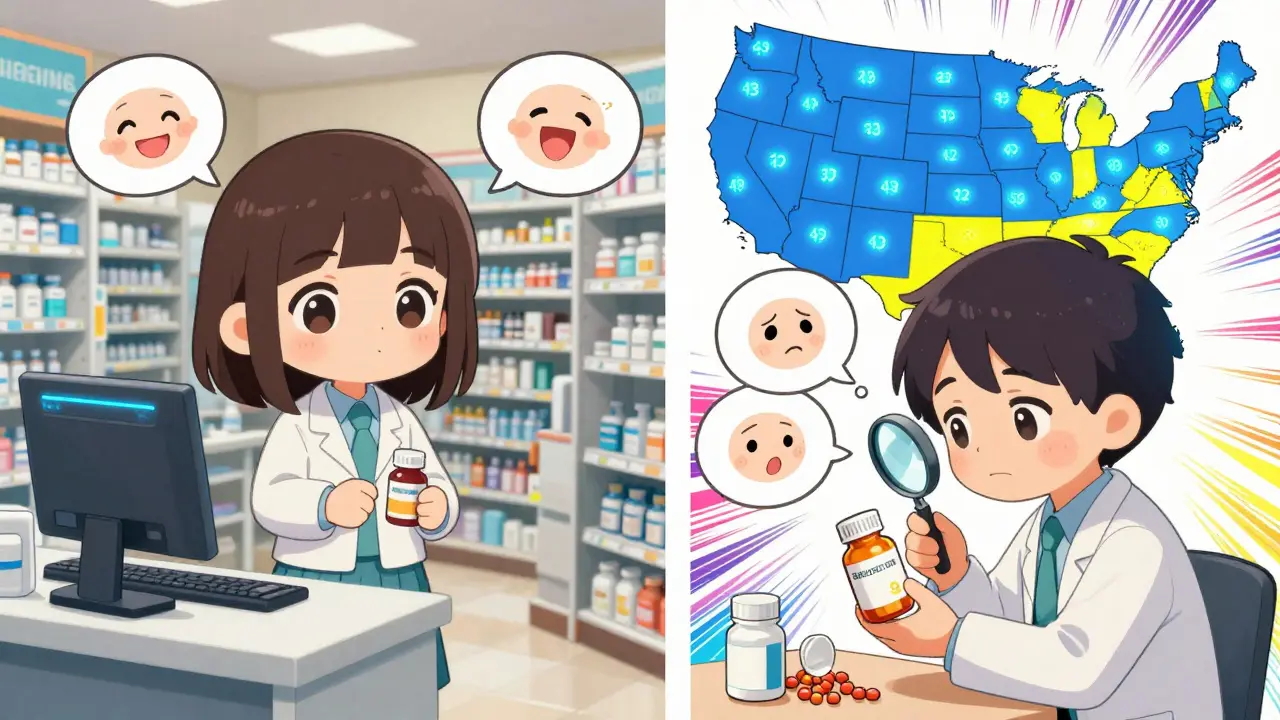
- Know your state’s rules. If you live in Alaska, Delaware, Hawaii, Maine, Maryland, New Mexico, or West Virginia, pharmacists must ask you first. In other states, they can assume consent.
- Track how you feel. If you notice new side effects after a switch, tell your doctor and pharmacist. Write it down. It matters.
The Future of Presumed Consent
The push for standardization is growing. Right now, you’ve got 51 different sets of rules-50 states plus D.C. That’s chaos for pharmacies that operate across state lines.The Uniform Law Commission is working on a “Model State Substitution Act” to bring consistency. So far, 17 states are considering it. One big idea? A tiered system: presumed consent for most drugs, but explicit consent only for NTI drugs and biologics.
That’s what experts like Dr. Erika Lietzan, a leading voice on pharmaceutical law, recommend: “Presumed consent works well-but only if we protect the most vulnerable patients.”
Meanwhile, biosimilars are coming fast. By 2028, they could make up 25% of the biologics market. That means more states will need to update their laws. Some already are. California’s 2022 law now requires extra notice for biosimilar switches. New York’s 2023 rules demand digital logs.
Don’t expect presumed consent to disappear. It’s too cost-effective. But expect it to get smarter-with more safeguards, clearer rules, and better communication.
Bottom Line
Presumed consent isn’t about tricking patients. It’s about making the system work faster and cheaper-without sacrificing safety. For most people, it’s a win. You get the same medicine at a fraction of the cost.But if you’re on a drug where small changes matter-epilepsy, thyroid, blood thinners-don’t assume it’s safe. Ask. Advocate. Know your rights. Your health is worth the extra step.
Wendy Lamb
February 4, 2026 AT 10:48Just checked my last prescription-yep, generic. Never even noticed. If it works and costs less, why make a fuss?
Antwonette Robinson
February 6, 2026 AT 00:18Oh wow, so now pharmacists are the new doctors? Next they’ll be writing your prescriptions too. And we wonder why people don’t trust the system. 🤦♀️
Justin Fauth
February 6, 2026 AT 18:59This is just another step toward socialism disguised as ‘cost savings.’ They’re taking away your right to choose because bureaucrats think they know better. Wake up, America!
Meenal Khurana
February 7, 2026 AT 21:18Interesting. In India, generics are the norm. No one bats an eye. Safety first, always.
Jesse Naidoo
February 8, 2026 AT 22:18My cousin had a seizure after they switched her meds. No one told her. Now she’s terrified of pharmacies. This isn’t ‘efficiency’-it’s negligence.
Sherman Lee
February 9, 2026 AT 10:22They’re tracking every swap with electronic logs? 🤔 That’s not transparency-that’s surveillance. Big Pharma and the FDA are in bed with pharmacies. They want you dependent on cheap meds so you don’t question the system. Watch the video I posted last week-proof is in the data.
Lorena Druetta
February 11, 2026 AT 09:17To every individual reading this: your health matters deeply. Please, take a moment to review your prescriptions. Ask questions. Your voice is powerful. You deserve to be informed, and you deserve to be heard.
Zachary French
February 11, 2026 AT 15:07Y’all are acting like this is some new dystopia. It’s 2025. We’re all just guinea pigs in Big Pharma’s lab experiment. And now they’re gonna swap your thyroid meds like it’s a game of musical pills? 😒 I’ve been on levothyroxine for 12 years. Changed generics 3x. Felt like a zombie each time. No one listens. Not even my ‘doctor.’
Kunal Kaushik
February 11, 2026 AT 22:58People stress too much. If it’s FDA-approved and cheaper, why not? Life’s too short to overthink pills. 🤷♂️
Nathan King
February 12, 2026 AT 04:32The structural inefficiencies inherent in the current pharmaceutical distribution model necessitate a reevaluation of patient autonomy versus systemic optimization. The ethical calculus is nontrivial.
Roshan Gudhe
February 12, 2026 AT 16:22It’s not about trust in the system. It’s about trust in the process. If we remove consent, even presumed, we’re not just changing pills-we’re changing the relationship between care and control. What happens when the next ‘presumed’ decision is about your surgery? Your mental health treatment? Where do we draw the line?
Rachel Kipps
February 13, 2026 AT 13:46I didn't know pharmacists could do this without asking. I'll check my next script. Thanks for the info. 😊
Joy Johnston
February 14, 2026 AT 04:28As a pharmacist with 15 years of experience, I can tell you: 98% of patients never notice or care. But for the 2% who do-those on NTI drugs-we’re trained to flag them. We’re not villains. We’re trying to keep care affordable and safe. If you’re worried? Just say ‘Dispense as Written.’ We’ll honor it. No judgment. Just care.