 by
by Rhabdomyolysis from Medication Interactions: What You Need to Know About Muscle Breakdown Emergencies
7 Feb, 2026Medication Interaction Risk Checker
Check Your Medication Risk
This tool checks for dangerous combinations that can cause rhabdomyolysis, a medical emergency that can lead to kidney failure and other serious complications.
Select two medications to check for dangerous combinations.
When you take multiple medications, your body doesn’t just process them one at a time. It’s a chemical dance - and sometimes, one drug throws off the rhythm of another. In rare but dangerous cases, that dance leads to rhabdomyolysis, a condition where muscle tissue breaks down so fast it floods your bloodstream with toxic proteins. This isn’t just muscle soreness. It’s a medical emergency that can shut down your kidneys, trigger heart rhythms gone wild, or even kill you - and it’s often caused by common drug combinations you might not even think twice about.
What Exactly Is Rhabdomyolysis?
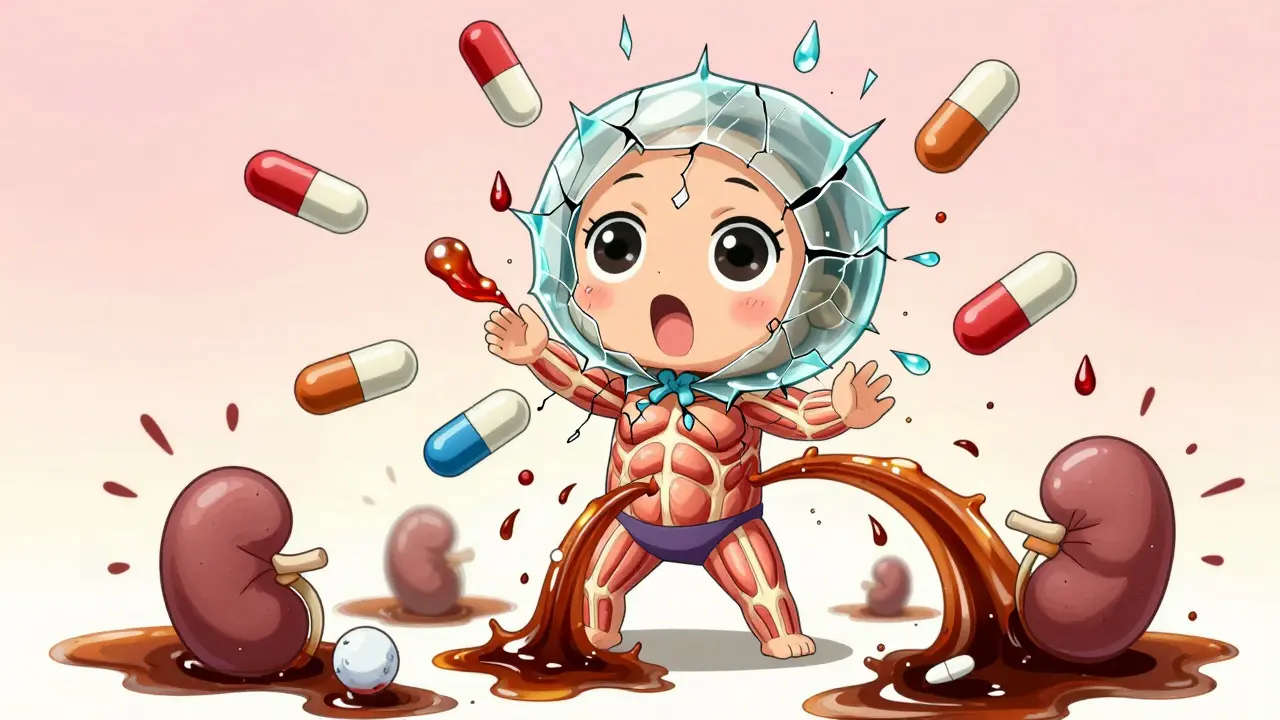
Rhabdomyolysis happens when muscle cells rupture, spilling their contents - especially a protein called myoglobin - into your blood. Myoglobin is fine in muscles. In your bloodstream? It’s a disaster. Your kidneys try to filter it out, but the protein clogs the tiny tubes inside them. That’s how kidney failure starts. And it doesn’t happen slowly. It can go from zero to critical in less than 48 hours.
Doctors used to see this mostly in people crushed under debris after earthquakes or fires. But since the 1980s, medications have become the leading cause. Today, about 7-10% of all rhabdomyolysis cases come from drug interactions. And the numbers are climbing. In the U.S. alone, over 27,000 people are hospitalized each year for this exact reason.
The Most Dangerous Drug Combinations
Not all medications are equal when it comes to muscle damage. Some are far more likely to cause trouble when mixed. Here are the worst offenders:
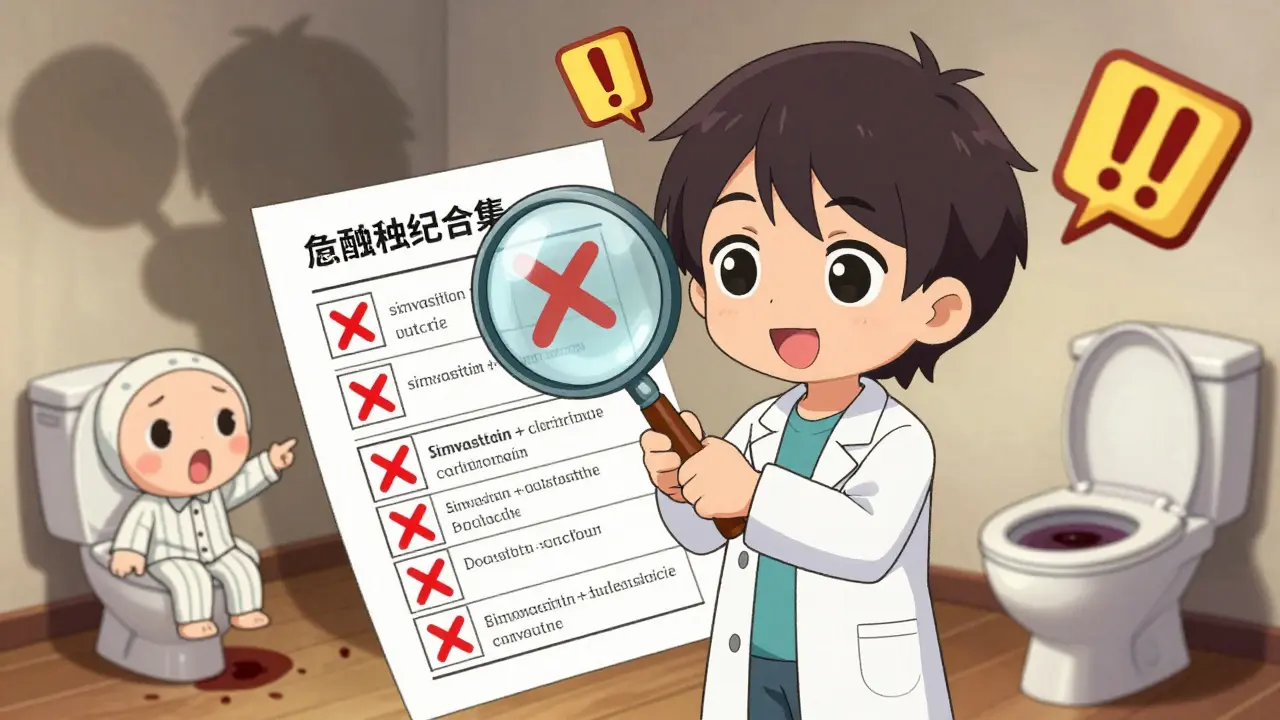
- Statins + Fibrates: The combo of simvastatin (Zocor) and gemfibrozil (Lopid) increases rhabdomyolysis risk by 15 to 20 times compared to statins alone. Why? Both drugs are broken down by the same liver enzyme (CYP3A4), so they pile up like traffic jammed on a highway.
- Statins + Antibiotics: Erythromycin and clarithromycin (common for sinus infections) can turn a safe statin dose into a lethal one. A single dose of clarithromycin can spike simvastatin levels by nearly 19-fold.
- Colchicine + Azole Antifungals: People with gout often take colchicine. If they also get an antifungal like itraconazole for a fungal infection, their risk of muscle breakdown jumps 14 times. The FDA issued a formal warning in 2021 after reviewing over 1,200 cases.
- Erlotinib + Simvastatin: This one’s a hidden killer. Erlotinib, used for lung cancer, blocks the same liver enzyme that clears simvastatin. Patients have hit CK levels over 40,000 U/L - more than 40 times the normal limit - within days of starting both drugs.
- Propofol Infusions: In ICU patients, propofol (a sedative) can trigger a rare but deadly form of rhabdomyolysis called Propofol Infusion Syndrome. It shuts down energy production in muscle cells. Mortality hits 68% when rhabdomyolysis develops.
Statins alone cause about 60% of all medication-induced rhabdomyolysis. Atorvastatin and simvastatin make up 78% of those cases. And here’s the kicker: 89% of fatal cases involve a drug interaction - even though these combinations make up only 12% of all statin prescriptions.
Who’s Most at Risk?
This isn’t random. Certain people are far more likely to develop this condition:
- People over 65: Their kidneys don’t filter drugs as well, and their muscles are more fragile. Risk is 3.2 times higher than in younger adults.
- Women: Studies show women have 1.7 times the risk of men, possibly due to differences in muscle mass and drug metabolism.
- Those with kidney problems: If your eGFR (a measure of kidney function) is below 60, your risk jumps 4.5 times. Your body can’t clear the toxins fast enough.
- People on 5+ medications: Polypharmacy is the silent killer. Taking five or more drugs increases risk by 17.3 times. It’s not the drugs themselves - it’s the hidden interactions.
- Those with the SLCO1B1*5 gene variant: About 15% of Europeans carry this genetic quirk. It makes their liver less able to clear simvastatin. Risk of muscle damage? 4.5 times higher.
What Are the Warning Signs?
Most people think rhabdomyolysis means intense muscle pain. But only about half of cases show the classic triad: muscle pain, weakness, and dark urine.
More common signs include:
- Urine that looks like cola or tea (that’s myoglobin)
- Unexplained fatigue or feeling "washed out"
- Abdominal pain, nausea, or vomiting
- Fever without infection
- Swelling or tightness in thighs, shoulders, or lower back
- Decreased urination
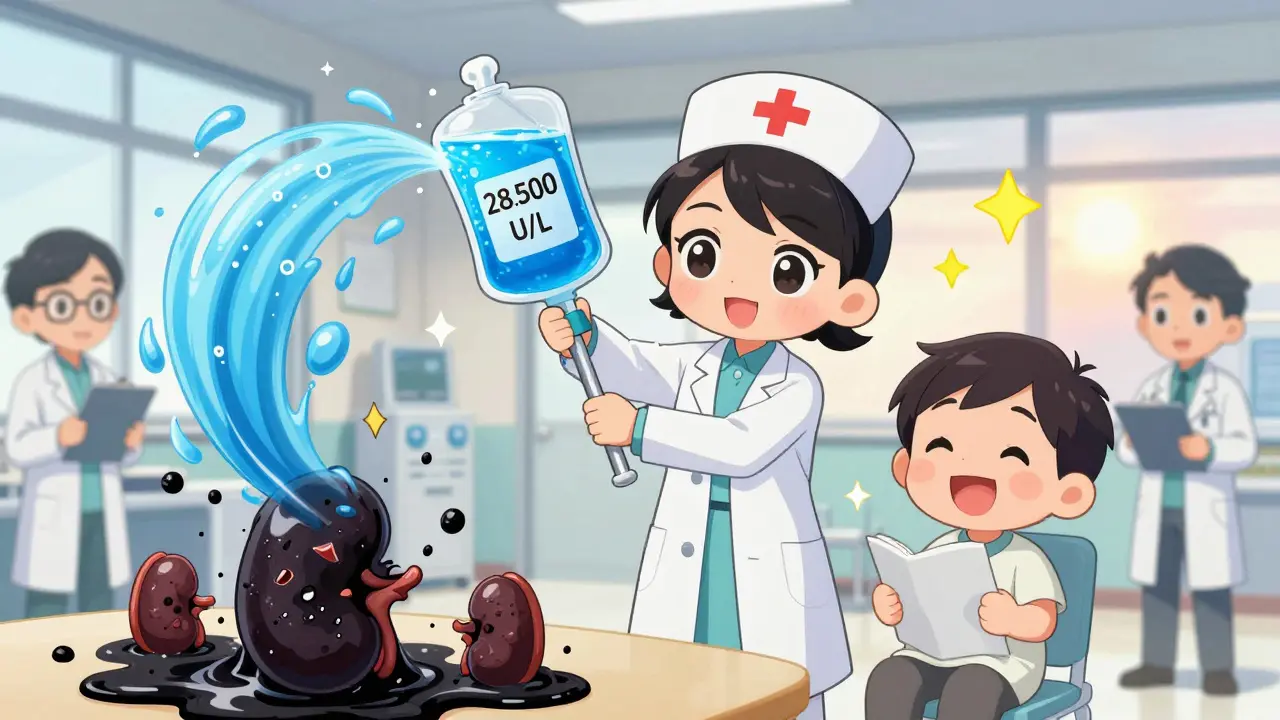
One patient on Reddit wrote: "I added clarithromycin to my colchicine for gout. Two days later, my urine turned dark. I thought it was dehydration. By day three, I couldn’t stand. CK was 28,500. I almost lost my kidneys. No one warned me."
Doctors often miss this. A 2022 survey of 147 rhabdomyolysis cases on Reddit found 92% of patients said their providers didn’t take early muscle symptoms seriously.
How Is It Diagnosed?
The key test is creatine kinase (CK). Normal levels are under 200 U/L. In rhabdomyolysis, they typically exceed 1,000 U/L. Severe cases hit 5,000 to over 100,000 U/L.
Doctors also check:
- Electrolytes - potassium can spike dangerously high (hyperkalemia)
- Calcium - often drops too low (hypocalcemia)
- Renal function - creatinine and BUN levels rise as kidneys fail
- Urine dipstick - shows blood without red blood cells under the microscope (a telltale sign of myoglobin)
A CK level over 1,000 U/L is 99.2% specific for rhabdomyolysis. If you’re on a high-risk drug combo and your CK is above that - don’t wait. Act now.
What Happens in the Hospital?
Time is kidney. Treatment starts the moment rhabdomyolysis is suspected:
- Stop the drugs: Immediately discontinue any suspected medication - statins, antibiotics, colchicine, etc.
- Aggressive IV fluids: You’ll get at least 3 liters of saline in the first 6 hours. Goal? Urine output of 200-300 mL per hour. This flushes out myoglobin before it clogs your kidneys.
- Urine alkalinization: Sodium bicarbonate is added to IV fluids to raise urine pH above 6.5. This keeps myoglobin from clumping in the kidneys.
- Monitor for complications: Electrolytes, heart rhythm, and pressure in limbs (compartment syndrome) are watched constantly.
For CK levels above 5,000 U/L, the Cleveland Clinic protocol recommends 3 liters of saline in 6 hours, then 1.5 liters per hour with bicarbonate. Dialysis may be needed if kidney failure sets in - and it happens in up to 50% of severe cases.
Long-Term Consequences
Surviving rhabdomyolysis doesn’t mean you’re back to normal. Recovery is long:
- Without kidney failure: Full muscle recovery takes 12.3 weeks on average.
- If you needed dialysis: Recovery can stretch to 28.6 weeks.
- 43.7% of survivors still have muscle weakness after 6 months.
And it’s not just physical. The emotional toll is real. Many patients say they never felt warned. They trusted their doctors - and paid the price.
How to Prevent It
Prevention is simple - if you know what to look for:
- Ask your pharmacist: When a new drug is added, ask: "Could this interact with anything I’m already taking?" Especially if you’re on statins.
- Know your meds: If you take more than three medications, get a full review every 6 months.
- Watch for early signs: Dark urine? Unexplained fatigue? Muscle aches that don’t go away? Don’t brush them off.
- Check your kidney function: If you’re over 65 or on statins, ask for an eGFR test at least once a year.
- Speak up if you’re on high-risk combos: If you’re on simvastatin + clarithromycin, or colchicine + itraconazole - ask if there’s a safer alternative.
The FDA and EMA now require stronger warnings on statin labels. But the real defense? You. Your awareness. Your questions.
What’s Next?
Researchers are racing to catch these interactions before they happen. The NIH is funding a real-time drug interaction alert system. Genetic testing for SLCO1B1*5 is becoming more common. And new drugs are being tested to protect muscle cells during statin therapy.
But right now? The best tool you have is knowledge. And the courage to ask: "Could this hurt me?"
Can rhabdomyolysis happen from one medication, or only from interactions?
Rhabdomyolysis can happen from a single medication - especially statins, colchicine, or high-dose antivirals. But the most dangerous cases almost always involve interactions. Combining drugs multiplies the risk, often by 10 to 20 times. For example, simvastatin alone has a low risk, but when mixed with clarithromycin, the risk jumps nearly 19-fold.
Is rhabdomyolysis reversible?
Yes, if caught early. Most people recover fully if they stop the offending drug and get enough IV fluids. But if kidney damage occurs, recovery takes longer - sometimes months. About 44% of survivors still have muscle weakness after six months. In severe cases with dialysis, full recovery can take over 6 months.
Can I take statins if I’m on antibiotics?
It depends. Some antibiotics are safe. Others are dangerous. Avoid combining statins with erythromycin, clarithromycin, itraconazole, or ketoconazole. Ask your doctor for alternatives like azithromycin (Zithromax), which doesn’t interfere with statin metabolism. Never assume a drug is safe just because it’s commonly prescribed.
What should I do if I notice dark urine while on medication?
Don’t wait. Dark, cola-colored urine is a red flag for rhabdomyolysis. Stop the suspected medication immediately and go to an emergency room. Get a creatine kinase (CK) blood test. Waiting even 24 hours can mean the difference between full recovery and permanent kidney damage.
Are there any natural supplements that increase rhabdomyolysis risk?
Yes. High-dose niacin (vitamin B3) and creatine can contribute to muscle breakdown, especially when combined with statins. Some weight-loss supplements contain unregulated stimulants or compounds that stress muscle cells. There’s no safety testing for most supplements - so if you’re on prescription meds, avoid them unless your doctor approves.
Ariel Edmisten
February 8, 2026 AT 13:18Niel Amstrong Stein
February 9, 2026 AT 15:27Paula Sa
February 9, 2026 AT 17:43Mary Carroll Allen
February 11, 2026 AT 11:01Joey Gianvincenzi
February 12, 2026 AT 17:09Amit Jain
February 14, 2026 AT 01:34Sarah B
February 15, 2026 AT 16:26Tola Adedipe
February 16, 2026 AT 07:20