 by
by Skin Rashes and Medication-Induced Dermatitis: What Patients Should Know
18 Mar, 2026Drug Rash Symptom Checker
Symptom Assessment Tool
This tool helps you assess whether your skin reaction might be a medication side effect and whether you need immediate medical attention. Always consult your healthcare provider for proper diagnosis.
Disclaimer: This tool is for informational purposes only. It does not replace professional medical diagnosis or treatment. Always consult your healthcare provider for proper evaluation and care.
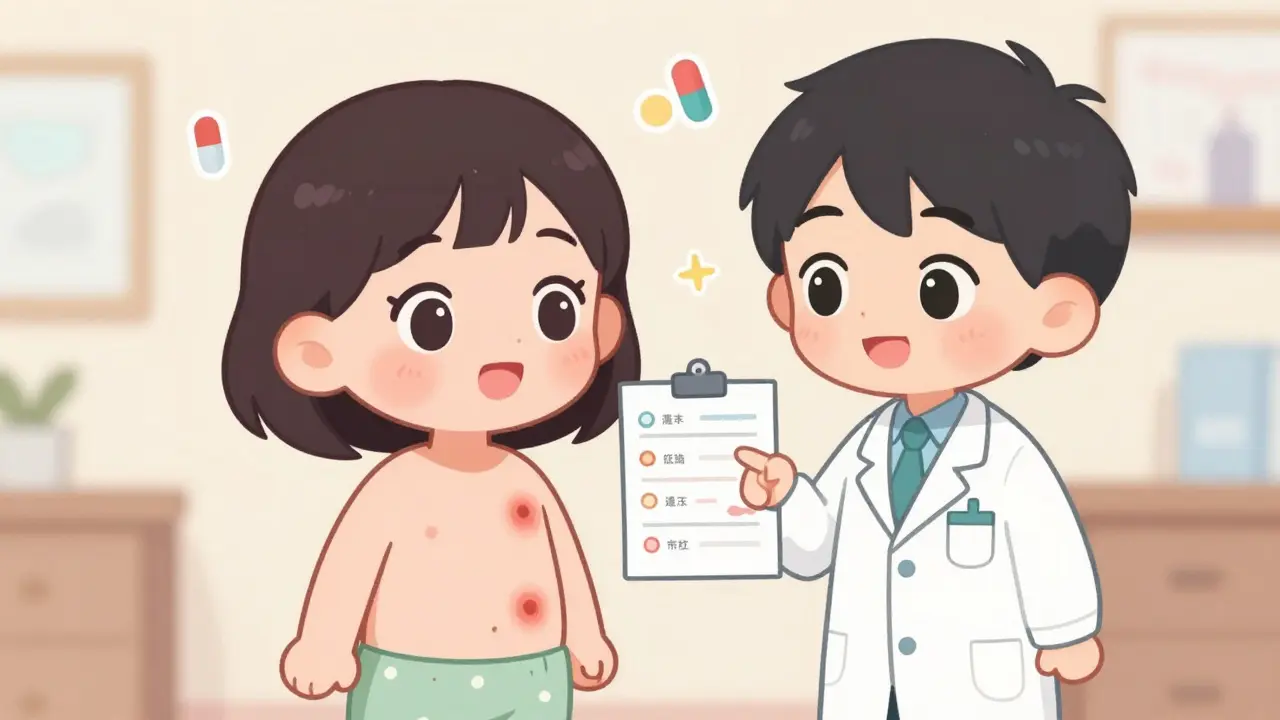
Every year, millions of people develop a skin rash after starting a new medication. Many assume it’s just an allergy, a bad reaction, or even something they caught from someone else. But here’s the truth: drug-induced dermatitis is one of the most common - and often misunderstood - side effects of prescription and over-the-counter drugs. If you’ve ever broken out in red bumps, itchy patches, or blisters after taking a pill, you’re not alone. And more importantly, you need to know what to do next.
How Common Are Drug Rashes?
About 2 to 5% of all adverse drug reactions show up on the skin. That means for every 100 people taking a new medication, at least two will develop some kind of rash. In Australia alone, emergency departments see hundreds of cases each month linked to common drugs like antibiotics, painkillers, and seizure medications. The most frequent type? A red, flat, or slightly raised rash that looks like measles - called a morbilliform eruption. It accounts for 90 to 95% of all drug rashes and usually isn’t dangerous.
But not all rashes are the same. Some are mild. Others can be life-threatening. The difference? Timing, appearance, and symptoms.
Types of Drug Rashes - And What They Mean
There are several patterns doctors look for. Each tells a different story about what’s happening inside your body.
- Erythematous (morbilliform) rash: This is the most common. It starts as small, pink or red spots on the chest, back, or arms. They spread symmetrically and may itch. Usually appears 4 to 14 days after starting the drug. Often goes away on its own within a week or two after stopping the medication.
- Urticaria (hives): Raised, red, itchy welts that come and go within hours. Can appear within minutes to an hour after taking the drug. May signal an IgE-mediated allergy. Often responds quickly to antihistamines and stopping the drug.
- DRESS (Drug Reaction with Eosinophilia and Systemic Symptoms): A delayed, multi-organ reaction. Starts 2 to 6 weeks after starting the drug. Features include rash, fever, swollen lymph nodes, and abnormal blood counts (especially eosinophils). Linked to anticonvulsants like carbamazepine, phenytoin, and lamotrigine; allopurinol for gout; and some antibiotics. Requires hospital care and steroid treatment.
- Stevens-Johnson Syndrome (SJS) and Toxic Epidermal Necrolysis (TEN): Medical emergencies. Begins with flu-like symptoms, then blisters and peeling skin over 10% or more of the body. Mortality rates: 5-15% for SJS, up to 35% for TEN. Often caused by antibiotics, NSAIDs, anticonvulsants, and sulfa drugs.
- Nummular dermatitis: Coin-shaped, scaly, red patches - often mistaken for eczema. Can be triggered by diuretics, beta-blockers, or interferon. Clears faster than regular nummular eczema once the drug is stopped.
- Photosensitivity: Rash only on sun-exposed skin - face, neck, arms. Caused by doxycycline, ciprofloxacin, hydrochlorothiazide, and some NSAIDs. Feels like a bad sunburn.
Why Do Some People Get Rashes and Others Don’t?
It’s not random. Genetics play a big role. For example:
- People of Southeast Asian descent with the HLA-B*1502 gene have a 1,000 times higher risk of developing SJS from carbamazepine.
- Those of Han Chinese ancestry with the HLA-B*5801 gene are 580 times more likely to get a severe reaction to allopurinol.
Other factors:
- Having a viral infection like Epstein-Barr or HIV when starting an antibiotic increases your risk by 5 to 10 times.
- Taking five or more medications raises your lifetime risk of a drug rash to 35%. Just one or two? Around 5%.
- People with weakened immune systems - from cancer, transplants, or autoimmune disease - are 3 to 5 times more likely to react.
And here’s something surprising: you don’t need to be allergic the first time you take a drug. Sometimes, your body gets sensitized during a first exposure - even from trace amounts in food or environmental sources. Then, the next time you take it, your immune system goes into overdrive.
What Should You Do If You Get a Rash?
Don’t panic. But don’t ignore it either.
If it’s mild: Red, itchy spots that started a week after starting a new drug? You might have a morbilliform rash. Stop the medication only if your doctor says so. Many people quit their meds on their own - but that’s risky. Stopping an antiseizure drug suddenly can cause seizures. Stopping a blood pressure pill can spike your pressure. Always call your prescriber first.
In the meantime:
- Take lukewarm showers. Avoid hot water - it dries and irritates skin.
- Use fragrance-free, soap-free cleansers.
- Apply emollients (like CeraVe or Eucerin) within 3 minutes of getting out of the shower.
- Try over-the-counter 1% hydrocortisone cream twice daily on small areas.
If it’s severe: Go to the ER immediately if you have:
- Blisters or peeling skin (especially around mouth, eyes, or genitals)
- Fever over 38°C (100.4°F)
- Swelling of the face, lips, or tongue
- Difficulty breathing or swallowing
- Widespread rash covering more than 10% of your body
These are signs of SJS, TEN, or DRESS. Delaying treatment increases the risk of death.
How Doctors Find the Culprit
Figuring out which drug caused the rash is harder than it sounds. Many patients take 3, 4, or even 10 medications at once. Doctors can’t test every one.
Here’s how they narrow it down:
- Timing: When did the rash start? Was it 10 days after starting a new drug? That’s a red flag.
- Pattern: Does it match a known drug rash type?
- Rechallenge (rarely): Sometimes, under strict supervision, a doctor will reintroduce one drug at a time - but this is risky and only done in controlled settings.
- Genetic testing: If you had a severe reaction to carbamazepine or allopurinol, you may be tested for HLA-B*1502 or HLA-B*5801. If positive, you’ll never take those drugs again.
- Penicillin skin testing: Now 95% accurate. Many people who think they’re allergic to penicillin aren’t. Testing can open up safer antibiotic options.
And here’s a key point: about 15% of people who say they’re allergic to penicillin can actually take it safely. Don’t assume you’re allergic just because you got a rash years ago.

Prevention and Long-Term Management
Once you’ve had a drug rash, you need to protect yourself.
- Keep a written list of all drugs that caused rashes - including the name, date, and type of reaction.
- Wear a medical alert bracelet if you’ve had SJS, TEN, or DRESS.
- Always tell every new doctor about your history - even if it was 10 years ago.
- Ask before taking any new medication, even OTC ones. Some painkillers, supplements, or herbal products can trigger reactions too.
- If you’re on long-term meds like anticonvulsants or allopurinol, ask your doctor if genetic testing is right for you.
Also, avoid sun exposure if you’re on drugs known to cause photosensitivity. Wear UPF 50+ clothing, use broad-spectrum sunscreen daily, and stay in shade during peak UV hours.
The Bottom Line
Most drug rashes aren’t emergencies. They’re annoying, uncomfortable, and sometimes scary - but they’re usually harmless if caught early. The key is knowing the warning signs, acting fast when needed, and never guessing.
Don’t stop your meds without talking to your doctor. Don’t ignore a rash just because it’s "not that bad." And don’t assume you’re allergic to a drug just because you had a reaction once - testing can change everything.
Drug rashes are a signal. Listen to your body. Get the right help. And remember: 90% of them clear up completely once the drug is stopped. You just need to know when to act - and when to wait.
Laura Gabel
March 20, 2026 AT 06:50jerome Reverdy
March 21, 2026 AT 11:02Andrew Mamone
March 22, 2026 AT 01:31MALYN RICABLANCA
March 23, 2026 AT 03:02gemeika hernandez
March 23, 2026 AT 05:51Nicole Blain
March 23, 2026 AT 18:17Kathy Underhill
March 24, 2026 AT 01:19Srividhya Srinivasan
March 25, 2026 AT 23:17Prathamesh Ghodke
March 26, 2026 AT 09:26Stephen Habegger
March 27, 2026 AT 05:00Sanjana Rajan
March 28, 2026 AT 21:36Kendrick Heyward
March 29, 2026 AT 08:14lawanna major
March 29, 2026 AT 14:59Andrew Mamone
March 30, 2026 AT 04:10