
 by
by Storing Medications Away from Children: Safety Best Practices
20 Jan, 2026Every year, 60,000 children under five end up in emergency rooms because they got into medications they weren’t supposed to. That’s about 165 kids a day. Most of these incidents aren’t from stolen pills or reckless behavior-they happen because a bottle was left on the counter for just two minutes while someone answered the door, or because a grandparent thought, "My grandkid knows not to touch medicine."
Why "Up and Away" Isn’t Enough
You’ve heard it before: "Keep meds up and away from kids." But that phrase is dangerously vague. A bottle on a high shelf? Still reachable. A cabinet above the sink? Kids as young as 24 months can open standard latches. A drawer in the bathroom? That’s where 41% of parents store meds-even though they know kids can get in there. The truth is, out of sight doesn’t mean out of reach. And child-resistant caps? They’re not childproof. According to Express Scripts, half of all kids under five can open them in under a minute. That’s not a flaw in the packaging-it’s a flaw in relying on it alone. The CDC’s Up and Away campaign got it right: you need both height AND a lock. Not just for prescription pills. Not just for opioids. But for Tylenol, ibuprofen, vitamins, even Tums. Why? Because chewable meds like Tums look like candy. Aspirin looks like Skittles. And toddlers don’t know the difference.What Counts as Safe Storage?
Safe storage isn’t about what’s convenient. It’s about what works. Here’s what the experts say:- Store all medications-prescription, OTC, supplements-in a locked container. Not just a cabinet. A lockbox. A safe. Something that requires a key, code, or biometric scan.
- Height matters. The container should be at least 36 inches off the ground, but ideally higher. Most childproofing experts recommend mounting it on a wall or placing it on top of a tall dresser.
- Size matters too. The container should be big enough to hold your largest bottle (like insulin pens or inhalers) plus extras. Minimum size: 6 x 4 x 2 inches.
- Temperature matters. Most pills are fine at room temperature (59°-77°F). But insulin, eye drops, and some antibiotics need refrigeration. Store those in a locked container inside the fridge-not on the door, where kids can reach it.
Locked Cabinets vs. Lockboxes: What Works Best?
A 2022 study in the Journal of Pediatric Health Care tracked 1,200 homes with kids under six. Here’s what they found:| Storage Method | Effectiveness at Preventing Access |
|---|---|
| Locked cabinet or safe | 98% |
| High shelf (no lock) | 72% |
| Weekly pill organizer on counter | 45% |
| Medication in purse or bag | 38% |
- Emergency meds: stored in a lockbox that opens quickly with a key or simple code, placed where all caregivers know the location.
- Regular meds: locked away in a higher, slower-access container.
The Hidden Danger: Travel and Guest Homes
Most accidents don’t happen at home. They happen when routines break. A 2023 Safe Kids Worldwide survey found that 31% of pediatric poisonings occur during travel. Why? Parents leave meds in hotel mini-fridges, carry them in backpacks, or leave them on nightstands. One CDC case from 2022 involved a 22-month-old who got into an opioid pill from an unsecured overnight bag. The parents had perfect home storage-but forgot to replicate it. The same thing happens at grandparents’ houses. Express Scripts found that 76% of grandparents don’t lock up meds when grandchildren visit. Why? They think, "They’re just visiting." Or, "They’re good kids." But kids don’t know boundaries-they know access. Solution? Carry a portable lockbox. The CDC now offers free "Travel Safety Kits" that include a small, TSA-friendly lockbox designed to fit in a suitcase or hotel safe. Use it. Every time.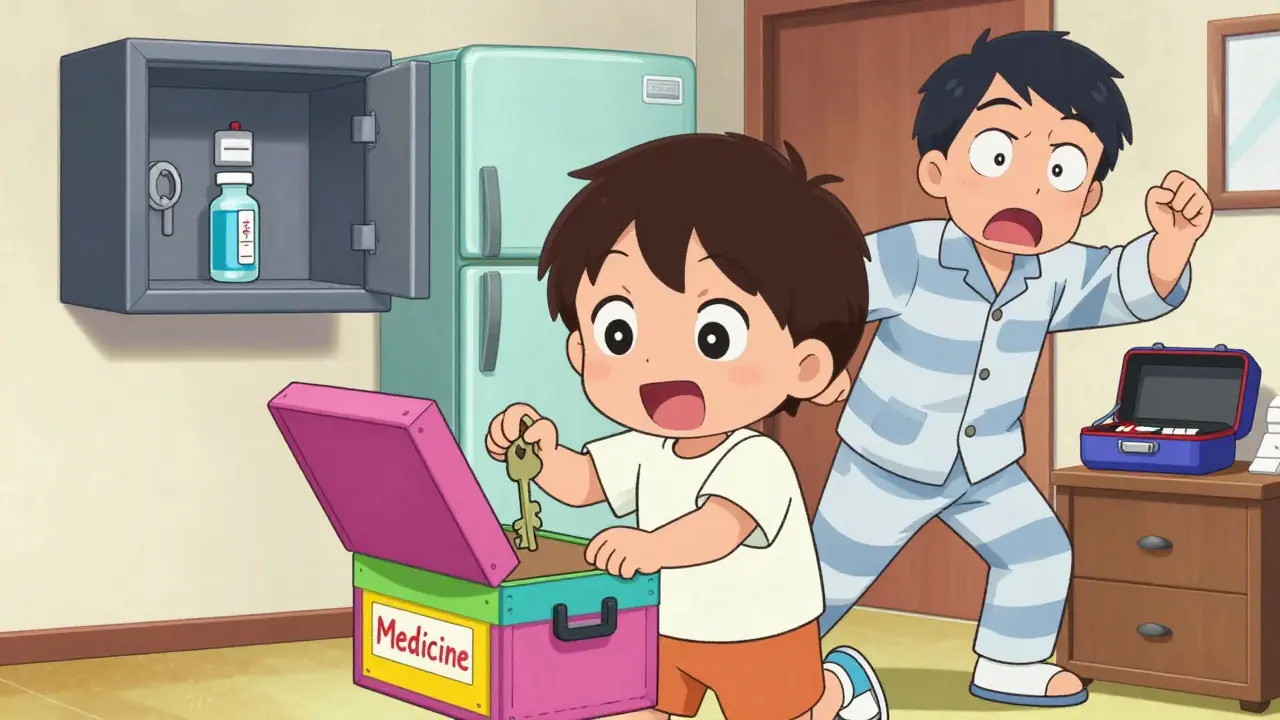
What About Teenagers?
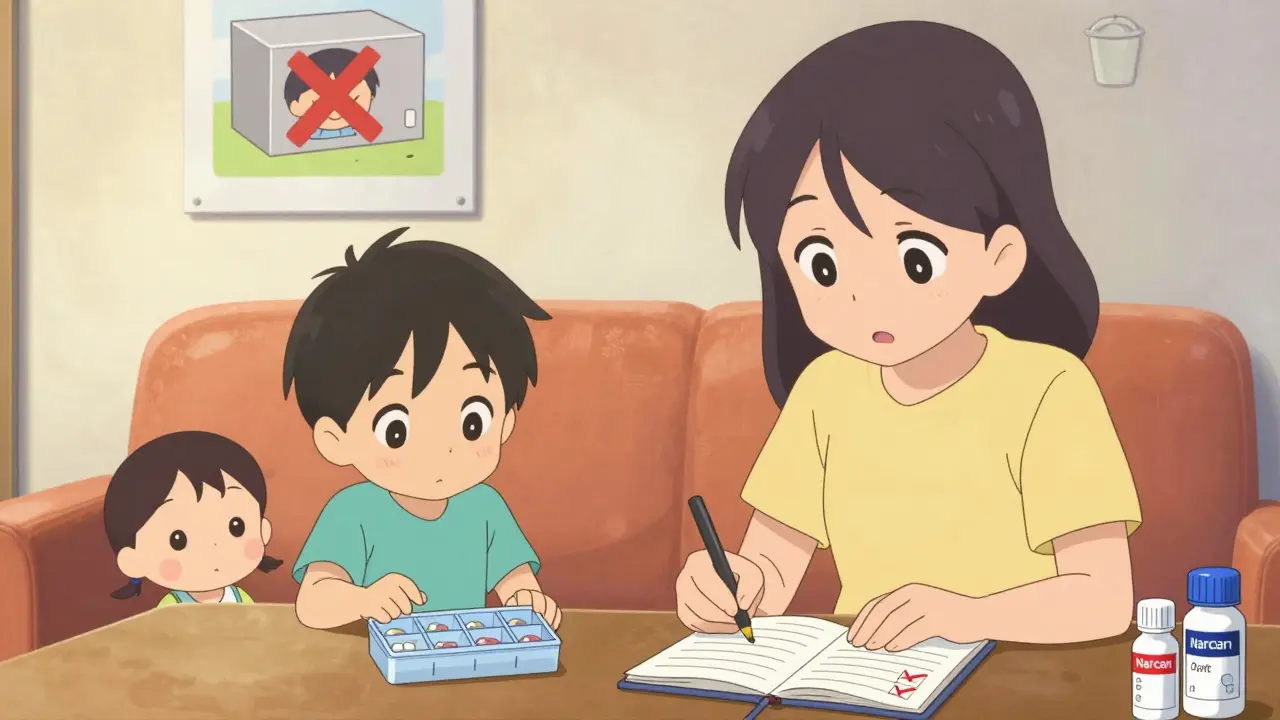
It’s not just toddlers. Teens are the second biggest risk group for medication misuse. A 2023 guideline from the National Association of Pediatric Nurse Practitioners found that households using monitored medication systems-where teens log each dose with adult verification-saw a 67% drop in prescription drug misuse. This isn’t about spying. It’s about accountability. If your teen takes ADHD meds, anxiety pills, or painkillers, set up a simple system: one pill at a time, signed off by a parent. Use a pillbox with a lock and a logbook. Or even a simple phone note. The goal isn’t control-it’s safety.Disposal Matters Too
You can lock up meds perfectly, but if you leave old pills in the medicine cabinet, you’re still at risk. The CDC says 78% of accidental ingestions involve expired or unused meds. Don’t flush them. Don’t toss them in the trash. Mix them with coffee grounds or cat litter, seal them in a plastic bag, and throw them away. Better yet-use a pharmacy drop-off kiosk. As of 2023, 78% of U.S. communities have permanent disposal sites at CVS, Walgreens, or local police stations. Find yours. Do it yearly.Behavior Is the Real Key
Here’s the hard truth: 78% of accidental ingestions happen during medication administration-not from stored bottles. That means you’re most at risk when you’re doing something right: giving your child their medicine. The CDC’s "Two-Minute Rule" is simple: never leave meds unattended for more than 120 seconds. That means:- Don’t set the bottle on the counter while you get water.
- Don’t answer the door with meds in hand.
- Don’t take a call while you’re counting pills.
Coral Bosley
January 20, 2026 AT 18:37My sister left her painkillers on the bathroom counter for two minutes while she brushed her teeth. Her 3-year-old got into them. She’s lucky he only threw up for six hours. This isn’t hypothetical. It’s happening in kitchens, bathrooms, and living rooms while we’re distracted by texts, doorbells, or that damn dog. Lock it. Every. Single. Time.
Steve Hesketh
January 22, 2026 AT 05:22Brother, this is the kind of post that saves lives. I’m from Nigeria, and we don’t always have lockboxes, but we do have creativity. We tie our meds in cloth bags, hang them from the ceiling beam with a knot only adults can undo. My cousin’s toddler never touched a pill because we made the medicine invisible-not by hiding it, but by making it unreachable. Safety isn’t about money. It’s about will. And yours? It’s strong.
Kevin Narvaes
January 23, 2026 AT 11:52so like… the real problem isnt the meds its the fact that we live in a world where toddlers are basically tiny thieves with curiosity overload? like… why are we even surprised? kids are natural explorers. they dont care if its medicine or candy. the system failed. not the parents. the system. and now we gotta buy $45 boxes? lol. next theyll make us buy a vault for the toaster.
Dee Monroe
January 24, 2026 AT 17:51There’s something deeply human about how we underestimate danger when it’s invisible. We think, ‘It won’t happen to me,’ because we’ve never seen it happen. But statistics aren’t abstract-they’re toddlers crying in ERs, parents screaming into the void, nurses cleaning up pills that looked like Skittles. We treat safety like a chore, when it’s actually an act of love. Every locked box is a silent promise: ‘I see you. I’m not letting you become a statistic.’ And that’s more powerful than any pill.
Alex Carletti Gouvea
January 25, 2026 AT 00:40Why are we letting the government dictate how we store medicine? Next they’ll tell us how to tie our shoes. Lockboxes? TSA kits? This is socialism creeping into parenting. If you can’t watch your kid for two minutes, maybe you shouldn’t be a parent. Stop outsourcing responsibility to gadgets.
Philip Williams
January 26, 2026 AT 04:22Thank you for this comprehensive and evidence-based breakdown. The data on child-resistant caps being ineffective in under a minute is particularly alarming. I’ve shared this with my entire medical team-we’re now distributing the CDC’s Travel Safety Kit flyers at every pediatric visit. Practical, scalable, and life-saving. This is public health communication at its best.
Yuri Hyuga
January 27, 2026 AT 16:42This is why I love communities like this 💪 You don’t just share info-you change behavior. I used to leave my wife’s insulin on the fridge door. Now? Locked box, wall-mounted, 48 inches high. My kids know it’s off-limits. Not because I yelled. Because I showed them the lock. And I told them why. Safety isn’t about fear. It’s about respect. And you just gave us all the roadmap. 🙏
shubham rathee
January 27, 2026 AT 22:21did you know the real reason they push lockboxes is so big pharma can sell them? its all a scam. the real cause of poisoning is vaccines and fluoride in water. parents just need to stop being paranoid. my kid ate a whole bottle of tylenol once and laughed about it. he’s fine. the system is lying to you
Ben McKibbin
January 28, 2026 AT 16:14Shubham’s comment is the exact reason we need more of this content. It’s not about fearmongering-it’s about giving people tools that work. I’m a nurse, and I’ve seen the aftermath. One kid swallowed a bottle of children’s ibuprofen because his grandma thought ‘he’s just a baby, he won’t touch it.’ He’s now on a feeding tube. Lockboxes aren’t expensive. Silence is. Speak up. Share this. Do better.
Jerry Rodrigues
January 30, 2026 AT 06:18My mom used to keep her meds in a shoebox on the closet shelf. Never thought twice about it. Then my niece got into one. We didn’t even know she’d taken it until she stopped breathing. Now we have a lockbox. It cost $27. It saved a life. Simple. No drama. Just do it.