 by
by Stroke and Recovery: Effective Rehabilitation After Brain Injury
5 Jan, 2026What Happens After a Stroke?
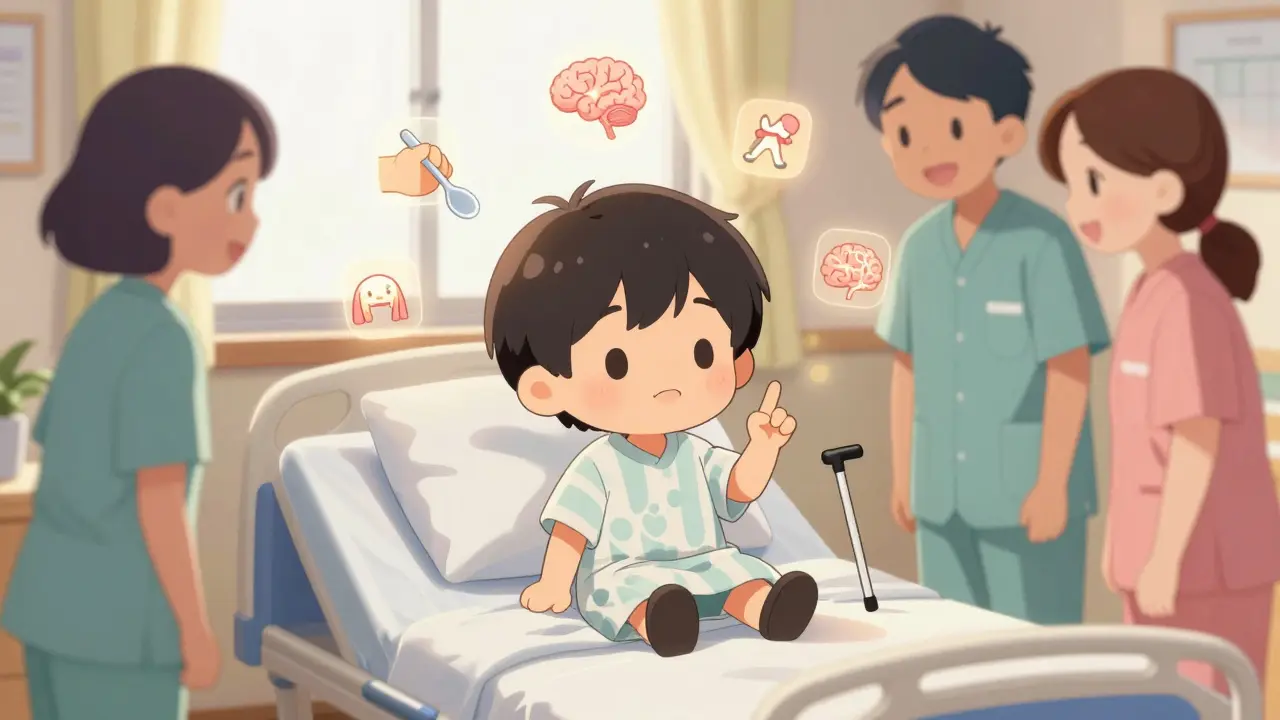
When a stroke hits, it doesn’t just stop your body in its tracks-it rewires your life. The damage to brain tissue can knock out movement, speech, memory, or even the ability to swallow. But here’s the truth most people don’t hear: stroke rehabilitation isn’t about fixing what’s broken. It’s about teaching the brain to find new ways to work. And it works-better than most think.
Recovery doesn’t start in a hospital bed. It starts the moment you’re stable. Research shows that starting therapy within 24 hours can boost recovery by 35%. That’s not a guess. That’s data from the Chartered Society of Physiotherapy. Delaying even a day can mean losing ground you’ll never get back. The brain doesn’t wait. Neither should you.
The Three Stages of Recovery
Recovery isn’t one thing. It’s three phases, each with its own goals, challenges, and strategies.
Stage 1: Recovery and Natural Healing (Days to Weeks)
This is when your body is still healing from the stroke itself. Swelling goes down. Some movement returns on its own. But passive recovery isn’t enough. Therapists focus on preventing complications-like muscle stiffness, bedsores, or blood clots. Passive range-of-motion exercises, done 2-3 times a day, keep joints flexible. Proper positioning stops muscles from tightening. Early mobilization-even sitting up or standing with help-triggers the brain to start rewiring.
Stage 2: Retraining (Weeks to Months)
This is where the real work begins. The brain is plastic. It can relearn. But it needs repetition, focus, and structure. Physical therapists use motor-skill drills to rebuild strength. Occupational therapists help you relearn how to brush your teeth, button a shirt, or pour a glass of water. Speech therapists tackle swallowing and language problems. One proven method? Constraint-induced therapy. You wear a mitt on your stronger hand 90% of the day, forcing your weaker hand to move. Studies show this leads to 30% better recovery than standard therapy.
Stage 3: Adaptation (Months to Years)
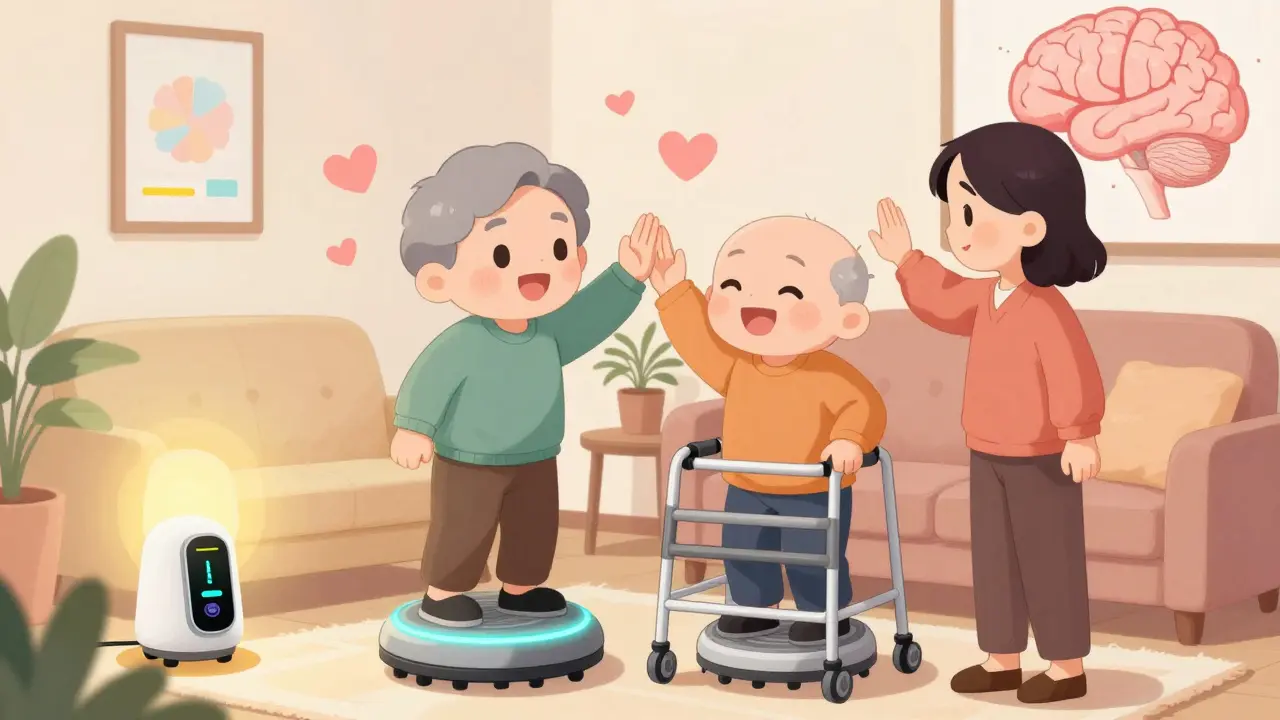
Not every function comes back. And that’s okay. The goal shifts from recovery to adaptation. Can you live independently? Can you get around your home safely? Can you still enjoy your favorite activities? This is where environmental changes matter-grab bars in the bathroom, raised kitchen counters, voice-controlled lights. It’s also where psychology steps in. Depression affects 1 in 3 stroke survivors. Counseling, support groups, and family involvement aren’t extras. They’re essential. Families that stay involved see 37% better adherence to therapy.
The Team That Makes It Work
No single person can do this alone. Stroke recovery needs a team. And it’s not just doctors and therapists. It’s you. And your family.
The American Stroke Association says the ideal team includes: neurologists, physiatrists, physical therapists, occupational therapists, speech-language pathologists, psychologists, nutritionists, social workers, nurses, and recreation therapists. Each person tackles a piece of the puzzle. A physical therapist improves your walk. An occupational therapist helps you cook again. A speech therapist gets you talking. A psychologist helps you cope with grief, frustration, or fear.
But here’s what most facilities miss: communication. When the team meets regularly-weekly, with clear goals-patients see 22% better outcomes. That’s not magic. That’s coordination. If your therapist doesn’t talk to your speech pathologist, you might get strong legs but still choke on your food. That’s not recovery. That’s risk.
Therapies That Actually Work
Not all rehab is created equal. Some methods are just busywork. Others? They change lives.
- Motor-skill exercises: Repeating tasks like picking up a spoon, stacking blocks, or reaching for a cup improves hand function by 40-60% over 12 weeks.
- Constraint-induced therapy: As mentioned, limiting the good arm forces the brain to rewire the weak one. Proven in Mayo Clinic trials.
- Functional electrical stimulation: Tiny electrical pulses wake up dead muscles. Improves wrist and hand strength by 25-45%.
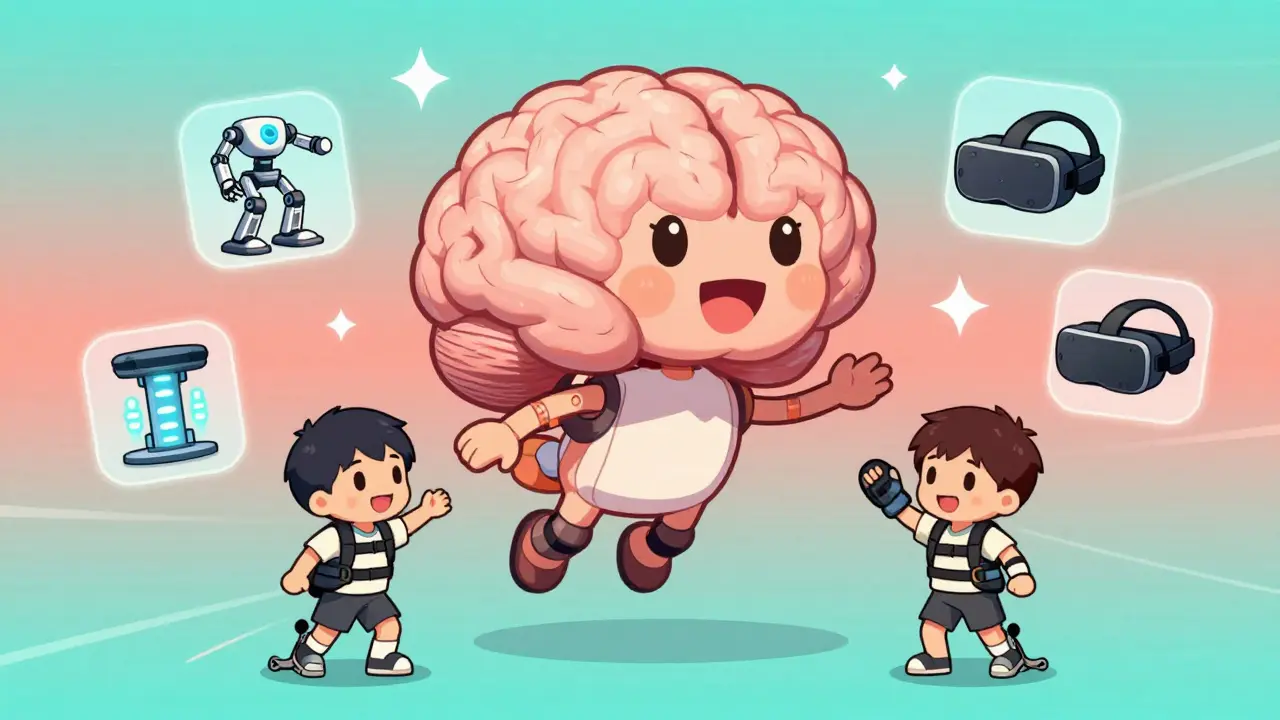
- Robotic gait training: Machines like the Lokomat guide your legs through walking motions. Patients walk 50% faster than with traditional therapy.
- Virtual reality: Playing games in a simulated kitchen or grocery store improves arm movement by 28%. It’s engaging. It’s measurable.
- Wireless activity monitors: These track your steps. Seeing your progress-like going from 500 to 2,000 steps a day-motivates you to keep going. Users increase daily steps by 32%.
And don’t overlook balance training. Six in ten stroke survivors have balance problems. That means falls. That means fractures. That means hospital trips. A structured balance program-standing on one foot, heel-to-toe walking, shifting weight-cuts fall risk by nearly half.
Timing, Intensity, and the Science of Neuroplasticity
Neuroplasticity is the engine of recovery. It’s the brain’s ability to form new connections. But it doesn’t happen by accident. It happens with repetition, intensity, and timing.
The American Stroke Association recommends 3 hours of therapy, 5 days a week, for people in inpatient rehab. That’s not optional. That’s the minimum. If you’re getting less, ask why. If you’re being told to wait, push back. The brain’s window for change is widest in the first 3-6 months. But it doesn’t close. Studies show improvement can continue for years.
And here’s what most people don’t know: brain scans show new neural pathways forming within 2-4 weeks of starting therapy. You’re not just getting stronger. Your brain is literally rewiring itself. That’s science. That’s hope.
What Really Drives Success?
It’s not just the therapy. It’s you.
Merck Manuals identified nine factors that predict recovery success:
- General medical condition
- Range of motion
- Muscle strength
- Bowel and bladder control
- Pre-stroke function
- Social support
- Learning ability
- Goal setting
- Motivation
Motivation alone accounts for up to 40% of recovery variance. That means if you believe you can get better, you probably will. If you give up, even the best therapy won’t help. That’s why setting small, daily goals matters. Moving your fingers 5 degrees more this week. Standing for 10 seconds longer. Taking one more step without help. These wins build momentum.
And rest matters too. Recovery isn’t about grinding 12 hours a day. It’s about balance. Aim for 40-50% of your day in therapy, 30-40% resting, and 20-30% socializing. Too much activity leads to fatigue. Too little leads to decline.
What’s Next? The Future of Stroke Recovery
Rehabilitation is evolving. New tools are emerging.
Transcranial magnetic stimulation (TMS) uses magnetic pulses to stimulate brain areas. When combined with therapy, it boosts motor recovery by 15-20%. AI is being trained to personalize rehab plans based on your brain scans and movement patterns. Telerehabilitation-therapy done over video-works just as well as in-person for many tasks, according to 2023 studies. That’s huge for people in rural areas or with limited transport.
And community-based programs are now a standard part of care. Seven out of ten stroke survivors need ongoing support after leaving rehab. Group exercise classes, home visits, and peer mentoring keep people moving, talking, and connected.
What You Can Do Today
If you or someone you love had a stroke:
- Start rehab as soon as doctors say it’s safe-don’t wait.
- Ask for a full team evaluation. Don’t settle for one therapist.
- Track your progress. Write down small wins.
- Get your family involved. They’re not just observers-they’re part of the team.
- Push for intensity. Three hours a day, five days a week, is the goal.
- Don’t ignore mood. Depression is common. Talk to someone.
- Believe in change. Your brain is still learning. You’re not done.
Recovery isn’t linear. Some days you’ll feel like you’re going backward. That’s normal. Progress isn’t measured in weeks. It’s measured in years. But every step counts.
Vinayak Naik
January 6, 2026 AT 07:06Bro, this post is fire 🔥 I had my uncle go through a stroke last year and the rehab stuff they pushed was total BS until we found this constraint-induced therapy thing. He was using his left hand to scratch his own back like a monkey after 3 months-no joke. Brain’s wild like that, man. Don’t sleep on the reps.
Saylor Frye
January 7, 2026 AT 03:08Interesting. Though I’d argue the ‘3 hours daily’ recommendation is more of a luxury than a standard in the US healthcare system. Most insurers cap therapy at 45 minutes, 3x a week. The real ‘recovery’ happens when you’re not being billed.
Jeane Hendrix
January 8, 2026 AT 04:28I’m fascinated by the neuroplasticity metrics here-especially the 2–4 week pathway formation window. But I wonder if the data accounts for comorbidities like hypertension or diabetes? Also, the mention of ‘passive recovery’ feels reductive; some patients need time to stabilize before motor input. Maybe we’re conflating urgency with aggression in rehab protocols?
Tom Swinton
January 9, 2026 AT 12:13Oh my gosh, I just cried reading this-seriously. My sister had a stroke at 42, and we were told to ‘wait and see’ for two weeks. TWO WEEKS. By then, her hand was already stiffening. We found a clinic that did robotic gait training and VR kitchen sims, and now she makes her own coffee again. It’s not magic-it’s science, but it’s also love. Don’t let anyone tell you to wait. Your brain is listening. It’s always listening. And if you show up, it shows up for you. I’m so grateful for this post. Thank you.
Kiran Plaha
January 10, 2026 AT 14:10My cousin in Delhi got stroke last year. They gave him just 15 min physio per day. No fancy machines. Just family helping him sit, stand, walk. He walks now. No robot. Just patience. This post feels like US luxury talk. Real recovery? It’s sweat, not sensors.
Amy Le
January 11, 2026 AT 02:03USA’s healthcare system is a joke. This is all great… if you have insurance. In India, people do this with ropes and buckets. We don’t need $10,000 robotic gait trainers. We need dignity. 🇮🇳❤️
Pavan Vora
January 13, 2026 AT 01:10Wow… this is so deep… I mean, really… the brain… it’s like a garden… you gotta water it… even if it looks dead… 🌱✨
Indra Triawan
January 14, 2026 AT 04:42Everyone talks about recovery like it’s a miracle… but no one talks about the loneliness after. The silence in the house. The way your kids look at you like you’re a ghost. I’m not mad… I’m just… tired. And nobody ever asks.
Susan Arlene
January 14, 2026 AT 13:02So… brain rewires. Cool. But what if you don’t wanna be rewired? What if you just wanna be you, even if you can’t button your shirt? Is that okay?
Joann Absi
January 15, 2026 AT 20:54OMG I’m literally sobbing rn 💔 this is the most beautiful thing I’ve read all year. My dad’s in a nursing home and they don’t even have a speech therapist. I’m starting a GoFundMe. If you’re reading this, please share. 🙏❤️🫶
Mukesh Pareek
January 17, 2026 AT 11:14Most of these ‘evidence-based’ therapies are overhyped. The real variable is neurocognitive reserve. Pre-stroke IQ, education, and linguistic complexity predict outcomes better than any machine. You can’t train plasticity if you never had much to begin with.
Gabrielle Panchev
January 18, 2026 AT 06:13Wait-so you’re telling me that virtual reality games are more effective than traditional physical therapy? That’s absurd. The brain doesn’t respond to ‘fun’-it responds to repetition, structure, and discipline. This is just gamification dressed up as science. And don’t get me started on telerehabilitation-how can you assess tone or spasticity over Zoom? This is dangerous.
Katelyn Slack
January 19, 2026 AT 06:25i just wanted to say thank you for writing this. my mom had a stroke last year and we didn’t know any of this. we thought rest was enough. we were wrong. now we do the finger exercises every morning. she smiles more. i’m so glad i found this.