Medicare Extra Help: What It Is, Who Qualifies, and How It Cuts Drug Costs
When you’re on Medicare Extra Help, a federal program that reduces out-of-pocket costs for Medicare Part D prescription drugs. Also known as the Low-Income Subsidy, it’s designed for people with limited income and resources who need help paying for medications. This isn’t just a small discount—it can slash your monthly drug bills by hundreds, sometimes over $5,000 a year. If you’re taking multiple prescriptions for conditions like high blood pressure, diabetes, or heart disease, this program can make a real difference in your ability to afford your meds.
Many people don’t realize they qualify because they think only those on Medicaid or with very low income are eligible. But the income limits are higher than most expect. In 2024, a single person can earn up to $21,870 a year and still qualify. Even if you own a home or a car, you might still be eligible. The program covers premiums, deductibles, and copays for Part D drugs, and it also eliminates the coverage gap—the dreaded "donut hole"—so you won’t face sudden spikes in costs mid-year.
It’s not just about price. Medicare Part D, the prescription drug benefit under Medicare. Also known as Medicare drug plans, it’s the foundation this program supports. Without Extra Help, people often skip doses, split pills, or stop taking meds altogether to save money. That’s dangerous. Studies show that patients who can’t afford their drugs are twice as likely to end up in the hospital. Extra Help isn’t charity—it’s a safety net that keeps people out of emergency rooms and keeps chronic conditions under control.
Another key player here is low-income Medicare beneficiaries, individuals with limited financial resources who rely on government assistance to manage prescription costs. Also known as Medicare savings program enrollees, they’re the ones who benefit most from this program. These are people who might be retired, living on fixed incomes, or managing long-term illnesses. They’re the same people who worry about expired pills in their cabinet or whether a generic version will work as well. Extra Help doesn’t just pay for drugs—it reduces the stress of choosing between food, rent, and medication.
The program works with any Medicare Part D plan you choose. You don’t need to switch plans to get the benefit—it automatically applies when you enroll. And if you’re already getting Medicaid, Supplemental Security Income (SSI), or certain state assistance programs, you’re automatically enrolled. But if you’re not sure, you need to apply. The application is simple, and you can do it online, by phone, or in person at your local Social Security office.
Don’t assume you’re too well-off to qualify. Even if you have a little savings or a small pension, you might still qualify. Many people miss out because they don’t know the rules. And if you’ve been denied before, try again—rules change, and your situation might have shifted. The savings are real. One woman in Ohio saved $3,200 last year on her heart and diabetes meds alone. Another man in Texas stopped choosing between his insulin and his groceries.
What you’ll find in the posts below are practical guides on managing medications under tight budgets—how to spot dangerous interactions, when generics really work, how to handle expired drugs safely, and how to avoid lab test errors from supplements like biotin. These aren’t abstract tips. They’re the real-world strategies people use when every dollar counts. Whether you’re helping a parent, managing your own meds, or just trying to understand how to make prescriptions affordable, this collection gives you the tools to take control.
Government Medication Assistance Programs by State: What’s Available in 2025
28 Nov, 2025
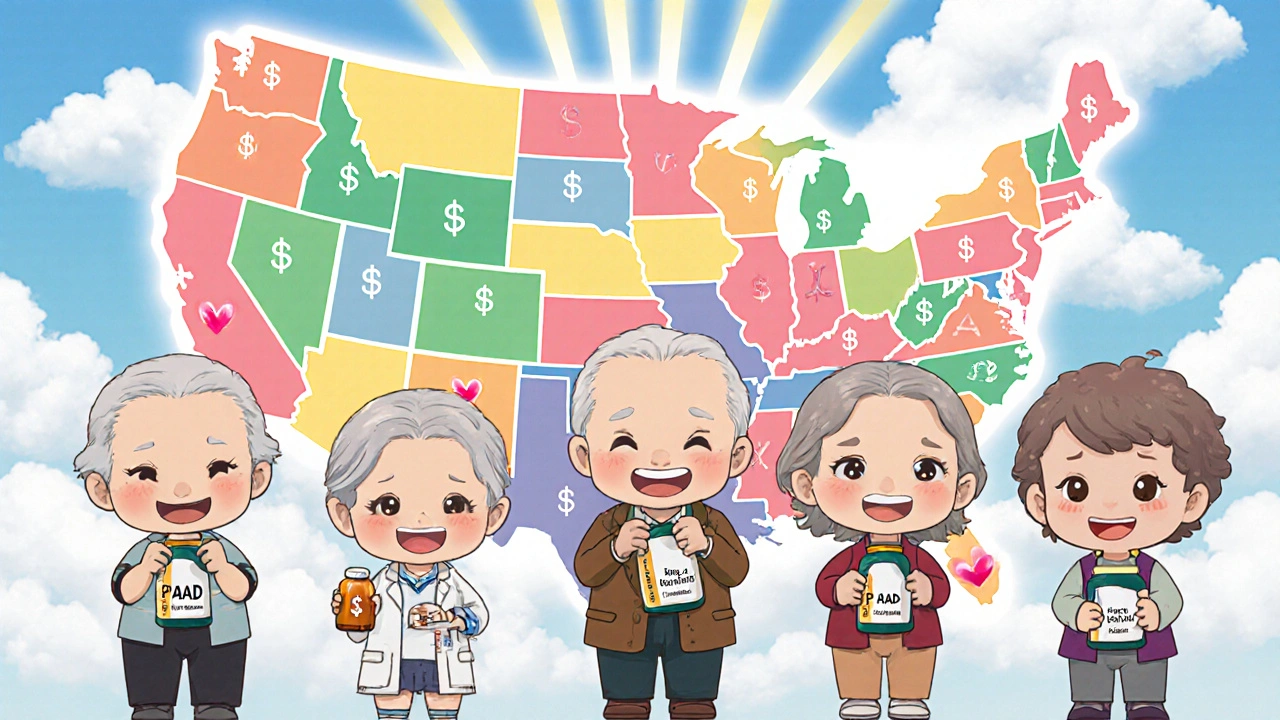
In 2025, government medication assistance programs help millions of Americans afford prescriptions. Learn how Medicare Extra Help and state SPAPs work, who qualifies, and how to apply before you're left paying full price.
 by
by