 by
by WHO Model Formulary: International Standards for Essential Generics
4 Mar, 2026Every year, millions of people around the world rely on generic medicines to survive. A simple antibiotic, a blood pressure pill, or an antiretroviral for HIV - these aren’t luxury items. They’re lifelines. But who decides which medicines actually make it into those lifesaving supply chains? The answer lies in a quiet but powerful document: the WHO Model List of Essential Medicines. It’s not a law. It’s not a marketing tool. It’s the closest thing the world has to a universal standard for what medicines every health system - no matter how poor or remote - should have on hand.
What the WHO Model List Actually Does
The WHO Model List isn’t a formulary in the way hospitals or insurance companies use the term. You won’t find copays, tiered pricing, or preferred brands here. Instead, it’s a simple, evidence-based list of medicines that meet three non-negotiable criteria: they work, they’re safe, and they’re affordable enough for public health systems to stock and use without breaking the bank. First published in 1977, the list has been updated every two years. The latest version, from July 2023, includes 591 medicines covering 369 diseases. Of those, 273 - nearly half - are generics.
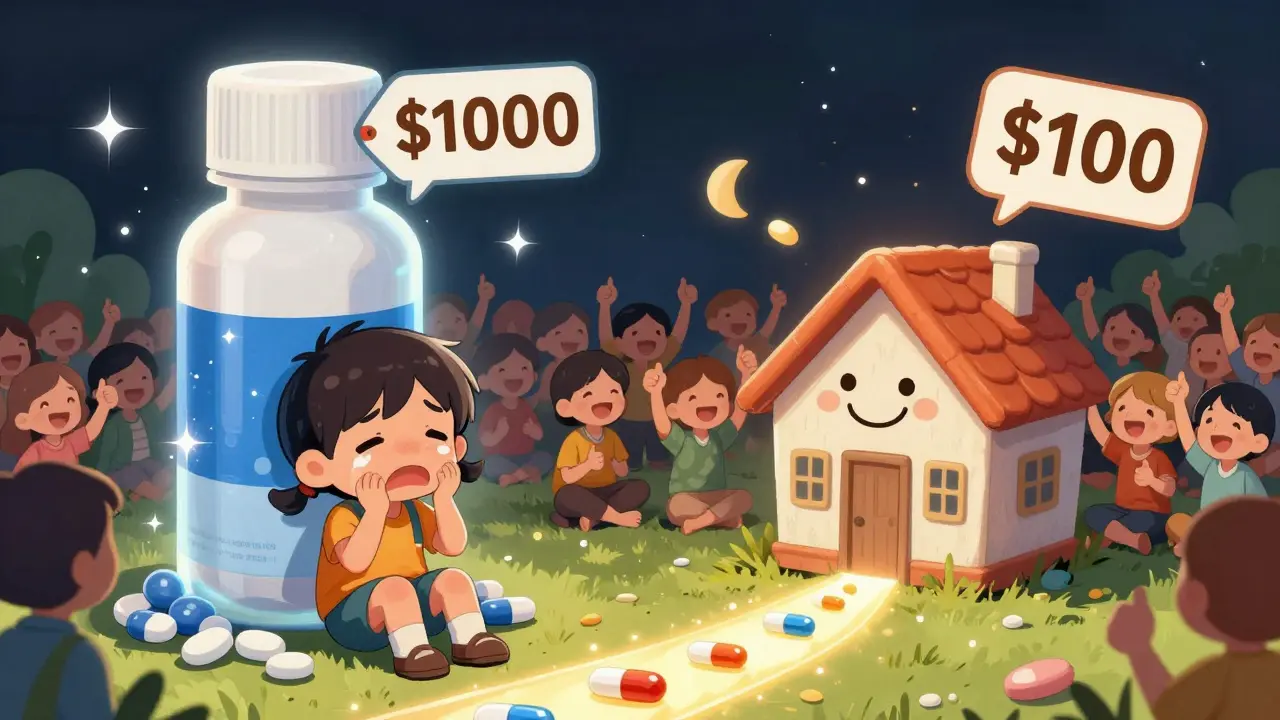
Why generics? Because they’re the only way most countries can afford to treat diseases like tuberculosis, malaria, diabetes, or HIV at scale. A brand-name drug might cost $1,000 a year. The generic version? Often under $100. The WHO doesn’t care who makes it. It cares that it meets strict quality standards - specifically, WHO Prequalification or approval from agencies like the FDA or EMA. That’s how you know the pill you get in a clinic in rural Malawi has the same active ingredient, absorption rate, and effectiveness as the one in a hospital in Berlin.
How Medicines Make the List
Getting on the WHO Model List isn’t easy. It’s not a popularity contest. Every two years, a committee of 25 independent experts from 18 countries reviews over 200 applications. Each medicine is scored across four areas: public health relevance (30%), efficacy and safety (30%), cost-effectiveness (25%), and feasibility of use in low-resource settings (15%). A medicine needs at least a 7 out of 10 in each category and an overall score of 7.5 to make the cut.
The evidence has to be solid. Randomized trials. Meta-analyses. Real-world data. No lobbying. No pressure from pharmaceutical companies. At least, that’s the rule. In 2023, 94% of inclusions were backed by systematic reviews. Still, critics point out that 45% of the supporting data now comes from industry-funded studies - up from 28% in 2015. The WHO says it now requires full financial disclosures from all committee members, and compliance was 100% in the last review cycle.
Core vs. Complementary: What’s on the List
The list is split into two parts. The core list includes medicines that every basic health system should have - things like insulin, amoxicillin, aspirin, or methadone. These are simple, stable, and don’t need fancy equipment to use. The complementary list includes medicines that need special monitoring or trained staff - like cancer drugs, certain antivirals, or biosimilars. These are harder to use in remote areas, but they’re still essential for treating serious conditions.
Take antibiotics. They make up 49% of the entire list. That’s not an accident. It’s a response to the global crisis of antimicrobial resistance. The WHO doesn’t just list antibiotics - it groups them into tiers based on how they should be used. The first-line, broad-spectrum ones are in the core list. The last-resort ones? They’re on the complementary list, with strict guidelines to prevent overuse. This isn’t just about access. It’s about preserving what we have.
Real-World Impact: Where It Works
The proof is in the results. Countries that use the WHO Model List as a foundation for their own national lists see real changes. In Ghana, adopting the list led to a 29% drop in out-of-pocket spending on medicines between 2018 and 2022. In India, hospitals saw a 35% reduction in antimicrobial costs after aligning their formularies with WHO guidelines. In sub-Saharan Africa, the availability of essential medicines in primary care facilities rose from 51% in 2007 to 65% in 2022.
Global health programs rely on this list too. The Global Fund, Gavi, and UNICEF base over 85% of their medicine purchases on it. That means when a child in Kenya needs malaria treatment, or a mother in Nepal needs oxytocin after childbirth, the drugs they get are the same ones that have been vetted by the world’s top experts.
Where It Falls Short
But having a list doesn’t mean having the drugs. Nigeria, for example, has a national list based on the WHO Model List. Yet a 2022 survey found that only 41% of those medicines were consistently available. Why? Not because the list was wrong - because the supply chain broke down. Stockouts lasted an average of 58 days per medicine. In many low-income countries, the problem isn’t knowing what to buy - it’s getting it there.
Another issue? Pediatric dosing. The 2023 list added more age-appropriate formulations - 42% now have them, up from 29% in 2019. But for many medicines, especially in the core list, there’s still no safe, easy-to-administer version for infants or young children. Pharmacists in Uganda and Bangladesh report having to crush pills or guess dosages - a dangerous gamble.
And then there’s the innovation gap. Between 2018 and 2022, over 200 new medicines were approved worldwide. Only 12% of them made it into the 2023 WHO list. That’s far below the 35-45% inclusion rate in high-income country formularies. Some of these drugs are breakthroughs - but they’re expensive. The WHO doesn’t include them because they don’t meet the cost-effectiveness threshold. That’s fair. But it also means people in poorer countries wait years longer to access new treatments.
The Generics Advantage
The real power of the WHO Model List is how it shifts the market. Before the list became widely adopted, generic manufacturers had no incentive to meet international quality standards. Why bother, if no one was buying? Now, over 90% of the generics on the list require WHO Prequalification. That’s changed everything. Between 2018 and 2023, the number of prequalified generic products jumped 47%. Companies in India and China now design their production lines to meet WHO standards - not just because it’s good practice, but because it’s the only way to win public tenders from UN agencies.
The price drop speaks for itself. The cost of generic HIV antiretrovirals fell by 89% since 2008 - from over $1,000 per patient per year to under $120. That’s what allowed treatment to scale from 800,000 people in 2003 to nearly 30 million today. It’s not magic. It’s competition. And the WHO list created the conditions for that competition to happen.
What’s Next
The WHO isn’t standing still. In 2023, it launched a free app - the WHO Essential Medicines App - downloaded over 127,000 times across 158 countries. It lets pharmacists and clinicians search the list offline, check dosing, and see alternatives. In February 2024, draft guidelines were released to tie the list more closely to antibiotic stewardship - forcing health systems to think not just about access, but about responsible use.
By 2030, the WHO aims to raise the availability of essential medicines in primary care from 65% to 80%. That’s ambitious. But it’s not just about adding more drugs. It’s about fixing the broken systems that keep them from reaching people. The list can’t fix poor logistics, corrupt supply chains, or underfunded health budgets. But it can be the foundation. And right now, it’s the only foundation the world has.
Why This Matters
When you hear about a medicine shortage in a refugee camp or a clinic in rural Zambia, it’s not because no one knows how to treat the disease. It’s because the right medicine never arrived. The WHO Model List doesn’t solve that. But it tells the world what needs to be there. And for millions of people who can’t afford brand-name drugs, it’s the only thing standing between them and death.
Is the WHO Model List legally binding?
No, the WHO Model List is not legally binding. It’s a technical guide that countries can use to develop their own national essential medicines lists. Over 150 countries have adopted it as a basis for their policies, but each country decides whether and how to implement it. It’s a recommendation, not a law.
How does the WHO decide which generics to include?
The WHO uses strict criteria: the medicine must be proven effective and safe through high-quality clinical trials, it must be cost-effective (typically costing less than three times the country’s GDP per capita per quality-adjusted life year gained), and it must address a disease with significant public health impact. All generics must also meet WHO Prequalification standards or equivalent regulatory approval to ensure quality.
Are all generics on the WHO list safe?
The WHO only includes generics that meet its Prequalification standards or are approved by stringent regulators like the FDA or EMA. These require bioequivalence testing - showing the generic performs the same as the original drug in the body. However, in real-world settings, substandard or falsified medicines still enter supply chains. WHO surveillance found that 10.5% of essential medicine samples in low-income countries in 2022 were substandard or fake. The list doesn’t eliminate this risk - it just sets the standard to aim for.
Why doesn’t the WHO list more new drugs?
The WHO prioritizes affordability and public health need over novelty. Many new drugs are extremely expensive and often offer only marginal improvements over existing treatments. For example, a new cancer drug costing $150,000 a year won’t make the list if a generic alternative exists for $1,500 with similar outcomes. The goal is to save as many lives as possible with limited resources - not to provide the latest treatment to the few.
Can high-income countries ignore the WHO list?
Yes, and many do. Countries like the U.S. use national formularies based on their own clinical guidelines and insurance structures. But the WHO list still influences global health programs, research priorities, and pharmaceutical development. Many U.S. hospitals use it for international aid programs, and some drug manufacturers design generics specifically to meet WHO standards to access global markets.
How does the WHO Model List compare to national formularies?
National formularies often include more drugs, use tiered pricing systems, and consider insurance reimbursement. The WHO list is simpler: it’s about what every health system - rich or poor - must have to cover basic needs. It doesn’t include cost-sharing tiers or preferred brands. It’s focused on universal access, not market dynamics.
Ferdinand Aton
March 6, 2026 AT 02:24William Minks
March 7, 2026 AT 06:19Jeff Mirisola
March 8, 2026 AT 16:04Susan Purney Mark
March 10, 2026 AT 15:35Ian Kiplagat
March 11, 2026 AT 17:28Amina Aminkhuslen
March 11, 2026 AT 17:45amber carrillo
March 11, 2026 AT 23:23Tim Hnatko
March 12, 2026 AT 23:17Aaron Pace
March 14, 2026 AT 22:00Joey Pearson
March 15, 2026 AT 04:46Roland Silber
March 15, 2026 AT 15:03