Liquid Medicine for Kids: Safe Dosing, Options, and What Parents Need to Know
When your child has a fever or pain, liquid medicine for kids, a measured, easy-to-swallow form of medication designed for children's weight and age. Also known as children's syrup, it's often the first line of defense against fever, colds, and minor aches. But not all liquid meds are the same—and using the wrong dose, type, or brand can do more harm than good.
Two main options dominate pediatric care: acetaminophen, a common pain and fever reducer safe for most children when dosed correctly and ibuprofen, an anti-inflammatory that also lowers fever and lasts longer. Acetaminophen is usually first for infants under 6 months, while ibuprofen works better for swelling or ear pain in older kids. Both come in different concentrations—infant drops are stronger than children’s syrup—and mixing them up is a leading cause of accidental overdose. Always check the label. The bottle says "160 mg per 5 mL"? That’s the standard kids’ strength. Don’t assume all brands are the same.
Why do some parents say their child seems different on one brand versus another? It’s not the active ingredient—it’s the inactive ingredients, the dyes, flavors, preservatives, and fillers that help the medicine taste better or stay stable. Some kids react to food dyes, artificial sweeteners, or even alcohol-based preservatives. If your child gets a rash, stomach upset, or seems unusually fussy after switching brands, it might not be the medicine—it’s the extras in it.
And yes, expired liquid medicine for kids? Don’t use it. Liquid formulas break down faster than pills. A bottle of acetaminophen past its date might not kill your child, but it won’t lower the fever either—and that’s dangerous if you think it’s working. Always write the opening date on the bottle. Most liquid meds last 6 to 12 months after opening, even if the bottle says "expires in 2027."
What to Watch For When Giving Liquid Medicine
Watch for signs the medicine isn’t working—or making things worse. If your child’s fever doesn’t drop after two doses, or if they’re vomiting, lethargic, or refusing fluids, it’s time to call the doctor. Don’t double up because you think "it didn’t work." Also, never mix liquid medicine with juice or milk unless the label says it’s okay. Some meds bind to calcium or sugar and lose effectiveness.
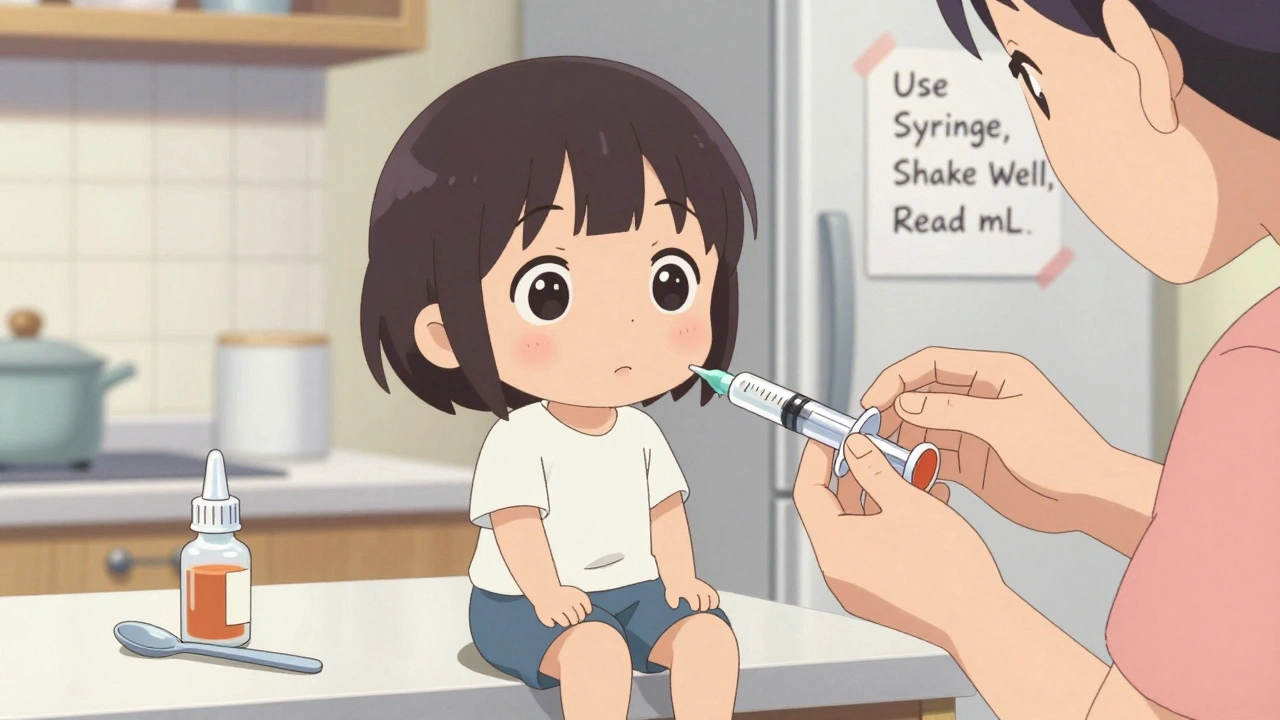
And here’s something most parents don’t know: giving liquid medicine with a syringe is safer than a cup. Kids spit, spill, or play with the cup. A syringe lets you control every drop. Aim for the inside of the cheek, not the back of the throat. It reduces choking risk and makes swallowing easier.
There’s no magic pill—or syrup—for every child. What works for one might not work for another. That’s why the posts below cover real-world cases: when generics feel different, how to handle insurance denials if your child needs a specific brand, what to do when a fever medicine stops working, and how to safely store or dispose of leftover liquids. You’ll find clear advice on dosing by weight, not age, how to avoid dangerous interactions with supplements, and why some kids react to dyes in children’s Tylenol but not the store brand. This isn’t guesswork. It’s what parents actually need to know.
How to Measure Children’s Medication Doses Correctly at Home
9 Dec, 2025
Learn how to measure children's liquid medication accurately at home using oral syringes and milliliters only. Avoid dangerous dosing errors with proven steps, tools, and expert tips.
 by
by