Expired Drugs Disposal: Safe Ways to Get Rid of Old Medications
When you find that bottle of pills in the back of your medicine cabinet with a faded expiration date, you might wonder: is it still safe? Or worse—could keeping it hurt someone? Expired drugs disposal, the proper removal of unused or out-of-date medications. Also known as pharmaceutical waste management, it’s not just about cleaning out clutter—it’s a public health step that keeps kids, pets, and the environment safe. Many people still flush pills down the toilet or toss them in the trash, not realizing these actions pollute waterways and make drugs accessible to others who shouldn’t have them.
Medication expiration, the date manufacturers guarantee full potency and safety. Also known as drug shelf life, it’s not a magic cut-off date where medicine suddenly turns toxic. Most pills are still safe for years after expiration—unless they’re insulin, nitroglycerin, or liquid antibiotics. But safe drug disposal, the process of removing unwanted medications from homes without harm. Also known as drug take-back programs, is still the smartest move. Why? Because even if a drug hasn’t lost strength, it might be less effective. Worse, if someone else finds it—like a teen looking for a buzz or an elderly person mixing meds—accidents happen. The FDA and CDC both say: don’t keep old meds around. And don’t just throw them out.
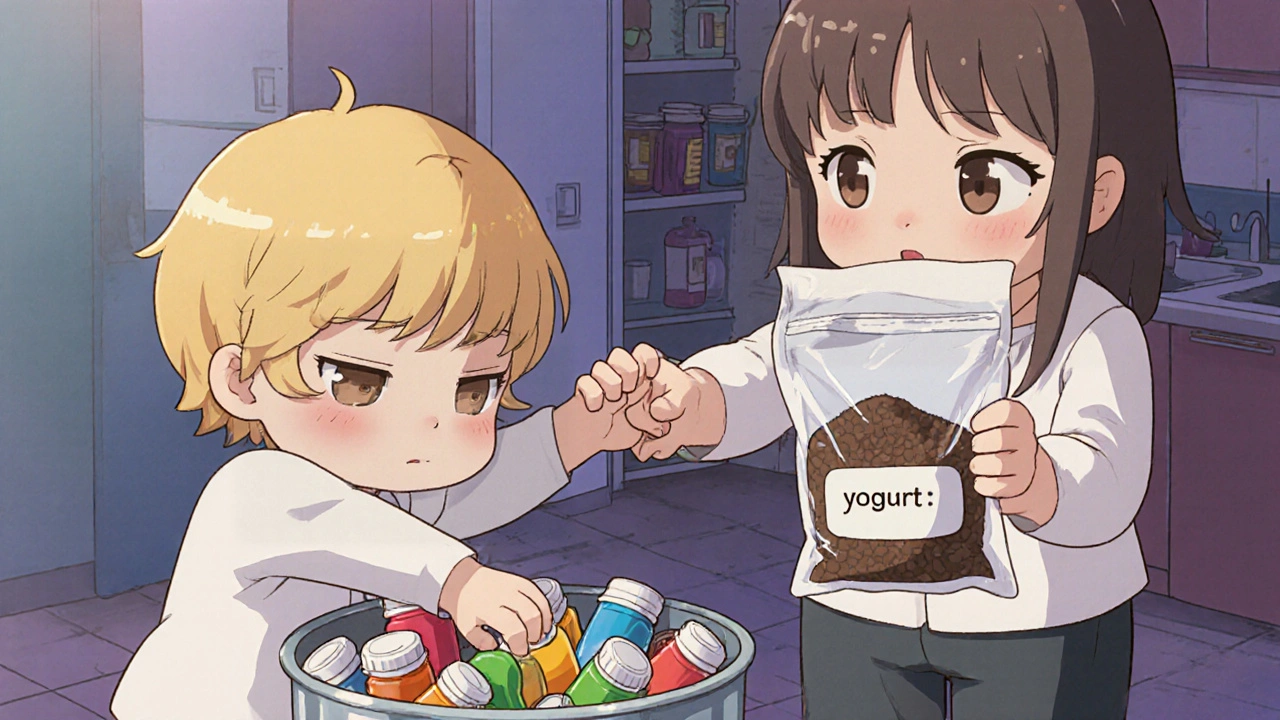
Here’s what actually works: find a local drug take-back bin at your pharmacy, hospital, or police station. These are free, secure, and designed to destroy meds safely. If you can’t find one, mix pills with coffee grounds or cat litter in a sealed bag before tossing them—this makes them unappealing and hard to reuse. Never crush or flush unless the label says so. And always remove personal info from bottles before recycling.
Some meds are high-risk if kept past their date—like blood thinners, seizure drugs, or heart medicines. A tiny drop in potency can be deadly. That’s why pharmaceutical waste, the collection and destruction of unused or expired drugs. Also known as controlled substance disposal, needs strict rules. Hospitals and pharmacies follow them. You should too. Your old antibiotics, painkillers, or sleep aids aren’t just clutter—they’re potential hazards.
What you’ll find below are real, practical guides from people who’ve been there: how to check if your first-aid meds are still good, why some expired pills are riskier than others, and how to handle meds for seniors or kids. You’ll learn which drugs you must throw out immediately—and which ones you can keep, just not forever. No fluff. No theory. Just what you need to do to keep your home safe, your water clean, and your family protected.
How to Safely Dispose of Medications in Household Trash: Step-by-Step Guide
29 Nov, 2025
Learn how to safely dispose of expired or unused medications in household trash using FDA-approved steps. Protect your family, privacy, and environment with this simple 5-step guide.
 by
by