Flying with Prescriptions: What You Need to Know Before You Board
When you're flying with prescriptions, the process of carrying your medications through airport security and across international borders. Also known as traveling with medication, it’s not just about packing bottles—it’s about avoiding delays, legal issues, or worse, running out mid-trip. Millions of people do it every year, but too many wait until the airport to figure out the rules—and that’s when problems start.
One big mistake? Keeping pills in their original pharmacy bottles only. While that’s a good start, the TSA, the U.S. Transportation Security Administration responsible for screening passengers and baggage at airports doesn’t require original containers for domestic flights. But they do expect you to be able to identify your meds if asked. A simple list with drug names, dosages, and your doctor’s contact info works just as well. For international trips, though, things get trickier. Countries like Japan, the UAE, and Australia have strict rules on what drugs you can bring in—even common ones like Adderall or painkillers with codeine. Some require a doctor’s letter or even pre-approval. medication import regulations, the legal rules that control which pharmaceuticals can enter a country vary wildly, and ignorance isn’t an excuse at customs.
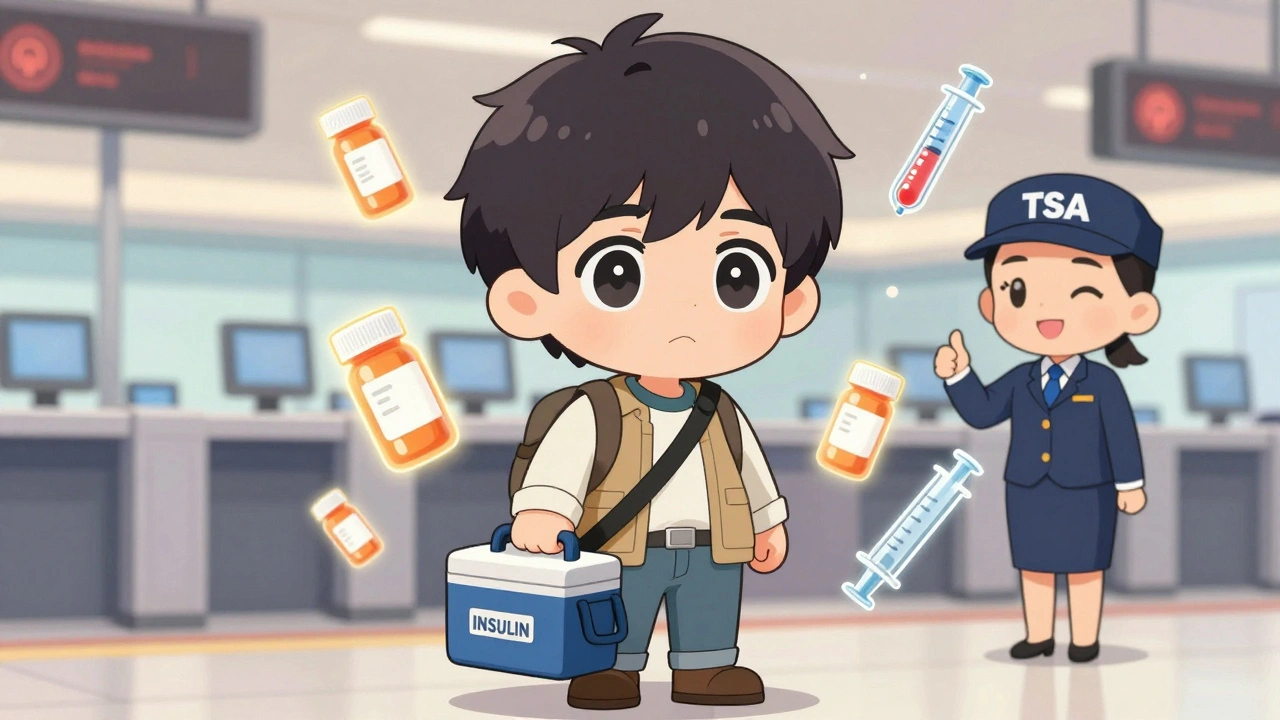
You also need to think about temperature, time zones, and delays. Insulin, liquid antibiotics, or eye drops that need refrigeration? Bring a small cooler with ice packs and a doctor’s note explaining why. Flight delays can turn a 4-hour trip into a 12-hour one. Always pack at least a 2-day extra supply in your carry-on. Never check your meds. Bags get lost. If you’re on a blood thinner like warfarin or have a chronic condition that needs daily pills, losing your stash could be dangerous. And don’t forget about drug interactions, how medications can react unpredictably with other drugs, supplements, or even foods. If you’re taking something like St. John’s wort or high-dose biotin, those can mess with lab tests or other meds you might need while traveling. Know what you’re carrying—and why.
Here’s what works: Keep your meds in a clear, zip-top bag in your carry-on. Label each bottle if possible. Carry a copy of your prescription or a note from your doctor, especially if the name on the bottle doesn’t match your ID. If you’re flying internationally, check the embassy website of your destination country for their drug rules. Some require a special form called a “Certificate of Medical Necessity.” Don’t rely on your airline—they don’t track every country’s laws. And if you’re using a pill organizer, make sure it’s labeled clearly. TSA agents have seen fake pills before. Be ready to explain what’s inside.
There’s no one-size-fits-all rule for flying with prescriptions, but the basics are simple: know your meds, know the rules, and plan ahead. Below, you’ll find real-world advice from people who’ve been through it—how to handle airport screenings, what to do when your meds get confiscated, how to refill abroad, and why some generics behave differently overseas. Whether you’re flying for work, vacation, or medical care, this collection gives you the practical steps to stay safe, legal, and in control.
Packing Medications for Air Travel: Best Practices for Safety
1 Dec, 2025
Learn the essential rules for flying with medications safely-TSA guidelines, temperature control, international restrictions, and what documents you need to avoid delays or lost meds.
 by
by