Nasal Decongestant Spray: How It Works, Risks, and What to Try Instead
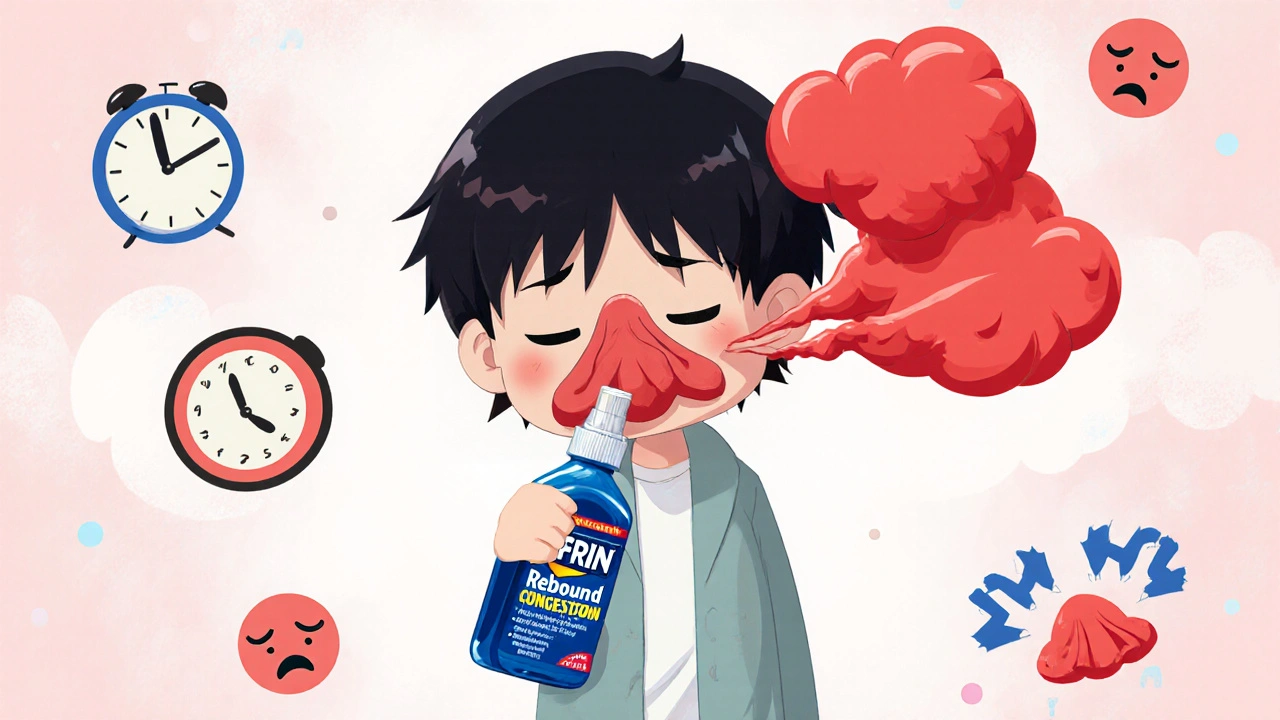
When your nose is completely blocked, a nasal decongestant spray, a fast-acting medication that shrinks swollen blood vessels in the nose to open airways. Also known as nasal spray decongestant, it’s one of the most common OTC remedies for colds, allergies, or sinus pressure. You feel relief in minutes—no pills, no waiting. But here’s the catch: if you use it for more than three days straight, your nose can start fighting back. That’s called rebound congestion, a condition where the nasal passages swell even more after the spray wears off, creating a cycle of dependence. It’s not addiction in the drug sense, but your body gets used to the spray being there to keep things open. Stop using it, and your nose gets worse than before.
Most nasal decongestant sprays contain oxymetazoline, a powerful vasoconstrictor that shrinks blood vessels in the nasal lining. It’s effective, but it’s also the main reason people get stuck in the rebound cycle. Phenylephrine is another common ingredient, and while slightly less potent, it carries the same risk. These sprays don’t treat the cause of congestion—they just mask it. That’s why they work so well at first, and why they fail so badly long-term. If you’ve ever reached for the spray again because your nose felt worse after the last dose, you’ve seen this in action.
There are better ways to handle nasal congestion. For daily relief without the risk, try a saline nasal spray, a simple saltwater solution that moistens dry passages and flushes out irritants without affecting blood vessels. It’s safe to use as often as needed, even for kids and pregnant women. Steam inhalation, humidifiers, and staying hydrated also help reduce swelling naturally. If allergies are the culprit, antihistamines or nasal corticosteroids (like fluticasone) are far more effective for long-term control. And if you’ve been using decongestant spray for weeks, don’t just quit cold turkey—gradually reduce use while switching to saline or a steroid spray to avoid a bad rebound flare-up.
The posts below cover real stories and science behind what happens when nasal sprays go wrong, how to break the cycle, and what actually works when your nose won’t cooperate. You’ll find guides on safe alternatives, how to spot early signs of overuse, and why some people can’t stop using these sprays even when they know they should. This isn’t about quick fixes—it’s about finding lasting relief without trading one problem for another.
Nasal Congestion from Medications: How to Break the Cycle and Find Relief
30 Nov, 2025
Nasal congestion from overusing decongestant sprays is called rebound congestion. Learn how to stop the cycle, use corticosteroids like Flonase, and recover safely without surgery or dependency.
 by
by