Orphan Drug Exclusivity: What It Means for Patients and Prices
When a drug gets orphan drug exclusivity, a seven-year period of market protection granted by the FDA to encourage development of treatments for rare diseases affecting fewer than 200,000 people in the U.S., it means no other company can sell a similar version for that exact condition—not even a generic. This isn’t just a paperwork perk. It’s a legal shield that lets drugmakers set high prices without competition. And while the goal was to fix a broken system where no one made drugs for tiny patient groups, the result today is often sky-high costs that leave families choosing between medicine and rent.
Related to this is the FDA orphan drug designation, a formal status given to a drug candidate before approval, which unlocks tax credits, research grants, and faster review paths.. Many drugs that get this label are biologics or complex molecules, not simple pills. That’s why you’ll see posts here about biosimilars, lower-cost copies of biologic drugs that still face major hurdles entering the market when orphan exclusivity blocks them.. Even when a generic version could work, exclusivity rules can delay it for years. Meanwhile, patients with rare conditions like Duchenne muscular dystrophy or certain forms of leukemia rely on these drugs—but often can’t get them without insurance battles, appeals, or charity programs.
It’s not all bad. Before orphan drug laws, companies ignored rare diseases entirely. Today, over 600 treatments exist because of these incentives. But the system has been exploited. Some companies have taken common drugs, given them a new label for a tiny patient group, and claimed exclusivity—turning a $10 pill into a $100,000-a-year treatment. That’s why posts here cover insurance appeals when generics fail, why people monitor health after switching meds, and why drug pricing, the hidden force behind whether a life-saving medicine is accessible or out of reach. matters more than ever. You’ll also find guides on government aid programs, medication safety, and how to navigate the maze when your treatment is one of these expensive orphan drugs.
What you’ll find below aren’t just articles about policy. They’re real stories from people who’ve fought insurers, dealt with side effects from inactive ingredients, or had to choose between brands because their insurance wouldn’t cover the only drug that worked. This collection connects the dots between the law, the lab, and the living room—where a single pill can mean the difference between breathing normally and not making it to tomorrow.
Regulatory Exclusivity: How Non-Patent Protections Delay Generic Drugs
6 Dec, 2025
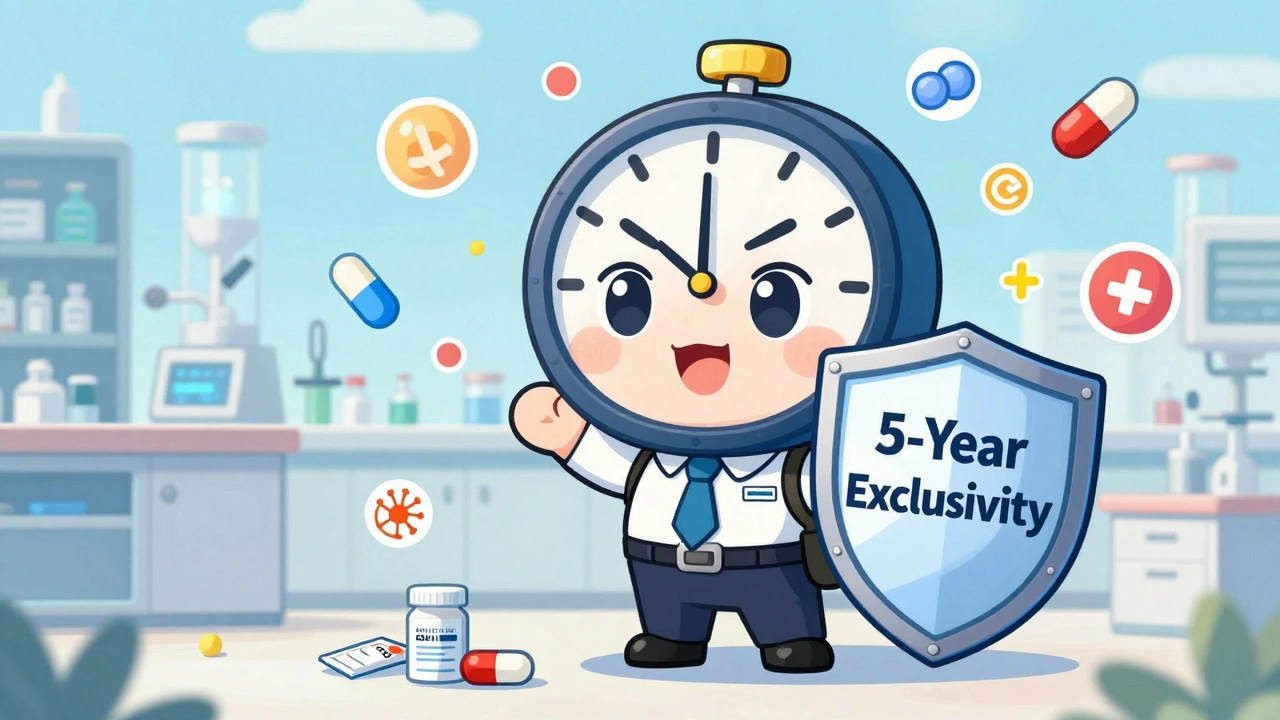
Regulatory exclusivity gives drugmakers exclusive market rights for 5 to 12 years after FDA approval, blocking generics even after patents expire. It's a key driver of drug pricing and innovation incentives.
 by
by