Packing Pills for Flight: What You Need to Know Before You Travel
When you're packing pills for flight, the process of organizing and transporting medications for air travel. Also known as travel medication management, it's not just about throwing bottles in your bag—it's about staying safe, legal, and in control while you're away. Whether you're flying across the country or overseas, your meds need to get there without hassle, loss, or legal trouble. The TSA doesn't require prescriptions for most medications, but they do expect you to be prepared. If you're carrying pills in your carry-on, keep them in their original bottles if you can. It helps avoid questions at security, especially if you're carrying controlled substances like opioids, sleep aids, or ADHD meds.
But what if your pills are in a pill organizer? That’s fine too—just make sure you have a list of your medications, dosages, and why you take them. A simple note from your doctor, even if it’s just an email printout, can save you from a long delay. International travel adds another layer: some countries treat common U.S. meds as controlled drugs. For example, pseudoephedrine (found in cold pills) is restricted in Japan, and melatonin is banned in the UK unless prescribed. Always check the destination country’s rules before you go. And don’t forget humidity and heat—bathrooms and checked luggage can ruin pills. Keep them in your carry-on, away from direct sunlight and moisture.
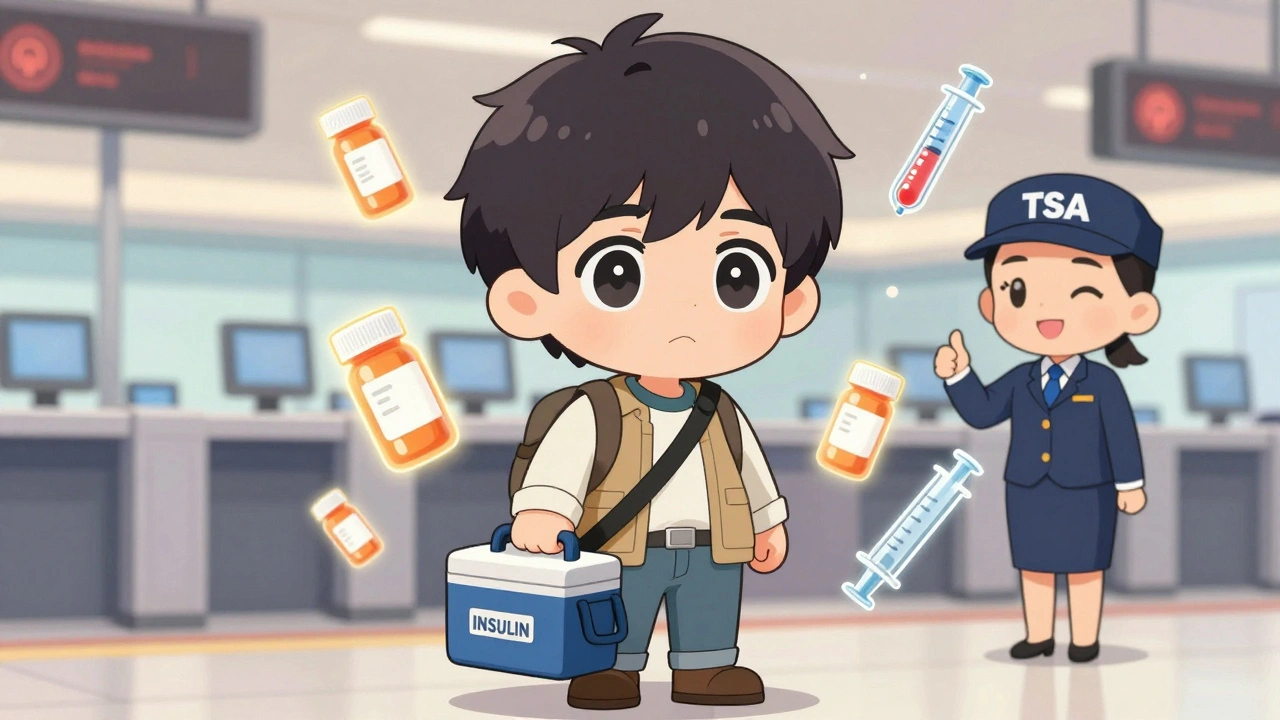
Another thing most people overlook: medication timing, the schedule you follow for taking drugs based on time zones. When you cross time zones, your body’s clock gets confused. If you take blood pressure meds at 8 a.m. local time, do you take them at 8 a.m. your home time or 8 a.m. destination time? Most doctors recommend sticking to your original schedule for the first day, then adjusting gradually. For insulin, thyroid meds, or anticoagulants like warfarin, even small timing shifts can matter. Use a pill pack with time labels or set phone alarms so you don’t miss a dose. And if you're flying with injectables—like insulin or GLP-1 agonists—bring your sharps container and a doctor’s note. TSA allows these through, but you’ll need to declare them.
You’ll also want to think about backup supplies. What if your luggage gets lost? Pack at least a three-day extra supply in your carry-on. Same goes for refills—don’t rely on getting a prescription filled overseas. Some countries won’t honor foreign prescriptions, and pharmacies might not carry your brand. If you’re on a specialty drug, call your pharmacy ahead of time and ask for a travel letter or documentation. Many insurance plans can provide this.
And while you’re at it, don’t forget to check expiration dates. expired medications, drugs past their labeled shelf life that may lose potency or become unsafe. Even if your pills look fine, they might not work right after a long trip in hot conditions. This is especially true for epinephrine auto-injectors, nitroglycerin, or insulin. If your meds are close to expiring, replace them before you leave.
Finally, be ready for questions. Security agents aren’t trying to be difficult—they’re trained to spot threats. If you’re calm, organized, and have your info ready, you’ll breeze through. Keep your meds in a clear, easy-to-reach spot. Don’t hide them. Don’t wrap them in foil. Don’t try to disguise them. The more straightforward you are, the faster you’ll get through.
Below, you’ll find real-world advice from people who’ve been there—how to handle international rules, what to do when your meds get confiscated, how to pack for long flights with multiple prescriptions, and how to avoid the most common mistakes that turn a smooth trip into a medical emergency.
Packing Medications for Air Travel: Best Practices for Safety
1 Dec, 2025
Learn the essential rules for flying with medications safely-TSA guidelines, temperature control, international restrictions, and what documents you need to avoid delays or lost meds.
 by
by