Rebound Congestion: What It Is, Why It Happens, and How to Stop It
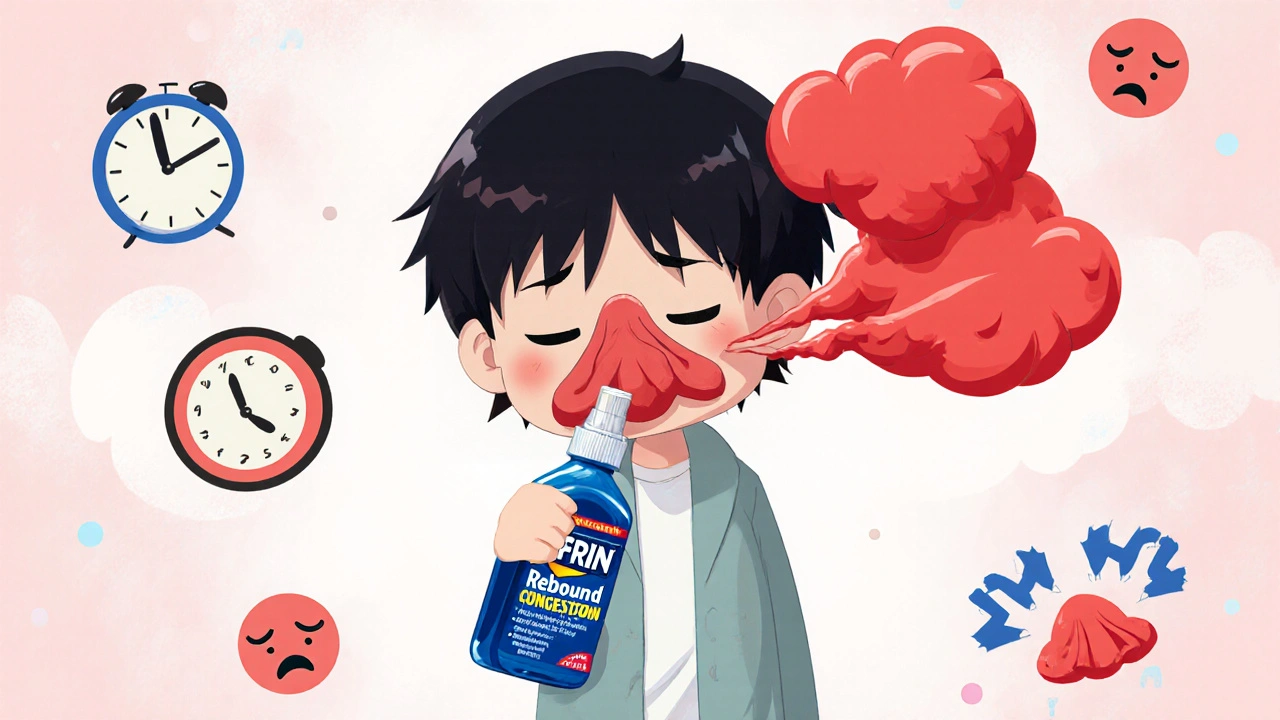
When you use a nasal decongestant spray too long, your nose doesn’t just get used to it—it starts fighting back. This is called rebound congestion, a condition where nasal spray use leads to worse congestion than before. Also known as rhinitis medicamentosa, it’s not an allergy or infection. It’s your body’s reaction to overuse of topical decongestants like oxymetazoline or phenylephrine. You start with a stuffy nose, use the spray for a few days, feel better, then stop—and suddenly, you’re even more blocked than before. It feels like the spray stopped working, but it’s worse: your nasal passages have become dependent on the chemical to stay open.
Most people don’t realize how quickly this can happen. Just three to five days of daily use can trigger it. The spray shrinks blood vessels in your nose, which reduces swelling and clears your airway. But when you stop, those vessels bounce back bigger than before, causing more swelling. It’s a loop: use spray → feel better → stop → get worse → use spray again. Over time, your nose loses its natural ability to regulate blood flow, and you’re stuck needing the spray just to breathe normally.
This isn’t just about discomfort. Rebound congestion can lead to chronic nasal obstruction, sleep problems, and even sinus infections if left unchecked. People often blame allergies or colds, but if you’ve been using nasal sprays for more than a week, the real culprit might be the spray itself. Nasal decongestants, short-term relief tools meant for occasional use are not meant for daily, long-term management. Yet, many turn to them because they’re available over the counter and promise instant results.
What you need instead is a plan to break the cycle. Stopping the spray cold turkey is hard—your nose will feel terrible for a few days. But there are safer ways. Saline rinses help flush out irritants and keep nasal tissues moist. Steroid nasal sprays, like fluticasone, reduce inflammation without causing rebound. Antihistamines can help if allergies are involved. And hydration? It’s not just a suggestion—it’s essential. Dry nasal passages make rebound worse.
Many people don’t know that rhinitis medicamentosa, the medical term for rebound congestion caused by medication is one of the most underdiagnosed conditions in primary care. Doctors often treat it like a cold or allergy, prescribing more sprays instead of stopping them. But the fix isn’t stronger medicine—it’s stopping the medicine that’s causing the problem.
What you’ll find in the posts below are real, practical guides on how to manage nasal congestion without falling into this trap. You’ll learn which OTC remedies actually help long-term, how to safely wean off nasal sprays, what alternatives work when sprays fail, and how to spot the early signs before your nose locks shut. No fluff. No marketing. Just what works when you’re stuck breathing through your mouth and tired of feeling like you’re always congested.
Nasal Congestion from Medications: How to Break the Cycle and Find Relief
30 Nov, 2025
Nasal congestion from overusing decongestant sprays is called rebound congestion. Learn how to stop the cycle, use corticosteroids like Flonase, and recover safely without surgery or dependency.
 by
by