FDA: What It Does, How It Affects Your Medications, and What You Need to Know
When you pick up a prescription or grab an over-the-counter pill, the FDA, the U.S. agency that approves and monitors drugs for safety and effectiveness. Also known as the Food and Drug Administration, it doesn’t just slap a stamp on new pills—it shapes how long you wait for cheaper versions, whether your medicine works the same as the brand name, and even if a supplement you take could mess with your heart drug. This isn’t bureaucracy—it’s the invisible hand behind every pill in your medicine cabinet.
The regulatory exclusivity, a period of market protection granted by the FDA after a drug is approved, separate from patents is one of the biggest reasons generics don’t show up right away. Even after a patent expires, the FDA can block other companies from selling the same drug for 5 to 12 years if it’s an orphan drug, a biologic, or a new formulation. That’s why your $500 monthly pill might still cost that much years after it was first approved. And when a generic finally arrives, the inactive ingredients, the fillers, dyes, and preservatives in a drug that aren’t the active medicine can still make you feel different—bloating, dizziness, or even a rash—even though the active ingredient is identical. That’s not a scam. It’s chemistry.
The FDA also tracks dangerous interactions you might never hear about—like how high-dose biotin supplements, a common vitamin marketed for hair and nails can trick blood tests into showing fake heart attacks or thyroid problems. Or how antibiotics, commonly prescribed for infections mostly don’t affect birth control, except for a few rare ones. These aren’t myths. They’re real reports the FDA collects and warns about. And when your insurance denies your brand-name drug because they want you to try a generic that didn’t work for you, it’s the FDA’s standards for therapeutic equivalence that your doctor has to fight to prove you need the original.
You’ll find posts here that dig into exactly how the FDA’s decisions touch your life: why some expired drugs are dangerous while others aren’t, how to safely dispose of pills so they don’t end up in your water supply, how to appeal when a generic fails you, and what to watch for when switching brands. These aren’t abstract rules—they’re the reasons your blood pressure med works, why your child’s fever pill has to be dosed by weight, and why your travel bag needs a printed list when you fly. The FDA doesn’t just approve drugs. It controls when you get them, how much they cost, and whether they’re safe for you right now.
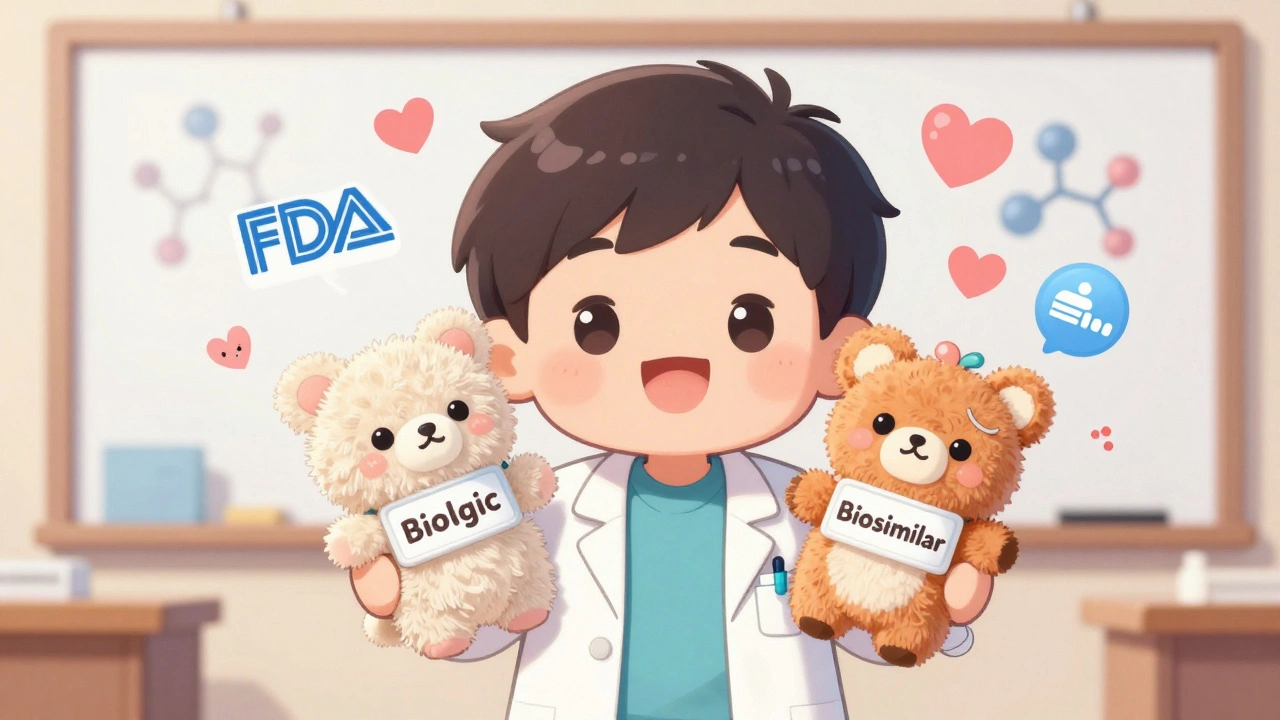
Biosimilars offer major cost savings over biologics, but they're not generics. Providers need to understand the science, regulatory pathways, and real-world differences to use them safely and confidently.
 by
by