Milliliters for Kids: Safe Dosing Guide for Parents
When giving medicine to a child, milliliters, the standard unit for measuring liquid medications in pediatric care. Also known as mL, it's not just a number—it's the difference between relief and risk. Many parents panic when they see "5 mL" on a label because they’re used to teaspoons or tablespoons. But a teaspoon isn’t always 5 mL, and a kitchen spoon? Even less reliable. Using the wrong tool can mean your child gets too little medicine—or too much.
Acetaminophen, a common fever and pain reliever for children, and ibuprofen, the go-to anti-inflammatory for kids over six months, both come in liquid form with precise concentration ratios. For example, children’s acetaminophen is usually 160 mg per 5 mL, while ibuprofen is often 100 mg per 5 mL. Mixing them up—or using adult concentrations—can be dangerous. Even a small error in milliliters can lead to liver stress or stomach bleeding. Always check the label, never guess, and use only the syringe or cup that came with the medicine.
It’s not just about the dose. The liquid medicine for children, formulated for taste and safety can vary between brands. One might taste sweeter, another might have different inactive ingredients that cause stomach upset. If your child reacts differently after switching brands, it’s not just in their head—dyes, preservatives, or flavorings can trigger side effects. Keep track of what works and tell your doctor.
Most pediatricians recommend dosing by weight, not age. A 20-pound toddler needs a different amount than a 40-pound child, even if they’re both "3 years old." That’s why pediatric charts list doses in mg per kg. You don’t need to do the math yourself—just give the exact milliliter amount your doctor or pharmacist tells you. If you’re unsure, call. It’s better to wait five minutes than risk an overdose.
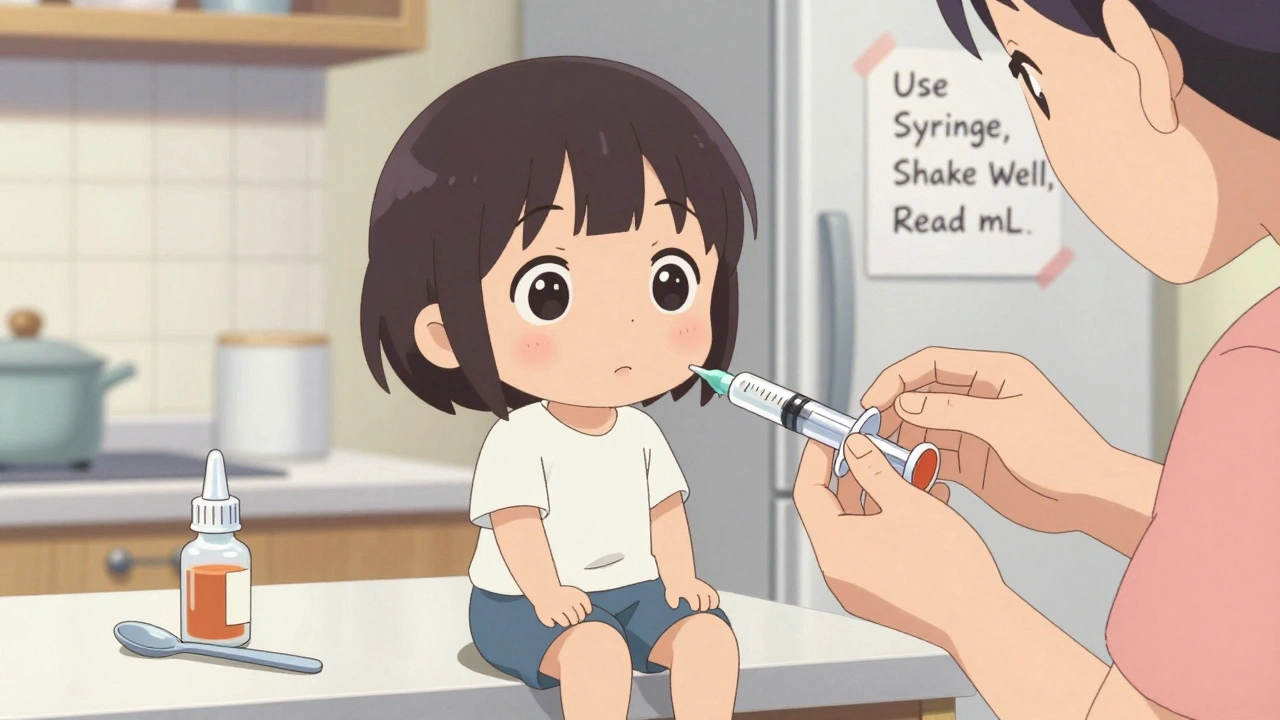
And don’t forget the tools. The cap on a bottle? Not a measuring device. The spoon from your drawer? Not accurate. Use the oral syringe or dosing cup provided. If it’s missing, ask for a new one. Pharmacies give them out free. Keep that syringe clean, labeled, and always stored with the medicine. You’ll thank yourself when it’s 2 a.m. and your child has a fever.
Milliliters for kids aren’t about precision for the sake of science—they’re about safety for your child. Every drop counts. And when you get it right, you’re not just giving medicine—you’re giving comfort, peace of mind, and time back to your family.
Below, you’ll find real guides from parents and pharmacists on how to handle common liquid meds, spot dangerous mix-ups, and know when to call the doctor—even if your child seems fine after a dosing mistake.
How to Measure Children’s Medication Doses Correctly at Home
9 Dec, 2025
Learn how to measure children's liquid medication accurately at home using oral syringes and milliliters only. Avoid dangerous dosing errors with proven steps, tools, and expert tips.
 by
by