Regulatory Exclusivity: What It Means for Drug Access and Pricing
When you hear regulatory exclusivity, a period of market protection granted by the FDA to drug manufacturers that prevents generics from entering the market, even after patents expire. It's not the same as a patent—it’s a separate rule designed to reward innovation, but it also delays cheaper alternatives. Think of it like a timed lock on a drug: no other company can sell a copy, even if they know exactly how to make it. This applies to brand-name drugs, biologics, and even some new uses for old drugs. And while it helps companies recoup research costs, it directly impacts how quickly you can get a lower-cost version.
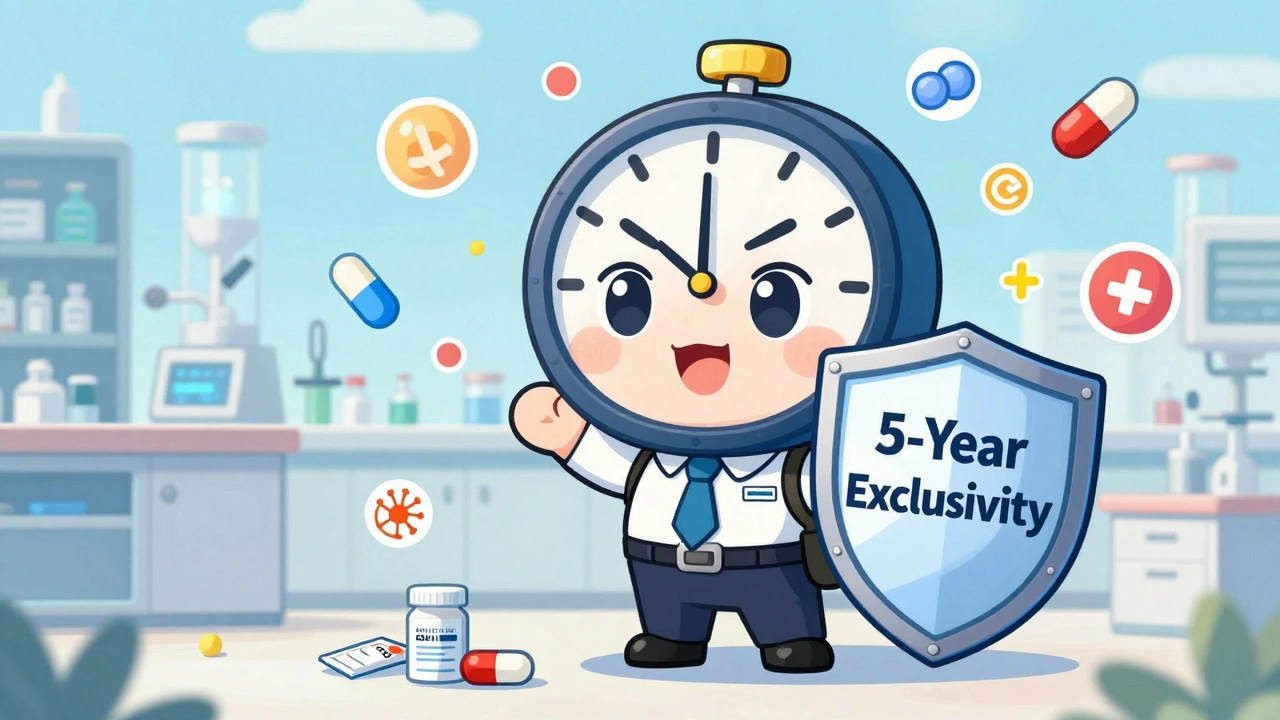
One big area where regulatory exclusivity shows up is with biologics, complex drugs made from living cells, like insulin or rheumatoid arthritis treatments. These get 12 years of exclusivity in the U.S., meaning biosimilars—similar but not identical copies—can’t launch until then. That’s why even though biosimilars are cheaper, you might not see them for over a decade after the original drug hits the market. Meanwhile, generic drugs for simple chemical pills only get 5 years of exclusivity (or less if patents expire first), which is why you’ll find generics for most pills within a few years.
But exclusivity isn’t just about timing—it’s about control. The FDA grants exclusivity for new indications, orphan drugs, pediatric studies, and even reformulations. A drug company might get extra time just for testing a drug in kids, even if the original patent is gone. That’s why you might still see high prices for a drug that’s been around for 20 years. And when exclusivity ends, it doesn’t always mean instant savings. Insurance companies and pharmacies often delay switching to generics, or require prior authorization, which is why you might need to fight an insurance denial even when a cheaper option exists.
What you’re seeing in the posts below is the real-world ripple effect of these rules. From regulatory exclusivity delaying access to biosimilars, to patients struggling when generics don’t work the same way, to insurance battles over brand-name drugs—these stories all tie back to how the system is built. You’ll find guides on what to watch for when switching to generics, how to appeal denials, and why inactive ingredients in generics can make a difference. You’ll also see how drug interactions, expiration risks, and lab test interference are all connected to the timing and availability of medications shaped by exclusivity rules.
This isn’t just policy—it’s personal. If you’ve ever been told you can’t switch to a cheaper drug, or wondered why your prescription suddenly costs more, it’s likely because of how long a company had exclusive rights to sell it. Below, you’ll find practical advice from people who’ve navigated these systems, so you know what to ask for, when to push back, and how to protect your health without overpaying.
Regulatory Exclusivity: How Non-Patent Protections Delay Generic Drugs
6 Dec, 2025
Regulatory exclusivity gives drugmakers exclusive market rights for 5 to 12 years after FDA approval, blocking generics even after patents expire. It's a key driver of drug pricing and innovation incentives.
 by
by