Temperature-Sensitive Meds: What You Need to Know to Keep Them Safe
When you buy a medication, you’re trusting it to work exactly as it should—but that only happens if it’s kept at the right temperature, the specific range of heat or cold a drug needs to stay stable and effective. Also known as thermally sensitive pharmaceuticals, these include everything from insulin and certain antibiotics to biologics and nasal sprays. Even a few hours in a hot car or a freezer that’s too cold can break them down—making them useless or even harmful.
It’s not just about refrigerated meds like insulin or Humira. Some pills, like nitroglycerin for heart pain, lose strength fast if exposed to humidity. Others, like liquid antibiotics, can grow bacteria if left unchilled. The drug potency, how strong and effective a medication remains over time depends heavily on storage. The medication storage, the conditions under which pharmaceuticals are kept to maintain safety and efficacy isn’t optional—it’s a medical requirement. The FDA and manufacturers set these rules for a reason: a pill that’s 10% weaker might not control your blood pressure. A shot that’s too warm could cause a severe reaction.
Many people don’t realize that the bathroom cabinet is one of the worst places to store meds. Heat and steam from showers degrade tablets. The fridge isn’t always better either—freezing can ruin injectables and suspensions. Even a delivery package left on your porch in 90-degree weather can ruin a week’s supply of your medication. You don’t need a lab to check if your meds are still good. Look for changes: discoloration, strange smells, clumping, or liquids that separate. If you’re unsure, call your pharmacist. They’ve seen what happens when people skip these steps.
What you’ll find in these articles isn’t just theory. Real stories from people who lost effectiveness because their insulin got too hot. How to tell if your asthma inhaler still works after being in a hot car. Why some generics fail when stored wrong, even if they’re chemically identical. And how to protect your meds during travel, power outages, or when you’re on the go. These aren’t minor details—they’re the difference between feeling better and ending up in the ER.
Packing Medications for Air Travel: Best Practices for Safety
1 Dec, 2025
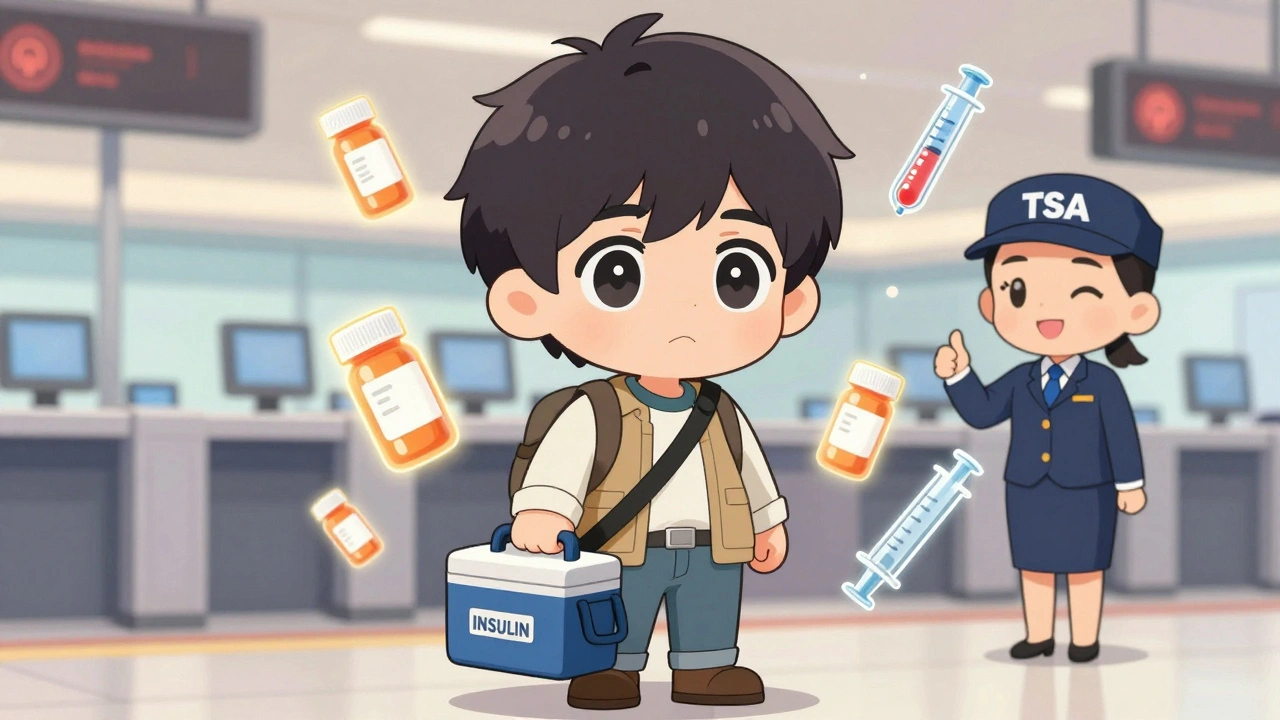
Learn the essential rules for flying with medications safely-TSA guidelines, temperature control, international restrictions, and what documents you need to avoid delays or lost meds.
 by
by