TSA Medication Rules: What You Can Bring on a Plane
When you're flying with medications, you need to know the TSA medication rules, the official guidelines from the Transportation Security Administration for carrying drugs through U.S. airport security. Also known as airport security pill rules, these aren't suggestions—they're enforced policies that can delay or even block your trip if you get them wrong.
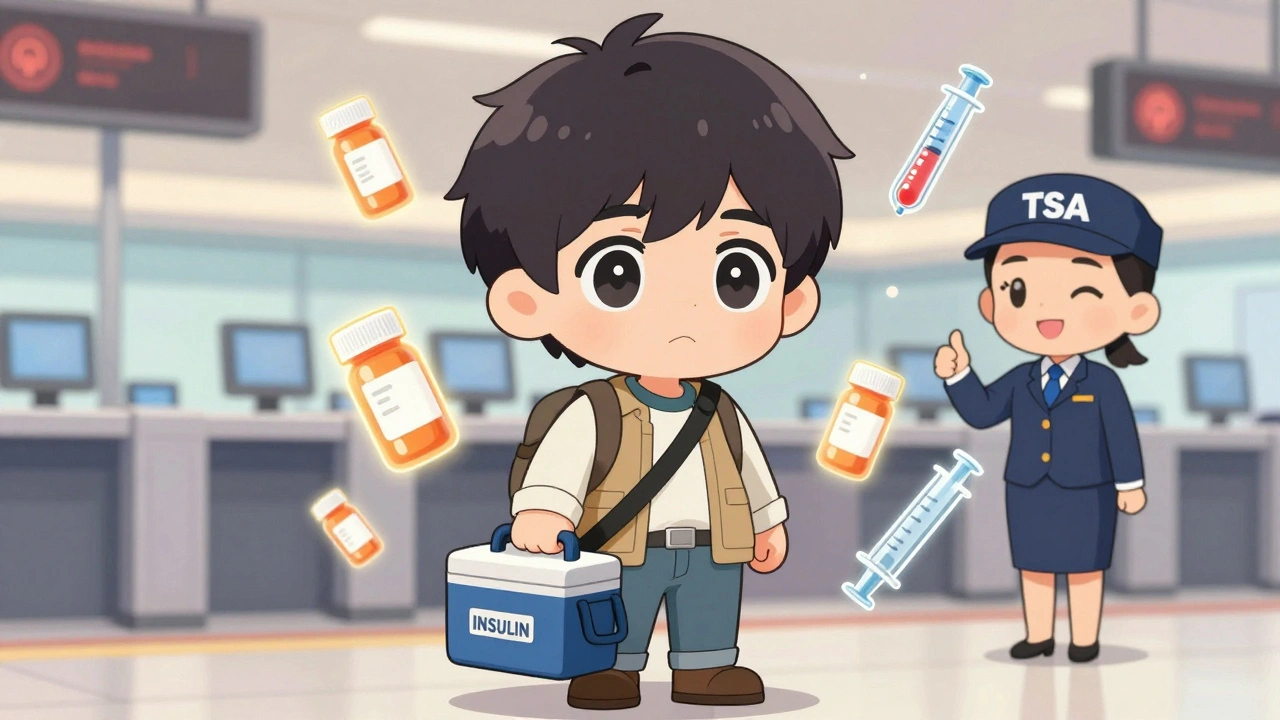
Most prescription and over-the-counter pills are fine in any quantity, as long as they're in their original containers or clearly labeled. Liquid medications like insulin, cough syrup, or eye drops are allowed in amounts over 3.4 ounces, but you must declare them at the security checkpoint. You don't need a doctor's note, but having one helps if an officer asks. The same goes for medical devices: inhalers, EpiPens, and nebulizers are always permitted in carry-ons, even if they look like suspicious items. What trips people up? Unlabeled pills in pill organizers, large bottles of liquid meds without labels, and mixing prescription drugs with supplements in unlabeled containers. TSA agents aren't looking to punish you—they're trying to stop real threats. But if your meds look like they could be something else, they'll ask questions.
Don't forget that international flights add another layer. Some countries ban common U.S. medications like pseudoephedrine or certain painkillers. Always check the destination country’s rules before you pack. And never put your essential meds in checked luggage—bags get lost. Keep them in your carry-on, along with a copy of your prescription. You’ll also find that many of the posts below cover related topics: how to safely dispose of expired drugs, what to do when generics cause side effects, and how to handle insurance denials for brand-name meds. All of these matter when you’re on the move. Whether you’re flying for vacation, work, or a medical appointment, knowing the rules means less stress and a smoother trip.
Packing Medications for Air Travel: Best Practices for Safety
1 Dec, 2025
Learn the essential rules for flying with medications safely-TSA guidelines, temperature control, international restrictions, and what documents you need to avoid delays or lost meds.
 by
by